Former Bangladeshi prime minister Sheikh Hasina announced she will return to Bangladesh on 16 December, Victory Day, marking the anniversary of Bangladesh's victory over Pakistan in the 1971 liberation war. Hasina, 79, fled to Delhi in August 2024 following a student uprising that ended her 15-year rule.
Hasina was sentenced to death in absentia for crimes against humanity, with the conviction relating to her role in the crackdown during the uprising. Her party, the Awami League (Bangladesh Awami League), is banned in Bangladesh. According to UN figures, security forces killed up to 1,400 people during the uprising. The Bangladeshi government has stated that Hasina would be immediately arrested if she returned and has pledged to carry out the death sentence.
Hasina wants the Bangladeshi government to arrange a flight from Delhi. If that fails, she could travel commercially or cross the land border. Abu Obaidha Arin, a key Hasina aide, told the BBC that Hasina is even prepared to walk into Bangladesh. India and Bangladesh share a 4,096-kilometre border across five Indian states - West Bengal, Assam, Meghalaya, Tripura and Mizoram. Hasina's supporters have identified nine possible crossing points, according to Arin.
Dhaka responded defiantly, insisting Hasina must be extradited. Humaiun Kobir, state minister for foreign affairs of Bangladesh (People's Republic of Bangladesh), told reporters in Dhaka: "Reality and desire are different things" and "She is not a regular commercial passenger. She can only be brought back in handcuffs." The Indian Ministry of External Affairs said on Wednesday that the request for Hasina's extradition is being considered through an "established process", adding that a voluntary return would be a separate matter.
Arin said Hasina has been in regular contact with party leaders and workers through interactive audio conversations on Telegram. Over the past 18 months, according to Arin, Hasina has held more than 300 such meetings, reaching supporters in all 64 districts and 300 electoral units. The meetings are organised through 78 units of the Awami League (Bangladesh Awami League) and "can last four or five hours". Arin claims the party "could mobilise five million people to greet her along the route from the border to Dhaka, forming a human chain".
The Awami League (Bangladesh Awami League) remains a mass party with millions of supporters, but is banned and largely sidelined from mainstream politics. Much of the party leadership is abroad, in prison or in hiding. Police have arrested supporters and filed thousands of cases against party workers. Several districts have reported bombings, arson and vandalism, though responsibility for some incidents remains disputed. Gopalganj, Hasina's home district, has proven particularly difficult for the authorities to control.
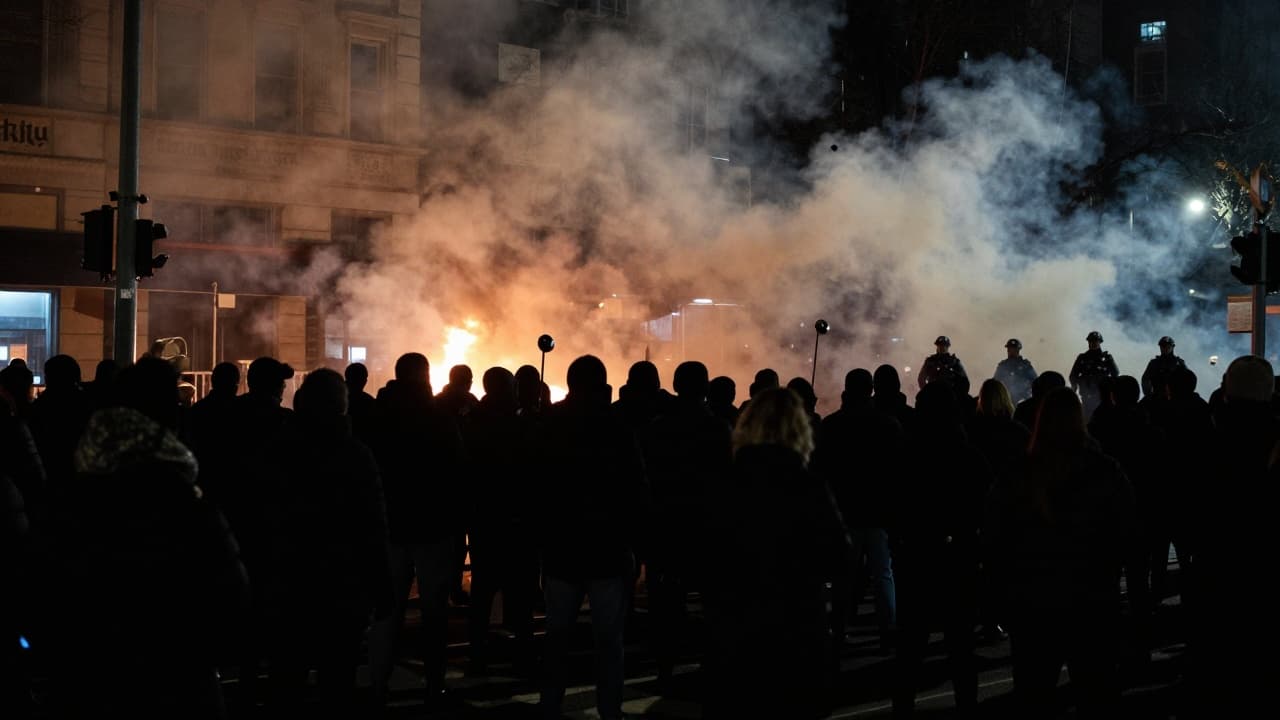
Awami League (Bangladesh Awami League) supporters have attacked police stations, set fire to vehicles, and targeted the homes and offices of leaders of the ruling Bangladesh Nationalist Party (BNP), according to reports. Highways have been blocked with felled trees and burning tyres, halting traffic. In some areas police withdrew due to fear of further attacks. Supporters have organised 40 demonstrations and more than 140 riots up to 23 November, according to data from the conflict-tracking group ACLED. At least 11 people, including two civilians, have been killed in political violence this month, six directly linked to unrest, ACLED said.
Shafiqul Alam, editor of the daily newspaper Daily Waadaa and former spokesperson for the interim government led by Muhammad Yunus, believes the party is "exploiting cracks in the unity forged during the uprising". Alam told the BBC that "disagreements" over the July Charter, proposed constitutional changes and a referendum have "deepened divisions" between the elected BNP government and its rival Jamaat-e-Islami.