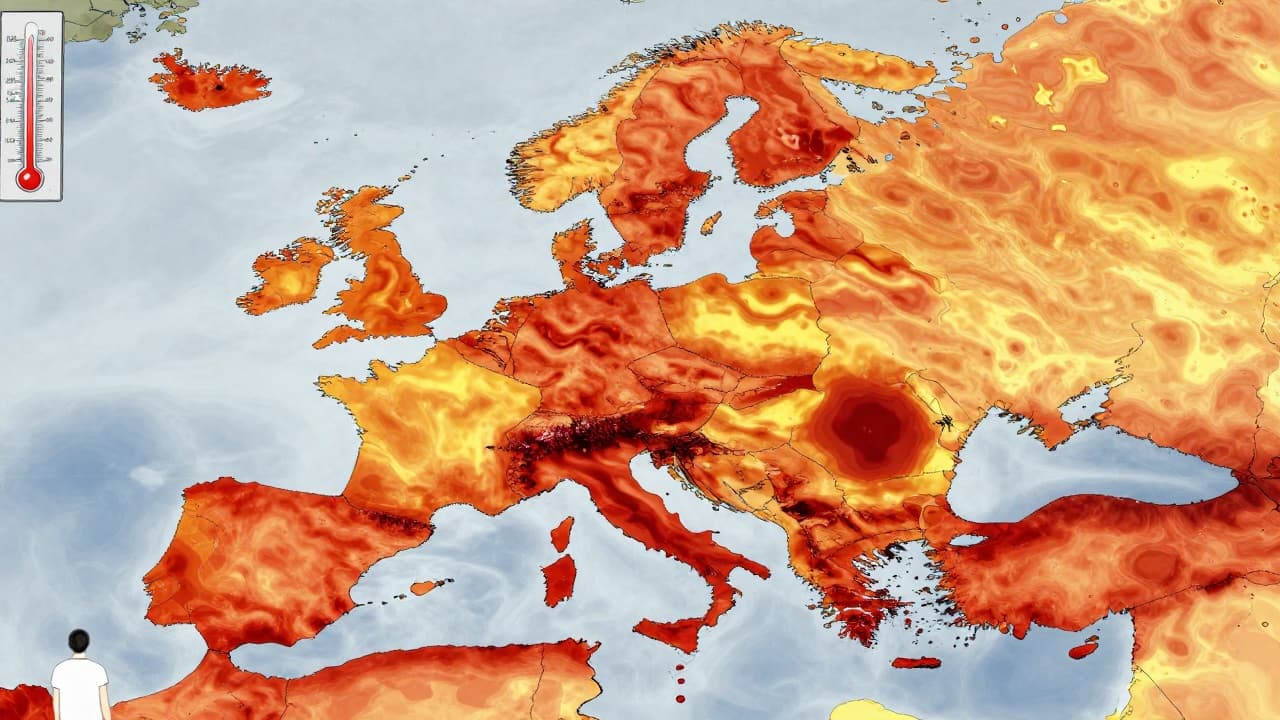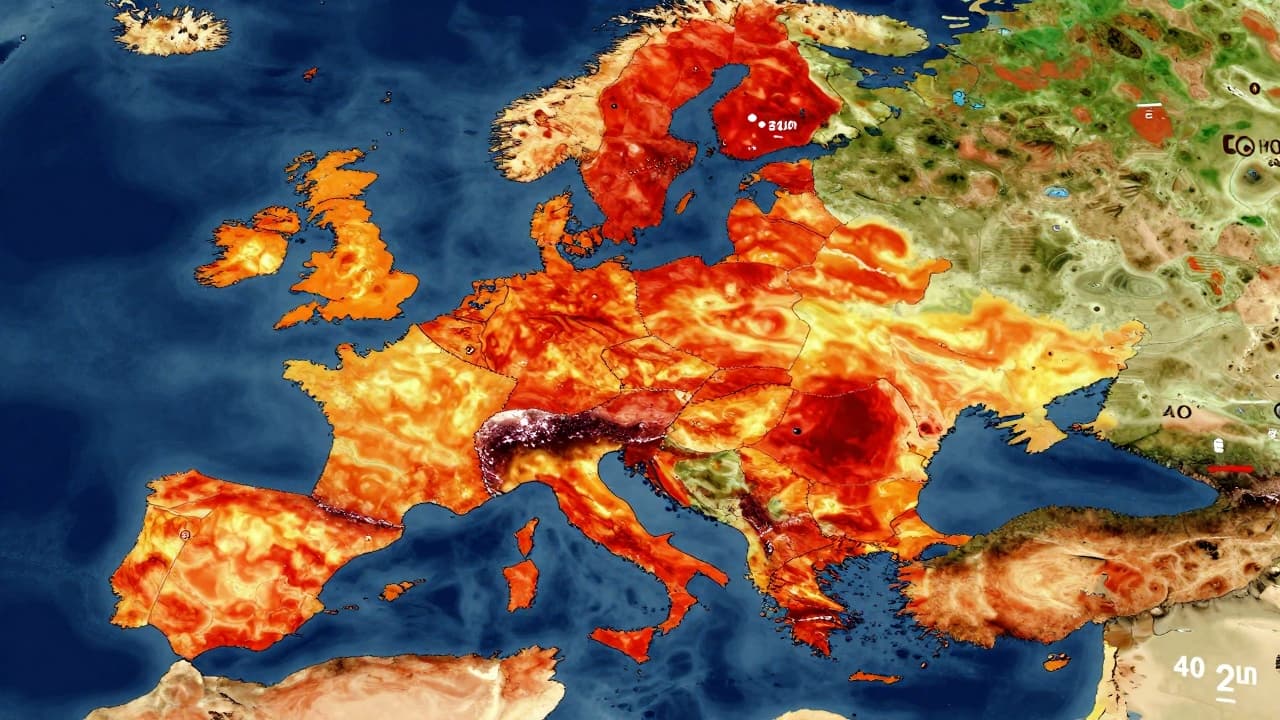
Western Europe recorded its hottest June and July on record, the European Union's Copernicus programme announced. The average temperature in the region was 21.62 degrees Celsius, which is 2.79 degrees higher than the average recorded in the reference period from 1991 to 2020.
The record temperatures were preceded by an unusually long period of heat starting in late spring. During this period, from late May, four separate heatwaves were recorded in Western Europe. This series of extreme weather events contributed to the high summer temperatures in the region.
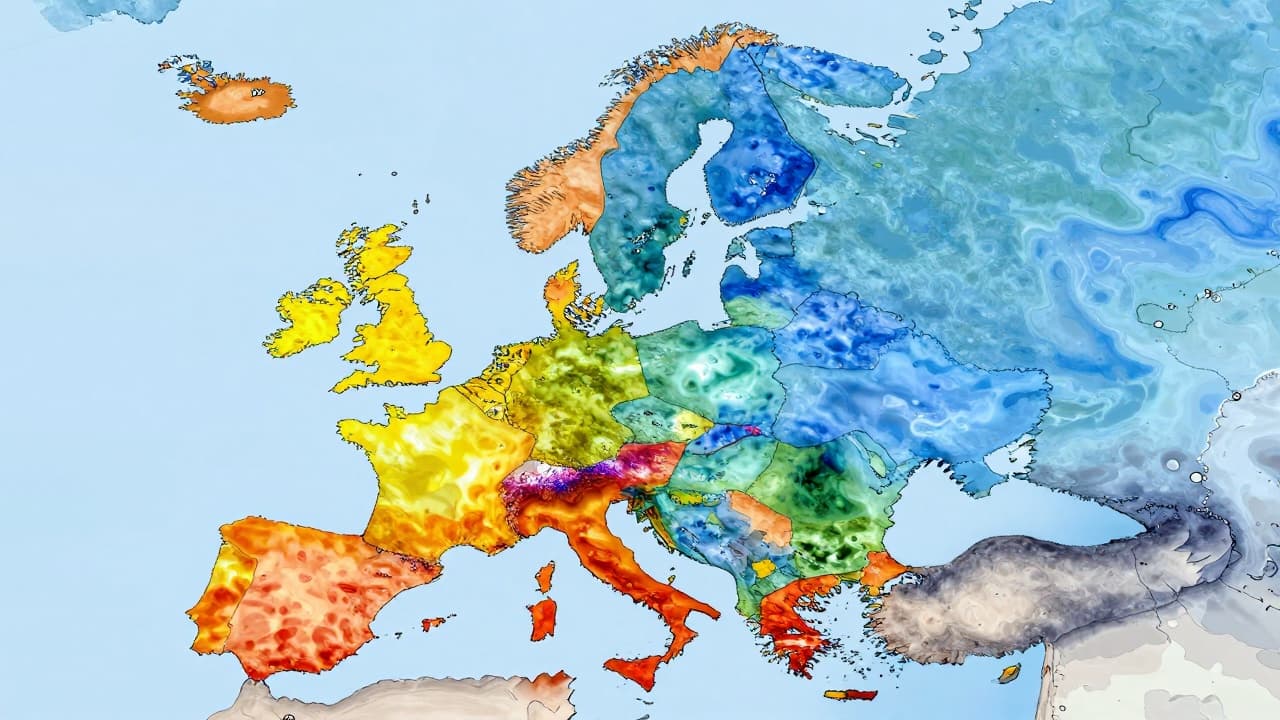
On the other hand, the situation was significantly different in other parts of the continent. Temperatures decreased towards Eastern Europe and Scandinavia, where it was noticeably cooler in the east compared to the west. When looking at Europe as a whole, July was the 11th warmest on record, with an average temperature of 20.49 degrees.
On a global level, July 2026 was the second warmest on record. The global average temperature that month was 16.9 degrees, 1.47 degrees above the pre-industrial average. This value was in line with the heat of July 2024.
The all-time record for the warmest July on a global scale remains July 2023, when the average temperature reached 16.95 degrees. The data from the Copernicus programme, which is crucial for monitoring climate change, has been collected continuously since 1950.