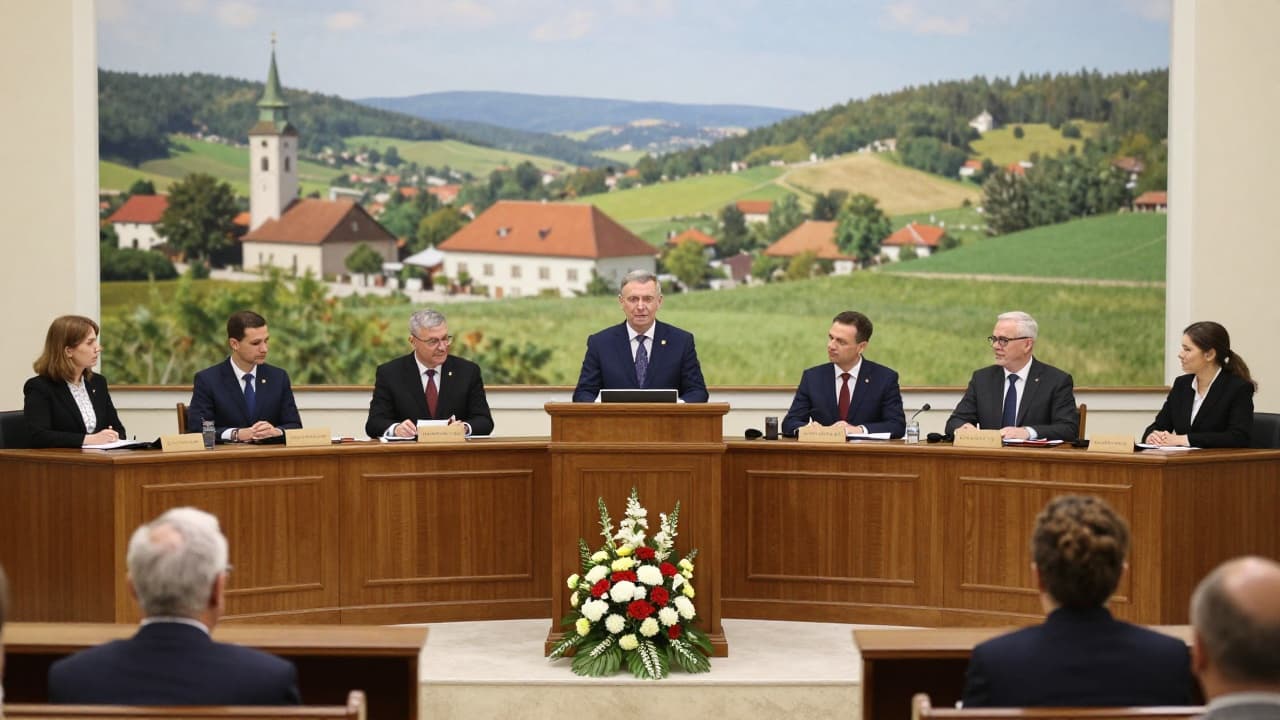

The annual meeting of the Croatian network of marine protected areas was held on 23 and 24 September in Sali on the island of Dugi otok, and was hosted by the public institution Park prirode Telašćica. The gathering brought together more than 40 experts and representatives of public institutions managing marine protected areas, the Ministry of Economy and Sustainable Development, partner organisations, and colleagues from the public enterprise managing marine resources in Montenegro. Among the participants was also a colleague from the professional staff of the National Park of Mljet.
The first day of the meeting was dedicated to the internal evaluation of past work and strategic planning for the coming period. It was concluded that the network has proven itself as a recognisable platform that connects stakeholders in nature protection both horizontally and vertically, and actively contributes to shaping legislative frameworks. It was also agreed that future work would be based on strengthening through joint projects, continuous knowledge exchange, and the introduction of a rotating coordination model at the annual level among the institutions.
Participants voted on three key priority activities to which they would direct their resources in the coming period. The first involves coastal and seabed cleaning actions, monitoring marine litter, and removing abandoned fishing gear. The second relates to monitoring the pressure of nautical tourism and the stronger establishment of ecological moorings, while the third involves significantly strengthening oversight within marine protected areas. Representatives were elected to represent the Croatian network of marine protected areas in the coming year.
During the meeting, an interactive workshop on the basics of constructive communication and tools for conflict management and conflict resolution was held, led by the director of the public institution Park prirode Telašnica, Andrijana Parić. This was followed by an evening knowledge exchange, an informal gathering where public institutions, scientific institutions, and non-governmental organisations presented their current projects, initiatives, and examples of good practice.
The second day of the meeting featured a series of expert lectures on monitoring methods for the marine environment and the conservation of biodiversity. Experts from the associations BIOM, Institute of the Blue World, Association of Hippocampus, University of Zadar, Association for Nature, Environment and Sustainable Development Sunce, and the Association of the Eagle Club presented their work and current projects. A sensitivity map for the development of offshore wind farms was presented, as was the work of the Dubrava Eagle Club, with a focus on the possibilities of cooperation with public institutions in the handling and care of injured birds.
In addition, the Adriatic-Ionian network of SAMESEA was presented, which focuses on monitoring and protecting key marine species such as the loggerhead sea turtle, the striped dolphin, and the Mediterranean monk seal. The increasingly prevalent problem of invasive species was discussed, with particular reference to the need to strengthen national capacities for the early detection and control of the invasive red fire crab. Through the project BlueCarb-HR, the concept of blue carbon was explained, and the carbon storage capacity of the seagrass Posidonia oceanica was analysed, while the project ADRIWATCH, which focuses on the more efficient collection and exchange of monitoring data in coastal and marine areas, was also presented.
The annual meeting concluded with a field visit to the Park of Telašćica by boat, during which participants were able to observe on the ground the concrete challenges in conserving sensitive marine habitats. The concluding message of the meeting was directed towards concrete solutions and more effective management of marine protected areas, with stronger oversight, responsible management of nautical tourism, and a continuous reduction in anthropogenic pressures. It was highlighted that the Adriatic Sea requires strong and effective oversight on the ground, clear rules for nautical tourism, and the continuous removal of anthropogenic pressures, such as marine litter.
The Croatian network of marine protected areas has confirmed its strength as a place for the exchange of knowledge, a partner on an equal footing, and a united voice of the profession that actively participates in shaping national legislation. By integrating science, effective management, and collaboration with the local community, the Network is taking on a proactive role in the construction of a system in which humans and the sea coexist in a sustainable balance. It was concluded that the preservation of the Adriatic is not the task of an individual, but a shared responsibility of all institutions and stakeholders, whose coordinated action is the only guarantee for the future of the Adriatic, and cooperation and the exchange of experience represent the foundation for the long-term protection of the Adriatic.