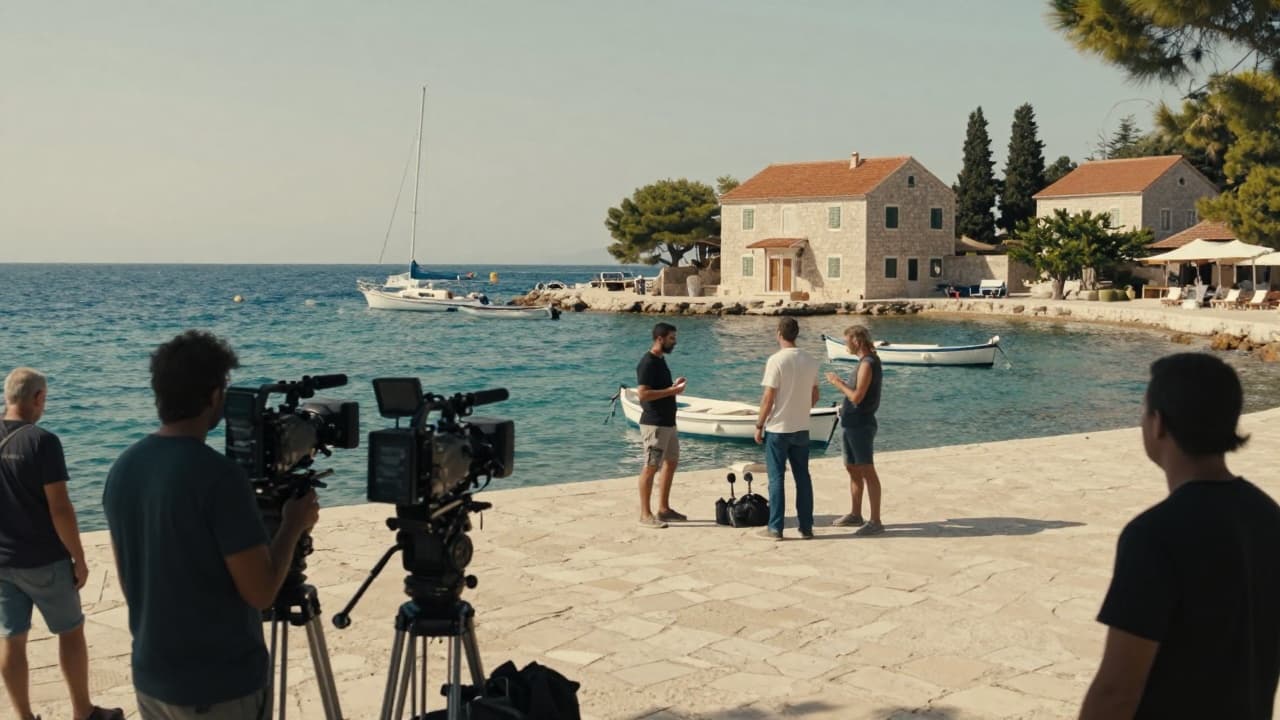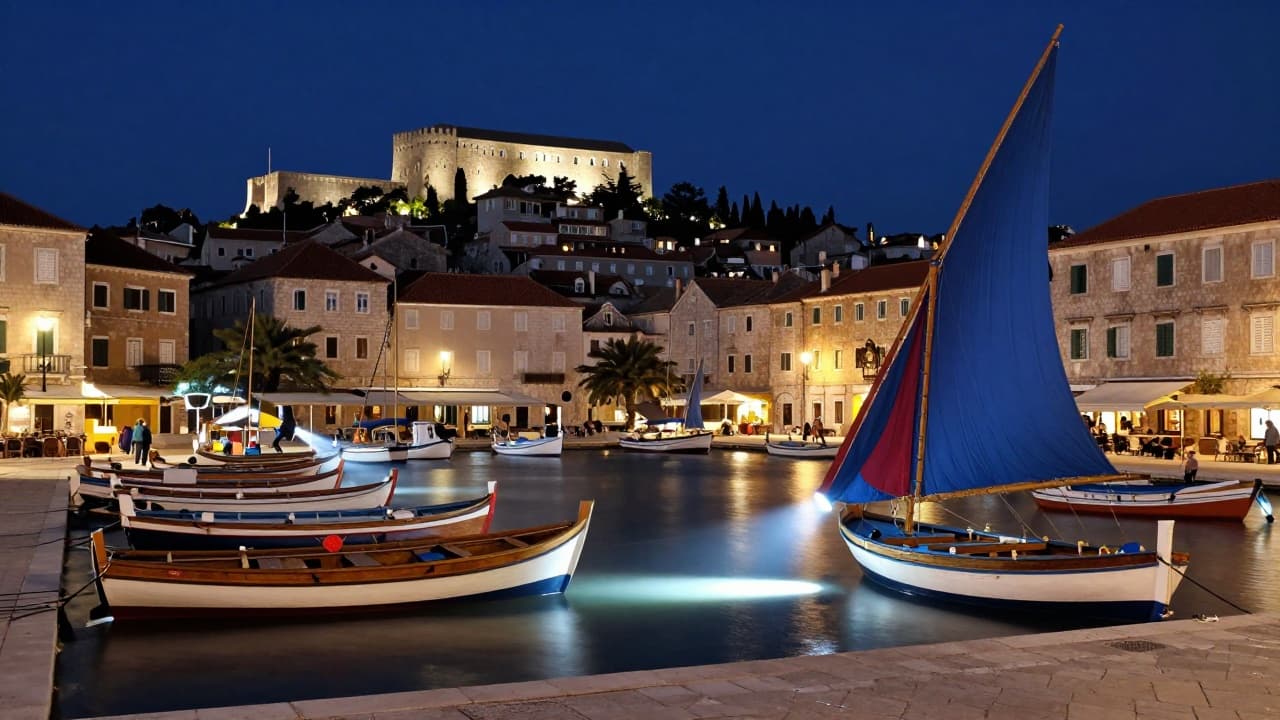
The 'Days in the Bay 2026' festival, held in Stari Grad on Hvar, concluded with its final evening on Saturday. The festival aims to preserve the maritime heritage of the Adriatic, with the central event being the night sail of traditional boats titled 'Dance of Sails and Lights', which began at 20:30 in the Stari Grad bay.
The lights of the spotlights illuminated the Stari Grad bay, as a fleet of 52 traditional boats made their way through the inlet. All boats in the fleet were wooden, including the beauty 'Victoria', a gajeta from Slatina that is 175 years old and the oldest boat at the festival. Her sail is blue and red with the Hajduk coat of arms. The fleet included a gajeta, leut, kornar, batana, Neretva boat, guč, Komšića falca, kaić, as well as a cutter from the Croatian Navy, an Italian top veneciano, and a scipion. Crews came from all over the Adriatic, from Venice, Italy, and the calmer waters of Bar, Montenegro, with sailors from Pula, Opatija, Selce, Pašman, Prvić, Šipan, Vrboska, and Stari Grad. The sailing lasted half an hour.
After the sailing, the scene shifted to Trg Tvrdalj, where a full evening concert by Petar Grašo took place at 21:00. Grašo stated that he was happy and delighted to be there that evening, noting that Hvar is an island close to his heart. He mentioned that his family on his wife's side are from Hvar, and he spent his childhood in Stari Grad because his friend Mark has a house on the island. He added that he loves the sea, noting that his father sailed with his grandfather, while he is more of a fisherman. Grašo is celebrating 30 years of his career, and he is pleased that Stari Grad is on the map of their concert tour. He performed his hit from 1996, 'Trebam nekoga'. The concert took place in a fully packed Trg Tvrdanj, in front of the palace of Petar Hektorović, followed by the 'Days in the Bay 2026' after-party.
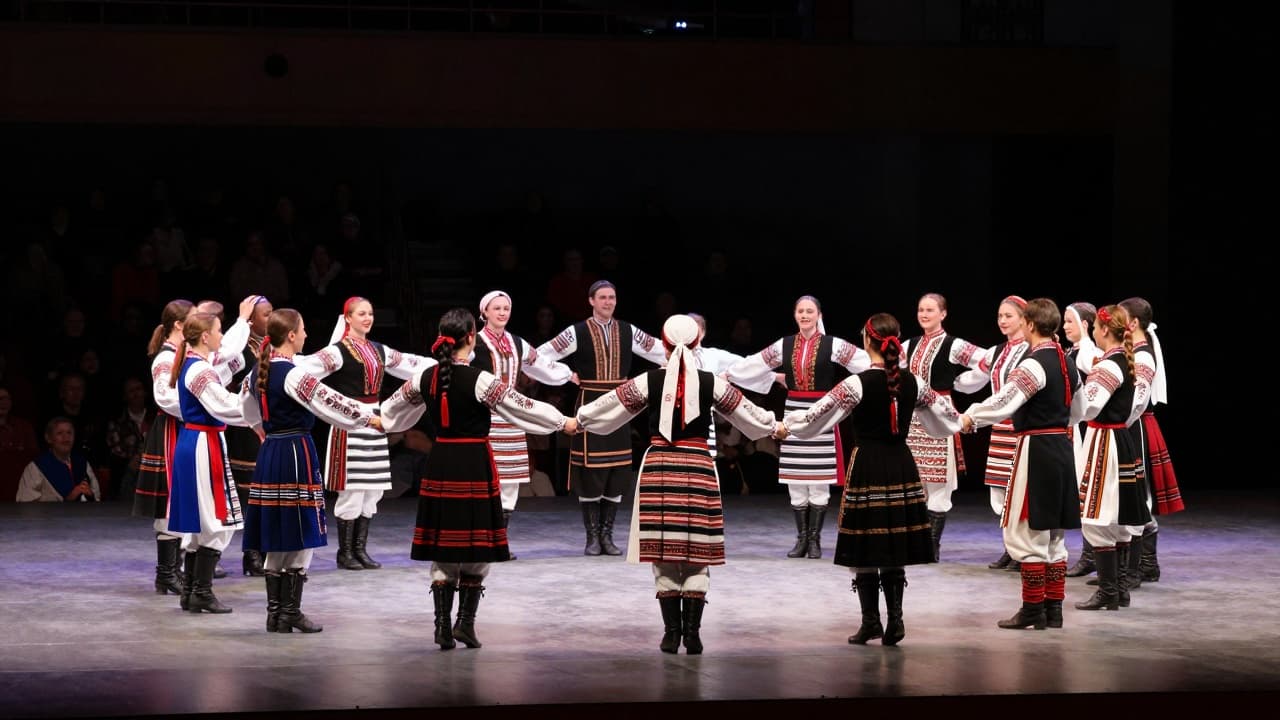
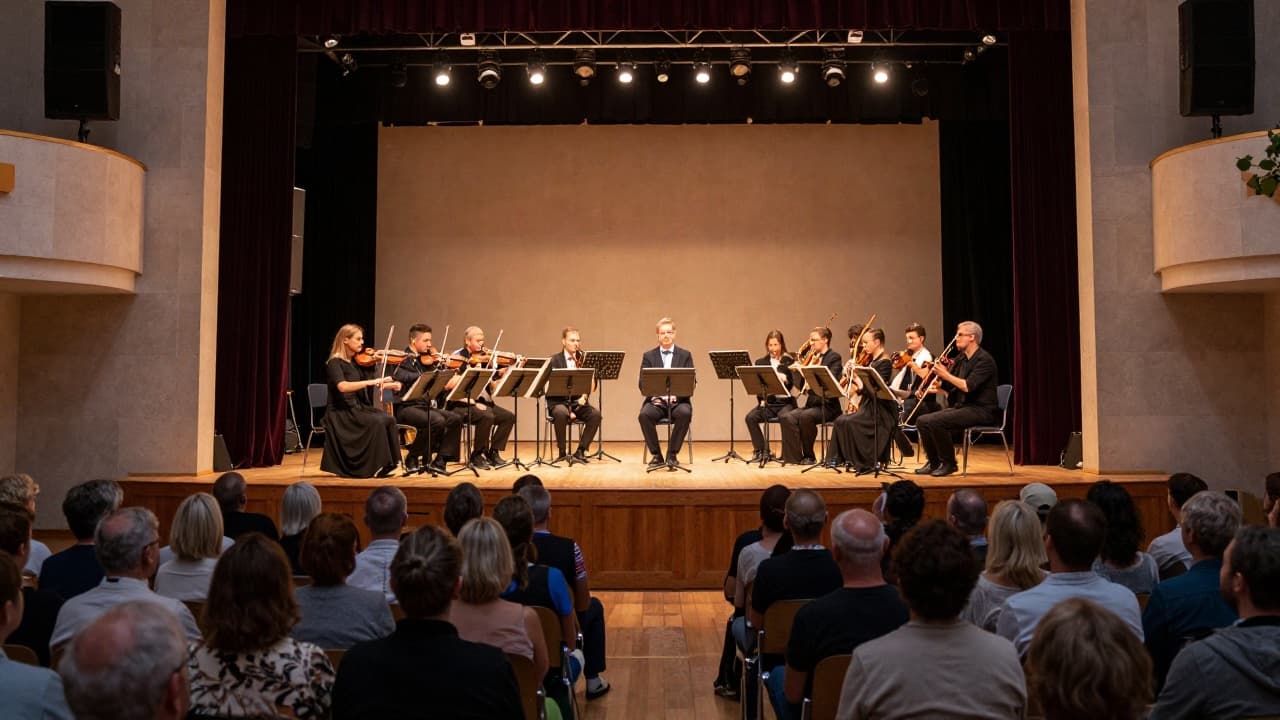
On the stage at Trg Tvrdanj, in front of the palace of Hektor, the sixth edition of the international festival of sea, sailors, and traditional boats 'Days in the Bay 2026' officially began. The day was crowned by a concert by the choir Cambi, which celebrated its fourth decade of operation, with the performance titled 'Stari Grad to Friends of the Sea'. The program also included the entry of a replica of the historic Dubrovnik galley Karaka.
The Dubrovnik galley was built in the Republic of Dubrovnik in the 15th century and is among the largest ships of its time. It was one of the most important trade ships of the Republic of Dubrovnik, reaching its peak between the 14th and 17th centuries, as Professor M. Mark writes in the V1 Travel Corner. Large ships carried valuable cargo such as silk, silver, and spices, connecting Dubrovnik with many Mediterranean and European ports. The galley had a wide, rounded hull and high fore and stern decks, which served for defence, and the ships could be armed with up to 40 cannons to protect the crew from pirates and other dangers at sea. The galleys typically had three masts, with the largest having four, and the Dubrovnik galleys were particularly notable as larger versions of the standard galley. The name 'Ragusa' is derived from the English word 'argosy', which denotes a large trading fleet or a ship carrying valuable cargo, and the Dubrovnik galley was a symbol of the maritime, trade, and shipbuilding power of the Republic of Dubrovnik.
The bay in Stari Grad is six kilometres long, and this weekend passed with the accommodation capacity fully booked, despite it being late September.