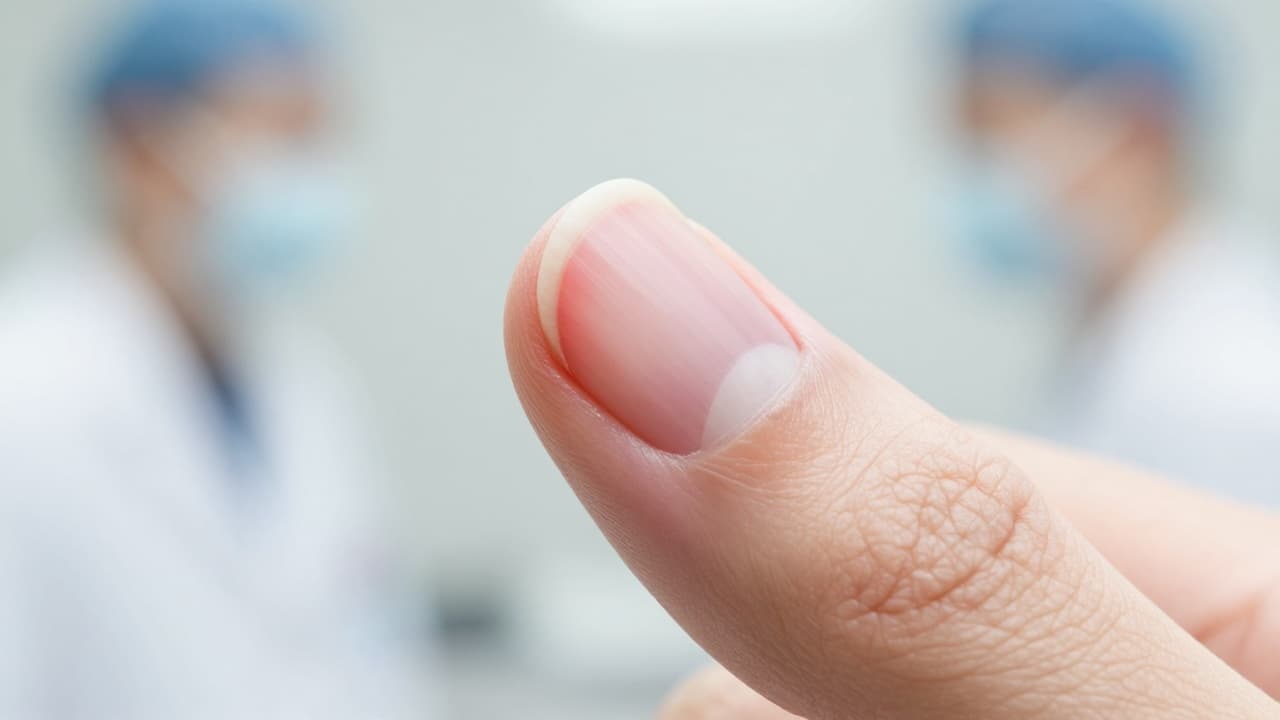
A reddish hue on the lunula, the pale semicircle at the base of the nail, is increasingly recognised by doctors as a signal warranting attention. Although the lunula is white in most people, its reddish change may indicate health problems that have not yet manifested with other visible symptoms. Researchers therefore examined whether specific patterns are associated with such a change, with results published in the American Journal of Medical Sciences.
Cases of red lunulae described to date were analysed, and the review showed that such changes are most commonly associated with cardiovascular, autoimmune and rheumatological diseases. However, it is important to stress that a red colour in the lunula does not automatically mean that a person is suffering from an illness. Redness is not a common occurrence, nor does it appear in all people with a particular health problem. Therefore, although conditions such as rheumatoid arthritis, liver cirrhosis or heart failure are statistically more frequently associated with this sign, it does not mean that everyone with red lunulae is necessarily suffering from the aforementioned conditions.
Experts warn that context is important. The link with a systemic disease is more likely when red lunulae are present on multiple nails. On the other hand, a change limited to a single nail more often indicates a local problem beneath or around the nail, such as an infection, bleeding, or, less commonly, a tumour. For this reason, doctors, when observing such a change, should take into account the possibility of both systemic and local causes, and assess whether the issue is a general health condition or a local problem.
Although the exact biological mechanism of the colour change in the lunula is not yet fully understood, it is hypothesised that the cause is the dilation of small blood vessels beneath the nail. This dilation causes an increased blood flow, which visually results in a reddish appearance. Researchers have therefore proposed a simple clinical test to check: pressure applied to the reddish lunula. If the colour recedes after pressure is applied and the nail returns to white, this indicates that the change is caused by the dilation of blood vessels, rather than a change in the nail structure itself. Although colour changes can be a sign of a health condition, it is important to stress that they do not necessarily indicate an illness on their own, but rather require professional assessment and contextualisation.