Regular intake of whole grains is associated with improved cholesterol, blood pressure, body weight, and waist circumference, a new analysis has shown. The results were published on Tuesday in the European Heart Journal.
Extensive research over the past two decades has shown that a diet rich in whole grains is associated with a lower risk of heart disease, high blood pressure, high cholesterol, and type 2 diabetes. Such a diet also helps in maintaining a healthy body weight. In the new analysis, the researchers reviewed dozens of studies.
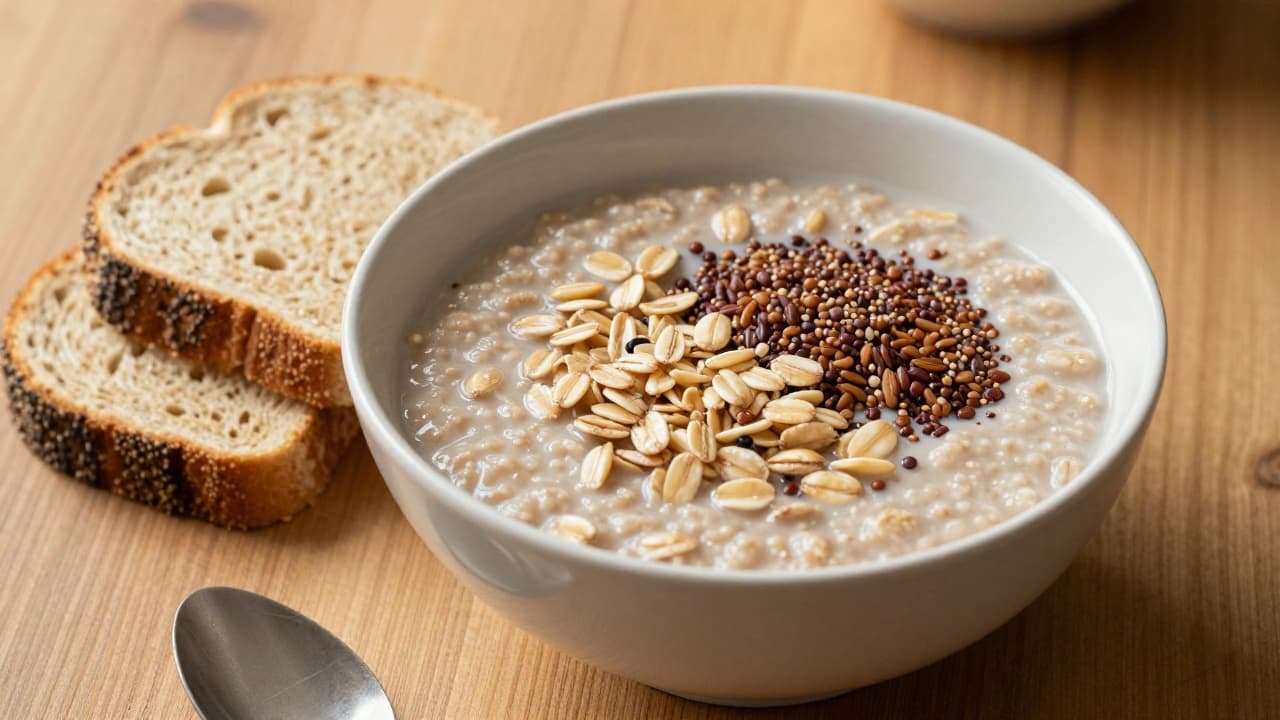
The results suggest that health benefits start to be apparent with an intake of about 90 grams, or three portions daily. This amount is roughly equivalent to two slices of whole-wheat bread and a bowl of porridge. According to the study, consuming four to six portions daily may have an even stronger effect.
Researchers found evidence that people who, over a period of time, ate between three and six portions of whole grains daily had slightly improved readings in ten health indicators. These indicators included total cholesterol, LDL, or 'bad' cholesterol, blood pressure, body weight, and waist circumference. All these indicators are linked to a higher risk of cardiovascular disease.
Dagfinn Aune, one of the authors of the meta-analysis and a researcher at the Department of Epidemiology and Biostatistics at Imperial College London, said that the combined results support the findings of large population studies. He concluded that 'there is likely a causal effect' of consuming whole grains, which 'could translate into a reduced risk of cardiovascular disease' for individuals.
Doctors in cardiology recommend choosing whole grains over refined grains. Whole-grain foods, such as porridge, brown rice, wholemeal bread, bulgur, popcorn, and quinoa, contain all parts of the grain as found in nature. Refined grains, such as white rice and all products made from white flour, are processed in a way that removes the less tasty parts of the grain, which are precisely where most of the fibre and other nutrients are located.
Lichtenstein, who did not participate in the new meta-analysis, said: 'If you eat a cinnamon roll made from whole grains instead of a cinnamon roll made from refined grains, I am not sure you will see the benefit'. She added that simply increasing the amount of carbohydrates in the diet to reach the recommended amount of whole grains could lead to an increase in body weight.
Most people in the United States do not eat two to four portions of whole grains daily, as suggested by the latest dietary guidelines of the US federal government. One portion can be one slice of wholemeal bread or half a cup of cooked porridge, brown rice, or quinoa. The American Heart Association recommends consuming whole-grain foods, but does not specify a quantity to be eaten daily.
Lichtenstein was the lead author of the dietary guidelines published by the non-profit organisation in March. She said there is no single quantity that can be clearly stated as the most effective, nor one that would suit every individual, their body, genetics, and lifestyle. 'We are trying to keep the focus on the overall pattern of diet', she said. In addition to whole grains, the guidelines highlight the consumption of a variety of vegetables and fruit, and limiting saturated fats, added sugar, salt, ultra-processed food, and alcohol.
A good start would be to replace three portions of refined grains with whole grains daily. 'My suggestion is that, as your individual food supplies run out in the pantry, you replace them with their whole-grain versions', Lichtenstein said. At the same time, she warned that dark brown bread and products labelled 'multi-grain' or 'made with whole grains' may actually be produced mainly from refined flour. She advises: 'Turn the package around and look at the ingredients list'. 'The first ingredient should be a whole grain', she said. If the first ingredient is not a whole grain, her advice is simple: leave the product on the shelf.