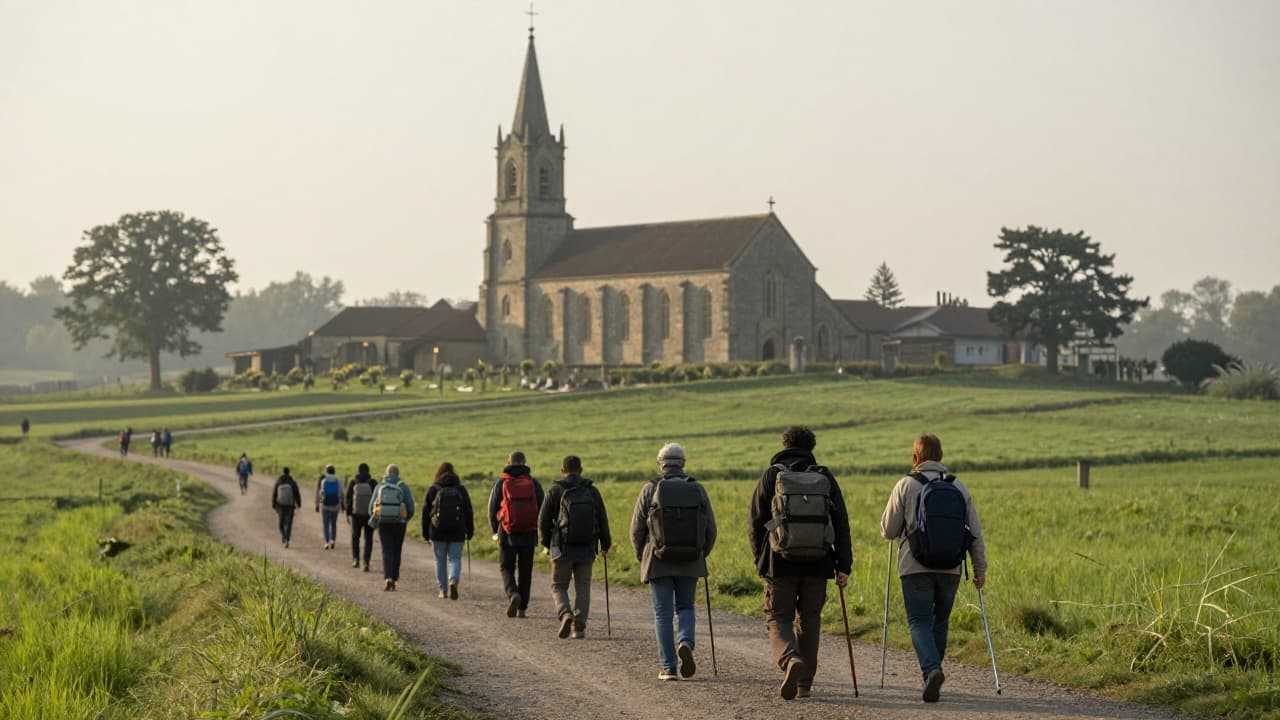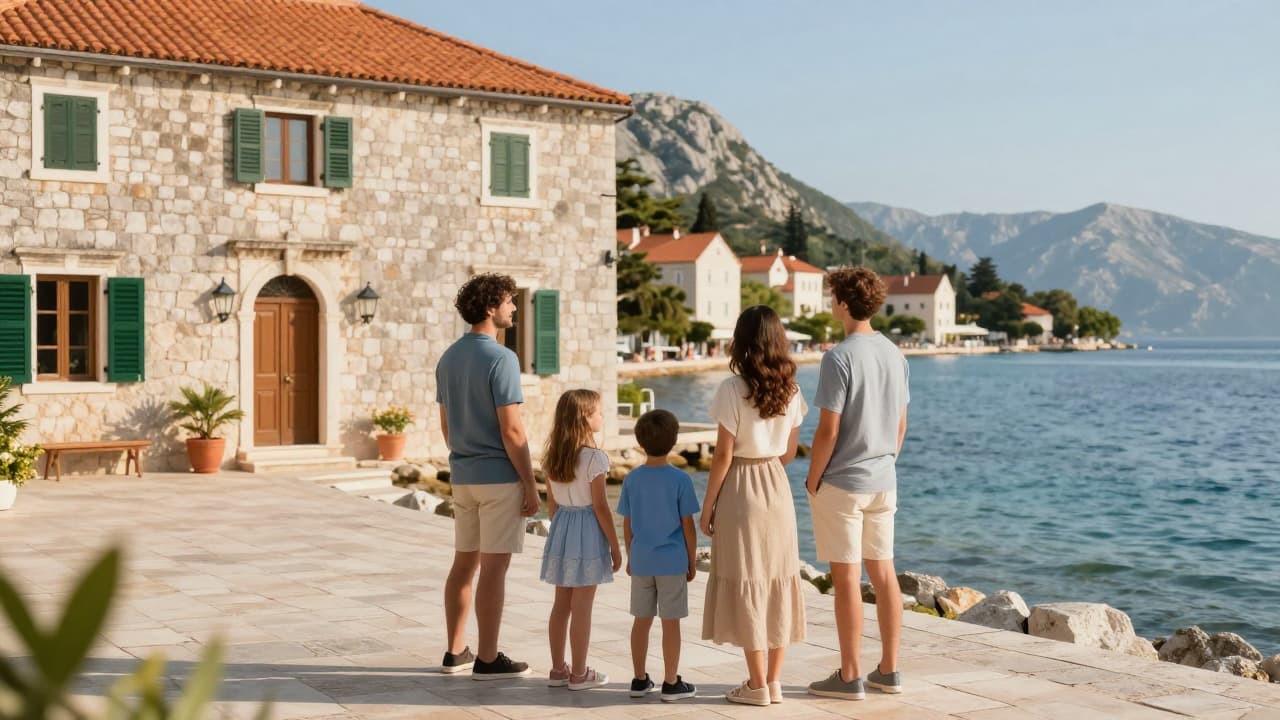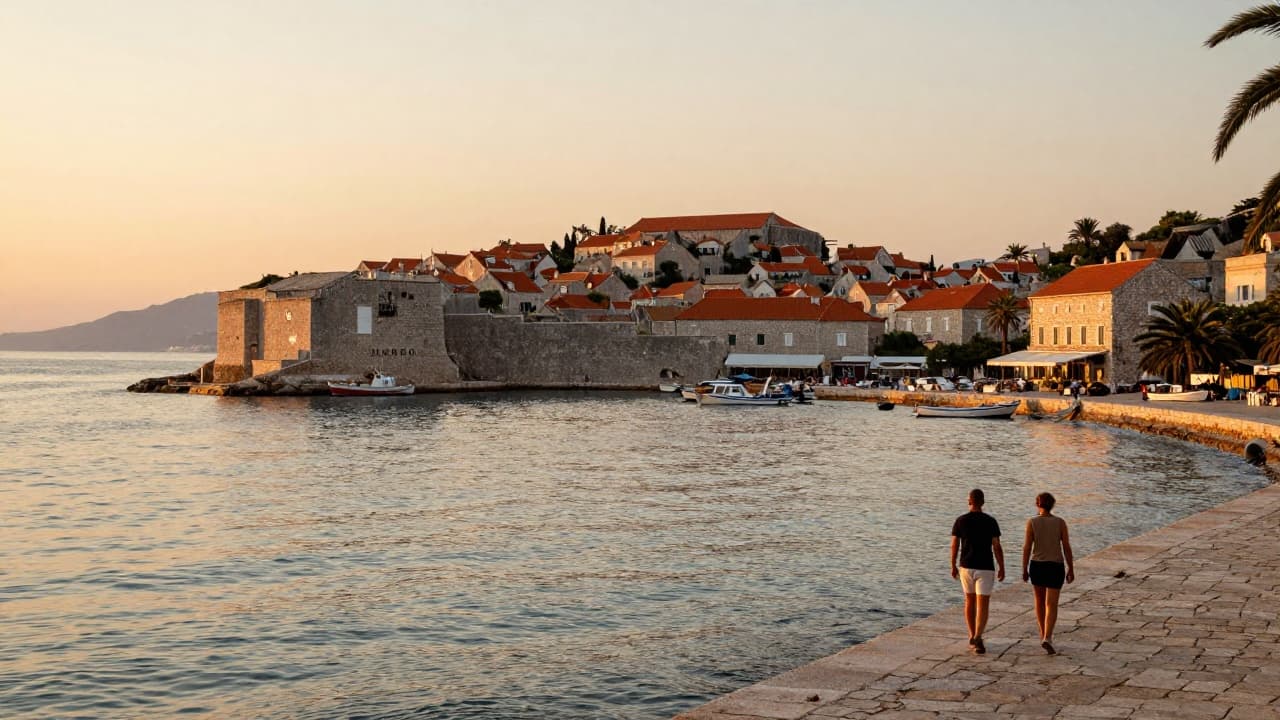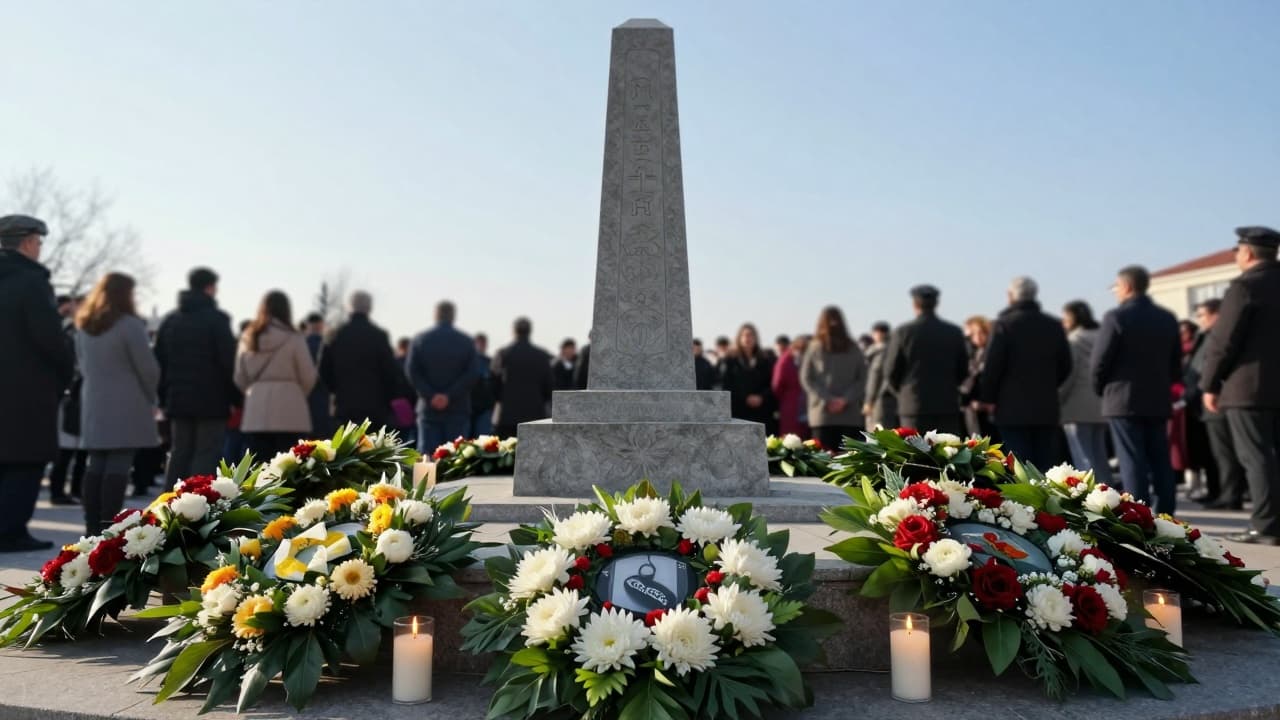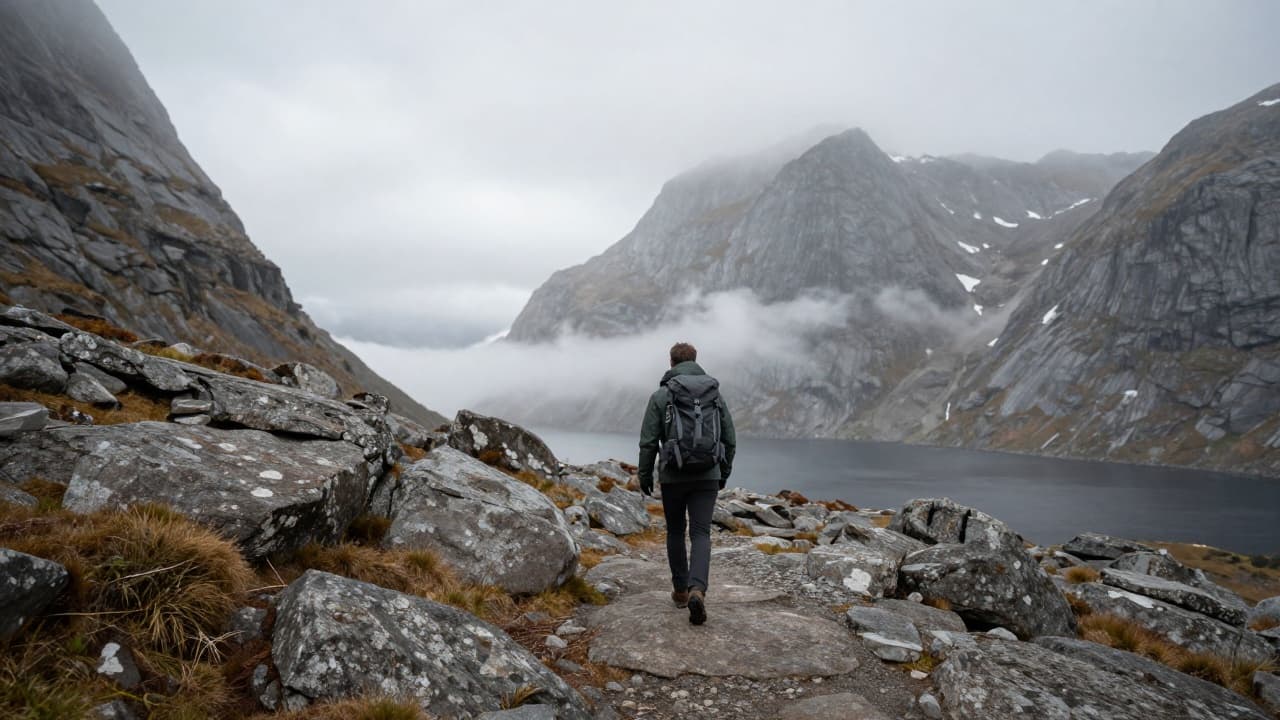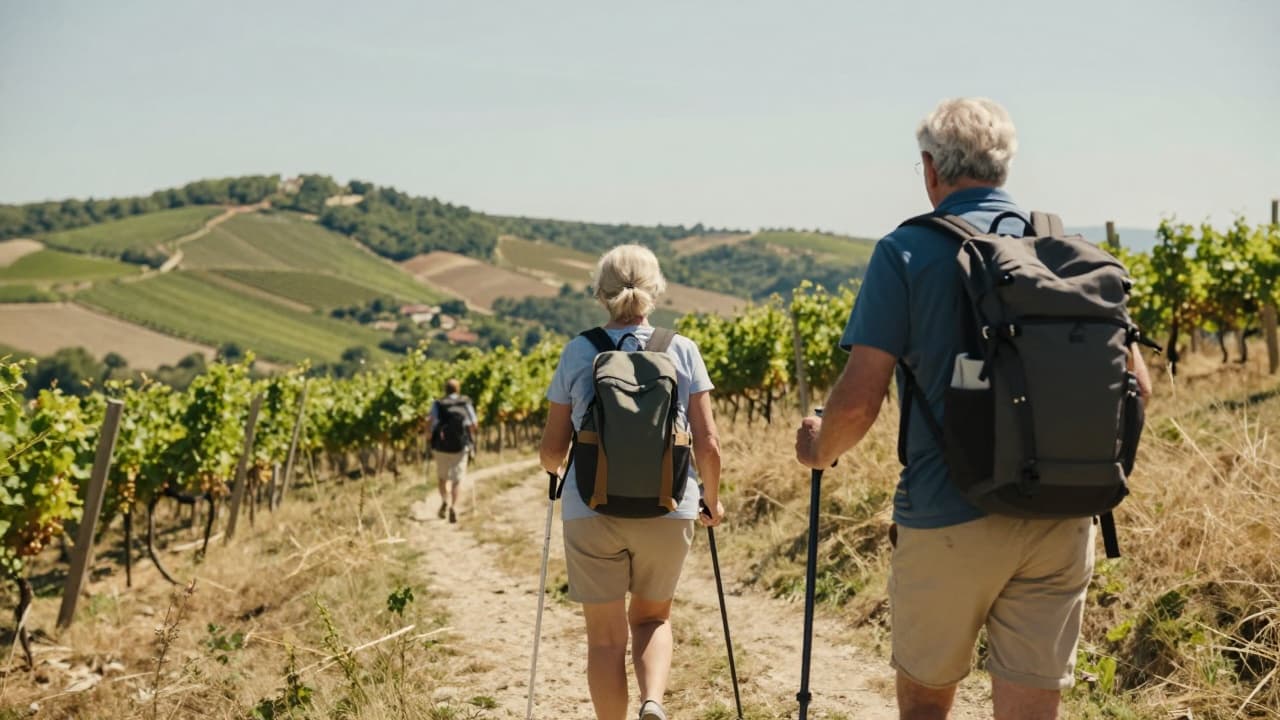
Šime and Jelena Čerina, who live in Canberra, spent the past few weeks walking the trails of the Croatian Long Distance Trail (CLDT), covering more than 1,200km of Croatia in 52 days. Their latest long-distance adventure prompted a meeting in Zadar, with the aim of meeting people and recording their stories for the project "Between Two Homes".
The CLDT is a national long-distance hiking route connecting Croatia's easternmost, northernmost, westernmost and southernmost points – Ilok, Sveti Martin na Muri, Savudrija and Prevlaka. The route traverses diverse terrains, from managed hiking and wild trails, through demanding Dalmatian karst, forest and field paths, to macadam and asphalt roads, passing through or near settlements. The couple walked through Slavonia, Baranja, Podravina, Međimurje, Hrvatsko zagorje, Medvednica, Žumberak, Gorski kotar, the hinterland of Rijeka and Istria, from Ilok in the far east to the Savudrija cape in the far west.
Jelena shared her experiences daily on social media so that their friends, acquaintances and other emigrants could at least partially partake in their Croatian adventure. The project stemmed from their regular trips to Croatia, and Jelena notes that they are not the only ones who return to their homeland every year. A large number of Croatian emigrants split their lives between the country where they were born and the one where they built their future. She adds that there is a first generation that left in the 1950s, 1960s and 1970s. "Many of them will never return, but they want to know, they want to see and they want to feel Croatia," Jelena says. She adds that many of them do not go to sleep in the evening until she writes to them to say how they are, whether they are safe, and whether they managed to finish that day. Their goal is not just to connect Croatia and Australia, but also America, South America and all other parts of the world where their people live.
Šime notes that they were young when they left and that they knew Croatia at the time mainly through their village and what they had seen as children. He had been to Zadar a few times, a little at school, and was in Zagreb for military service before he left. "We left as children and actually did not have the opportunity to get to know all of Croatia, so the project gave us the chance to get to know our own country, people and regions, to see how beautiful Croatia is," Šime says. He admits that now, in a way, he no longer wants to return to Australia. "People here are so good, the people, the customs," he says. They travel a lot around the world, but what they have here is nowhere else – that hospitality, customs, tastes, smells, no one else has that. That is what they miss.
Their story began a long time ago. It was the 1980s, a time when many Croats were leaving their homeland, some temporarily and some forever. Šime had thought about going to work on a ship, but his sister told him not to go on a ship but to try to get papers for Australia. He went to the embassy, submitted a visa application, got it and left. He thought he would stay in Sydney for a year or two, earn money for a café and a Fiat, buy them in Croatia and return. But he has not bought a café or a Fiat yet. Jelena came to Canberra for her sister's wedding – and stayed. Their paths crossed in Canberra, at a football match between Croatian teams from Canberra and Sydney. From that day on, they have walked through life together. They built a shared life far from their homeland, raised children and welcomed grandchildren, and they are united by a love for long-distance walking, nature, people and Croatia. In Canberra, where they live, there are 14,000 Croats.