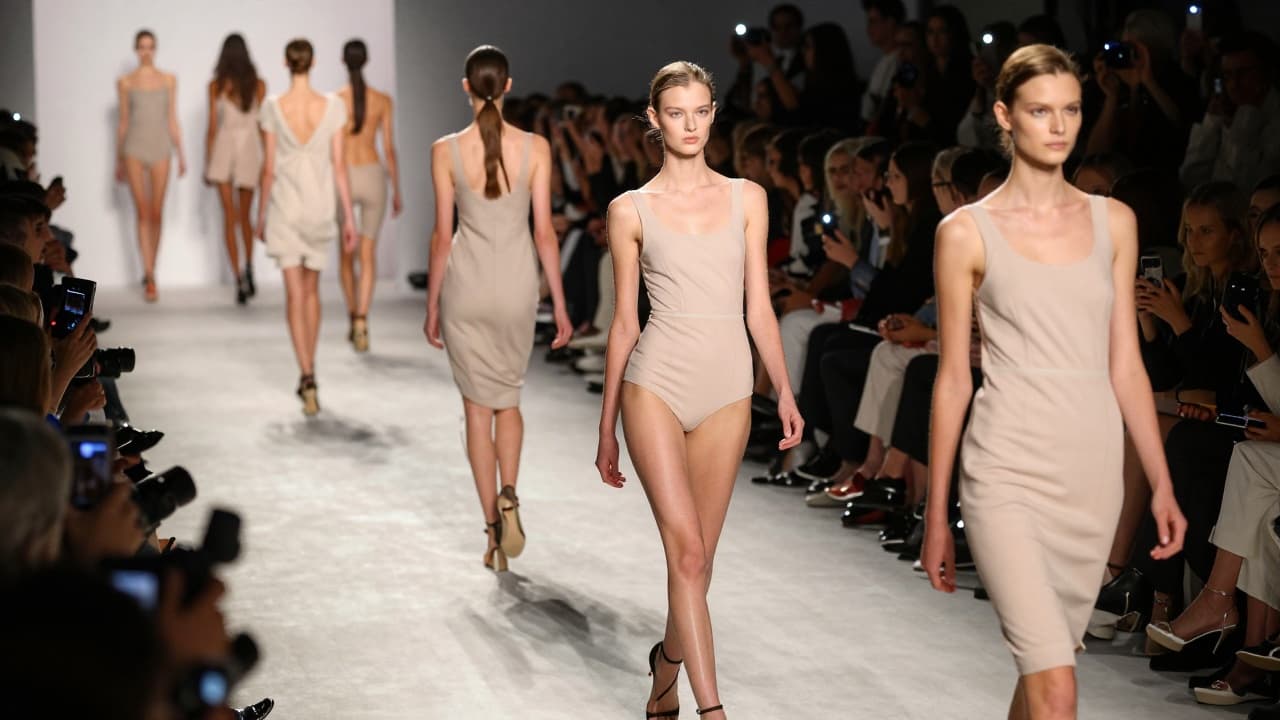
After years in which the fashion industry promoted the acceptance of diverse body shapes, extreme thinness is once again occupying a prominent place on runways and social media. Hannah Marriott writes extensively about this shift for the British Guardian.
According to the data she cites, 97.5 per cent of models at recent shows in four major fashion capitals wore a ready-to-wear size 4 or smaller under the US sizing system. An analysis by Vogue Business also shows that the share of outfits displayed on models in standard, mostly smaller ready-to-wear sizes increased from 95 per cent in 2023 and 2024 to 97 per cent in the following two years.
Attention was drawn to the sponsorship of pharmaceutical company Eli Lilly, maker of the weight-loss drugs Mounjaro and Zepbound, at the Vogue World Milano event. Organisations dealing with eating disorders criticised the association of such drugs with the fashion industry. The company stated that it wanted to shift the conversation about body weight from appearance to health and reduce the stigmatisation of people with obesity.
The body positivity movement reached its peak popularity in the late 2010s, promoting the acceptance of bodies regardless of their shape or size. Tigress Osborn, president of the US-based National Association to Advance Fat Acceptance, reminds that the movement has its roots in activism for the rights of people with higher body weight. She also believes that the fashion industry has largely turned the movement’s messages into marketing campaigns, without significant changes in business practices. Artist and designer Michaela Stark claims that certain brands have engaged models in larger ready-to-wear sizes, even though they did not actually produce clothing in those sizes.
Marriott notes that the proliferation of GLP-1 drugs, including Ozempic, has further changed attitudes towards weight loss. Some celebrities who previously promoted body acceptance have also lost weight with the help of such drugs. Osborn warns that their popularity could increase pressure on people with excess weight to slim down, even when they do not want to.
Amanda Raffoul, a lecturer at the University of Toronto, warns that algorithms can impose content about weight loss and appearance on users that they did not seek themselves. Research reported by the Guardian showed that TikTok can encourage a harmful diet culture and the mistaken belief that body weight is the most important measure of health. TikTok banned the hashtag #SkinnyTok in 2025, which was associated with promoting unhealthy eating habits.
According to Hannah Marriott’s analysis, one of the biggest changes has occurred in the language used to talk about the body. Instead of openly highlighting the desire for thinness, social media and advertisements increasingly speak of fitness, muscle definition, protein intake and a healthy lifestyle. Former body positivity activist Matthew Diaz now advocates the concept of body neutrality, an approach according to which physical appearance should not be the basis of personal worth.