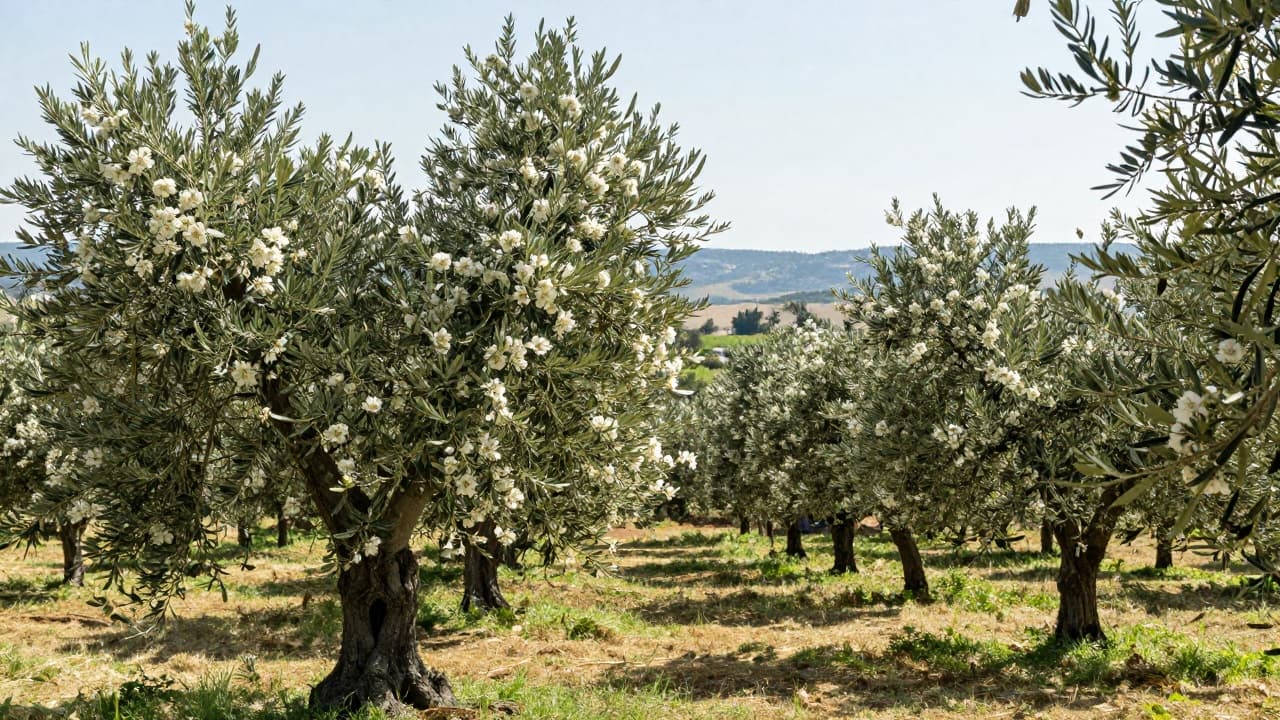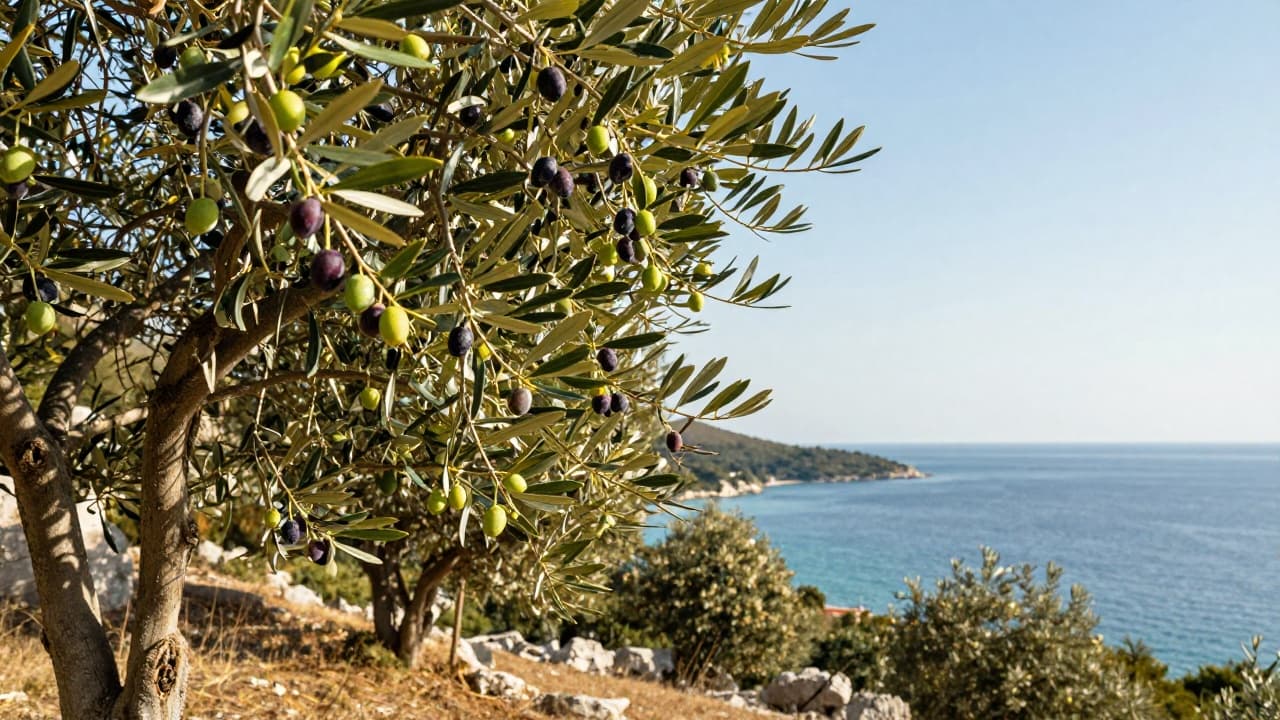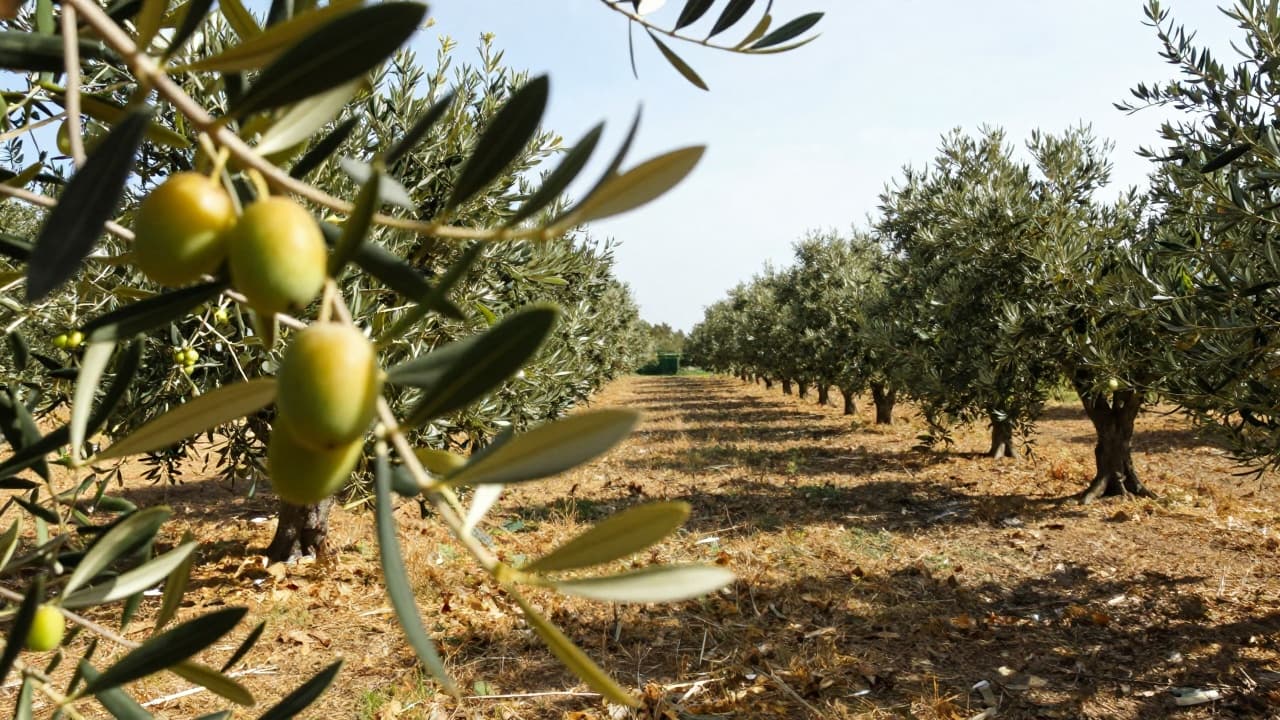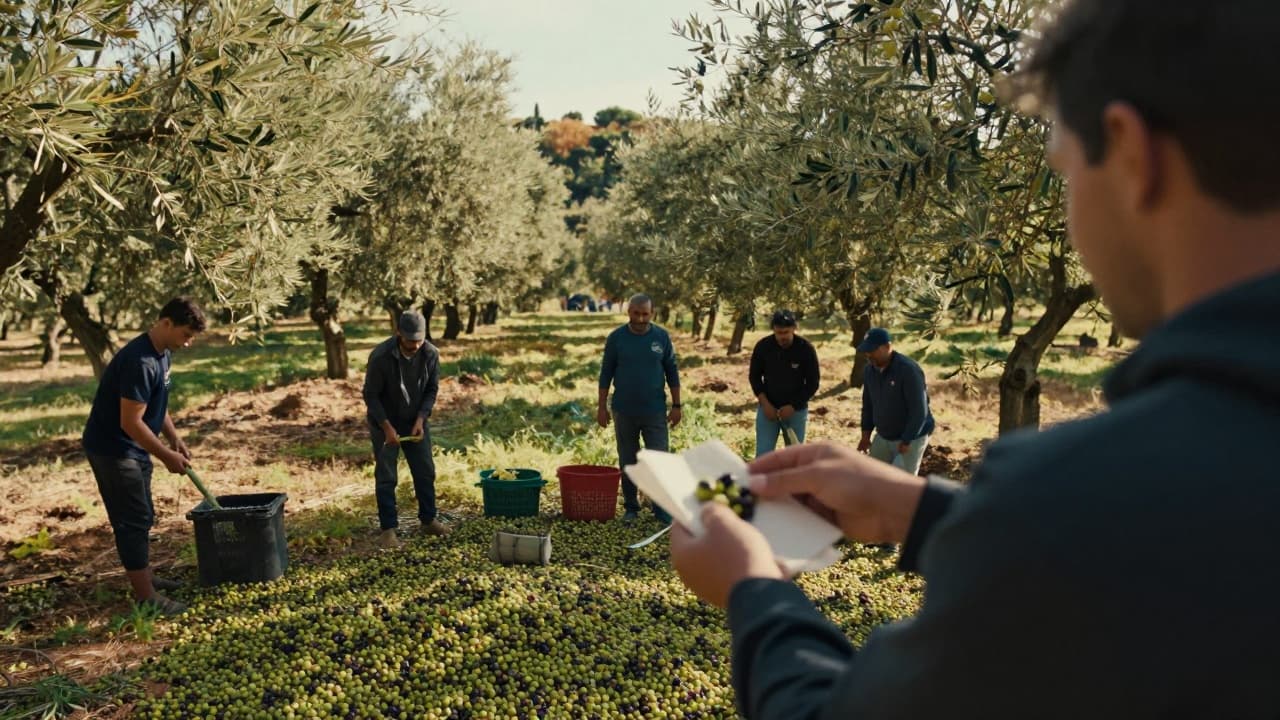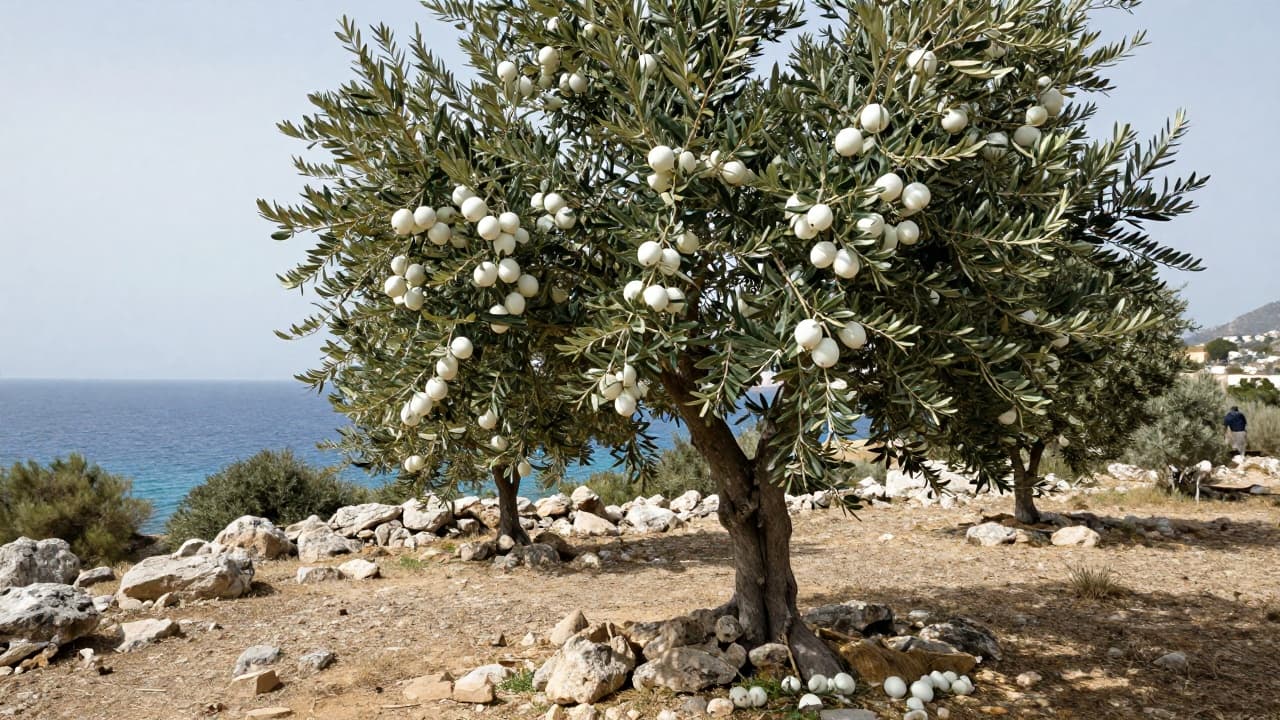
The white olive variety dates back to ancient Greece, and it has since spread and persisted throughout Calabria under the name "Leucolea", meaning white olive. This is noted by Franislav Godinović on a website dedicated to the island of Hvar.
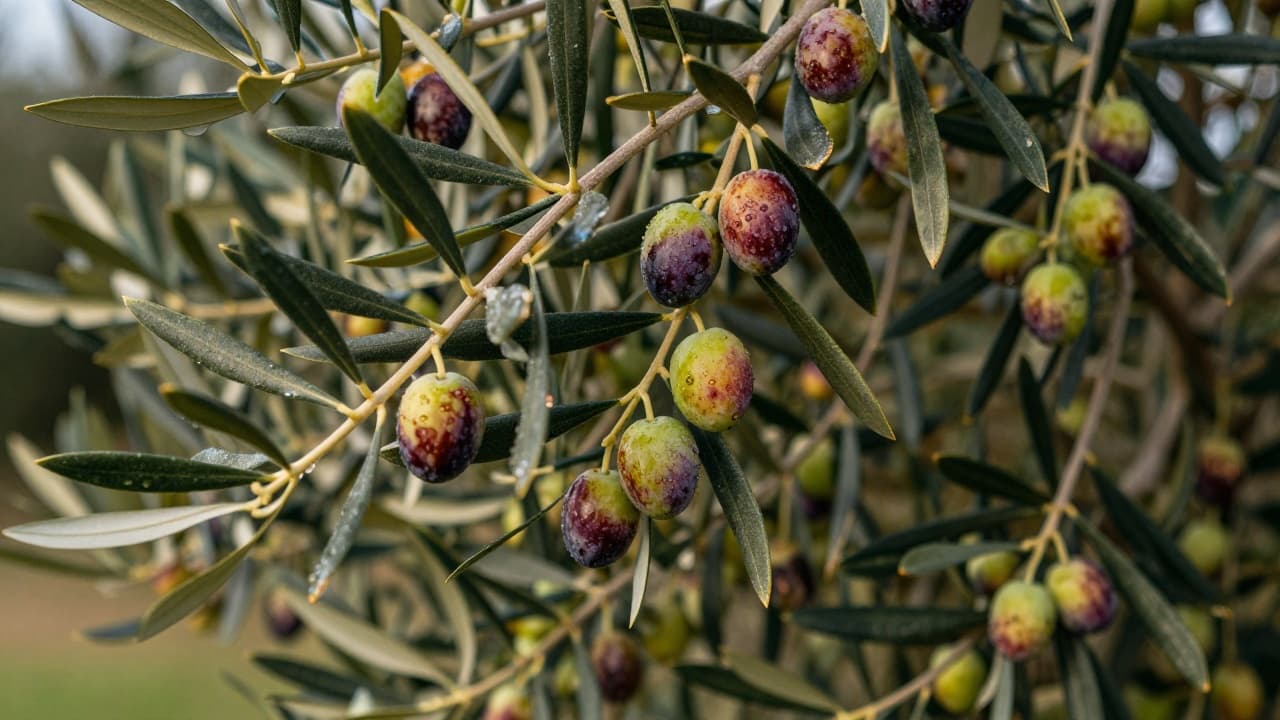
The peculiarity of this olive is that its fruits remain white until full maturity. Leucocarpa, or the white olive, is almost the only olive variety that retains its white colour in all stages of ripening. In other varieties, the activation of flavonoids and anthocyanins, in conjunction with the degradation of chlorophyll, causes darkening or a change in colour during ripening. This does not happen in this variety, so the fruit remains white in all stages of ripening.
Oil named "Olio del Crisma" is obtained from the fruits of the white olive. This oil was used in the Byzantine Empire for coronation ceremonies, appointments to high positions, baptisms, confirmations, the anointing of the sick, and the consecration of priests and bishops. In addition to religious and state rites, it was also used for lamps in public places because it produces very little smoke when burned.
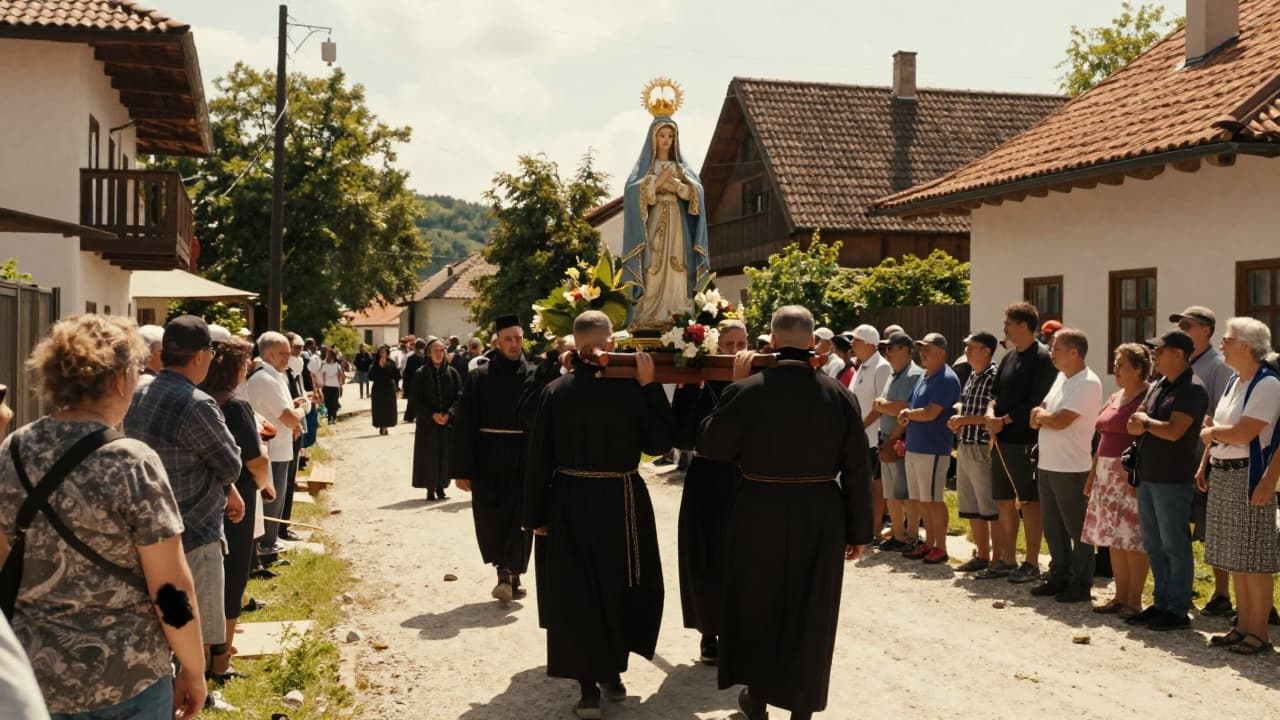
The tradition of cultivating this variety is maintained today by monks in southern Italy. It is also found in small quantities in Libya, in the city of Tarhuna, and in Palestine. The extra virgin oil obtained from processing this variety is edible and commercial, and in terms of fatty acid composition, aroma and taste, it is similar to other olive varieties. Its exclusivity lies mainly in the unusual appearance of the fruit.