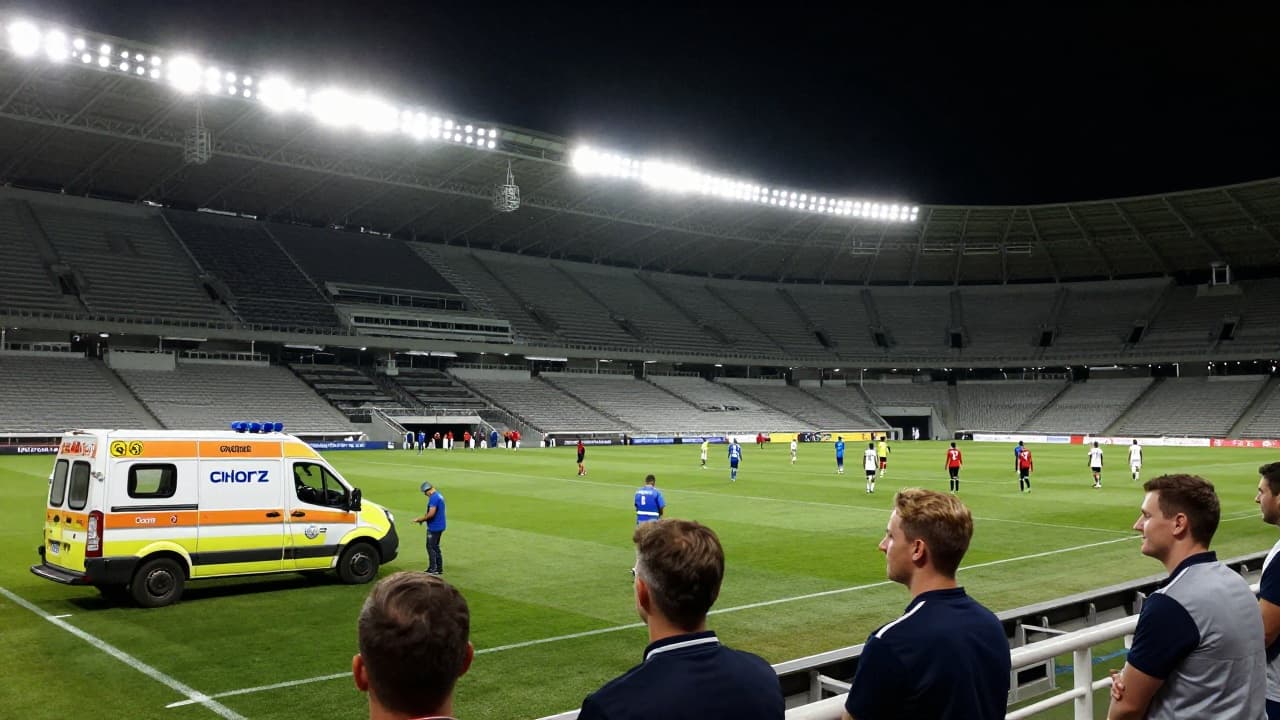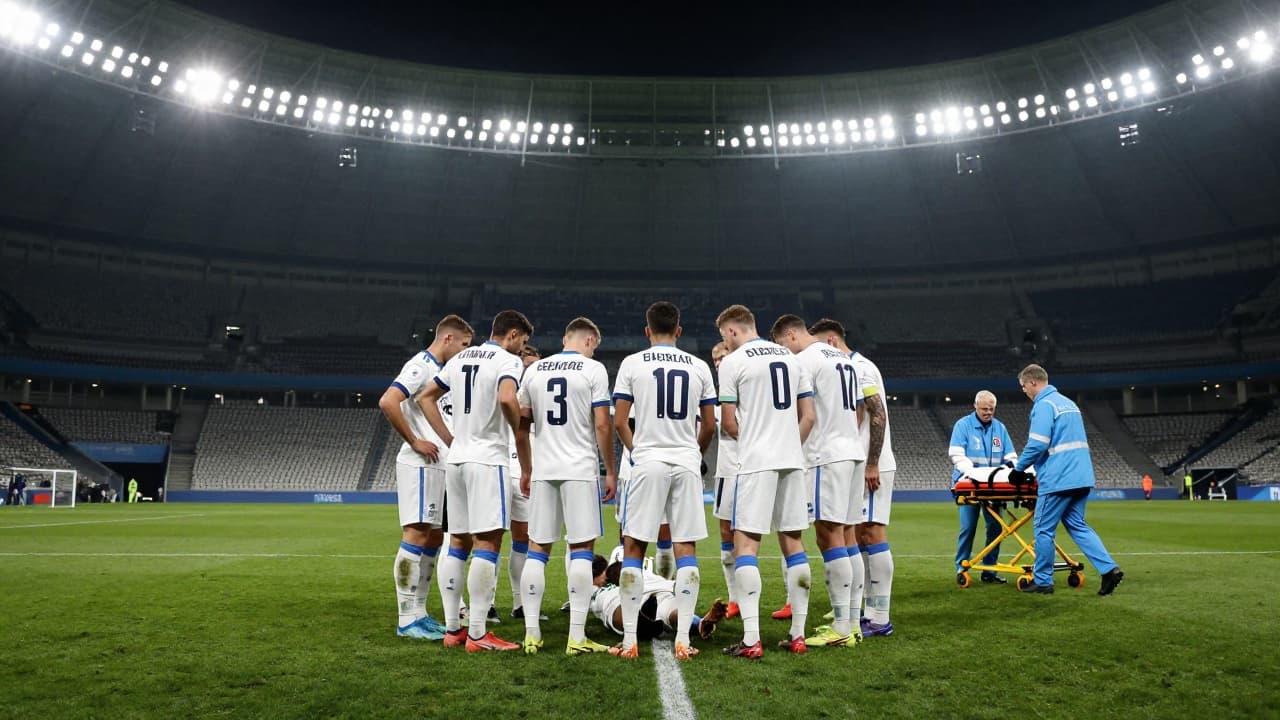
The Spanish football world is in shock following the death of 30-year-old Tenerife striker Jesús de Miguel, who died from the consequences of a heavy collision with the opposing goalkeeper during a match against Andorra. The news was officially confirmed by his club CD Tenerife, stating that De Miguel Alameda died on Tuesday, 3 November 2026, at 8:00 am.
The tragedy occurred on Monday, 2 November, towards the end of the match. De Miguel moved towards the ball, while visiting goalkeeper Jesús Owono rushed far beyond his penalty area and collided violently with him, striking him hard with his knee. The referee immediately sent Owono off and stopped the match. De Miguel suffered a cardiac arrest on the pitch and was taken to hospital, where he died the following morning.
Spanish authorities are investigating the circumstances of the accident and the possibility of criminal prosecution for negligence. If the state prosecution assesses that it was gross negligence, Owono could be criminally charged with involuntary manslaughter or causing grievous bodily harm with fatal consequences. Police and the disciplinary committee of the Royal Spanish Football Federation are analysing footage and official reports, and the final decision on the potential criminal liability of the Andorra goalkeeper will be made by the judicial authorities.
Part of the Spanish public is demanding the harshest possible punishment for Owono, while others are calling for reason and noting that the Andorra goalkeeper certainly did not intend to kill the Tenerife striker. The family of Jesús de Miguel expresses gratitude for all expressions of support and simultaneously asks for the greatest possible respect for their privacy in these difficult times.
The news of De Miguel's death has attracted significant attention from all relevant global media, who are treating it as a major tragedy. The death of the Spanish second-tier Tenerife footballer is only the latest in a series of similar accidents on football pitches. In May 2014, PSAP Sigli goalkeeper Agus Rahman kicked Akli Fairuz in the stomach while attempting to win the ball; Fairuz was initially able to leave the pitch, but his condition worsened due to internal injuries and he died six days later.
In 1931, Celtic goalkeeper John Thomson attempted to stop Rangers striker Sam English in the Old Firm derby, during which the opponent hit him in the head with his knee; he suffered a severe skull injury and died that same evening in hospital. Nineteen-year-old Spanish Colindres goalkeeper Raúl Ramírez Osorio died in 2025 two days after a heavy collision with an opposing footballer in a fifth-tier match; he came out for a centre kick, and Reville's striker threw himself at the ball and sent it into the net for 1:0, during which Ramírez received a blow to the head, lay motionless, lost consciousness and suffered a cardiac arrest on the pitch, and another during transport to hospital, where he died.
Marc-Vivien Foé collapsed without contact with an opponent during the 2003 Confederations Cup semi-final against Colombia; he died after unsuccessful resuscitation, and the autopsy determined hypertrophic cardiomyopathy. Miklós Fehér, Benfica striker, suffered a cardiac arrest before a million-strong television audience in a 2004 away game at Vitória Guimarães and died after resuscitation attempts. Antonio Puerta collapsed in 2007 during a Sevilla and Getafe match, managed to get up and leave the pitch, but collapsed again in the dressing room and died three days later. Juan Izquierdo collapsed in 2024 during a Copa Libertadores match against São Paulo, and died five days later from the consequences of a cardiac arrest associated with arrhythmia.
Hrvoje Ćustić died on 29 March 2008 at the Stanovi stadium in Zadar, in a first-league match against Cibalia. Zadar goalkeeper Danijel Subašić played a long ball forward, Ćustić went after it, and young Cibalia striker Tomislav Jurić was also involved in the battle for the ball near the stand. Jurić pushed Ćustić in the run, who lost his balance, went out of bounds and hit a concrete wall with his back and head. He lost consciousness, was urgently taken to Zadar hospital, where severe head injuries, including a skull fracture and brain contusion, were determined. He was operated on and put into an induced coma, and after four days his condition rapidly deteriorated.