
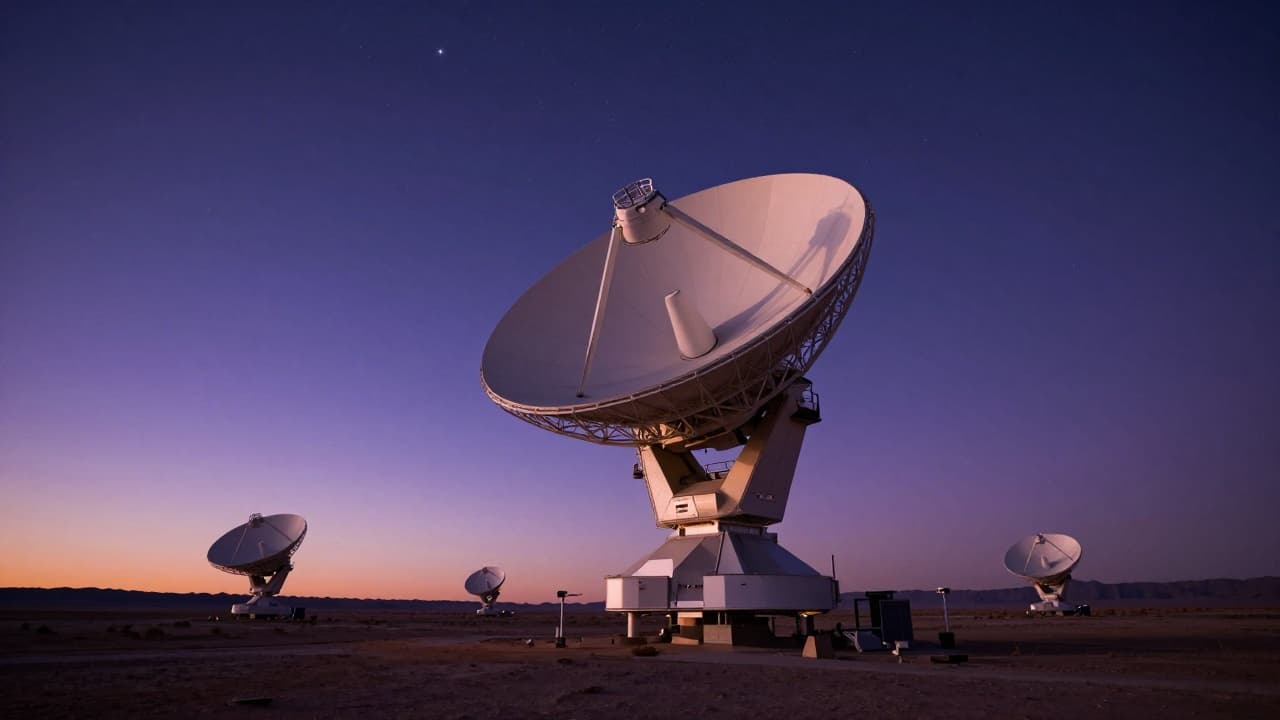
NASA has officially integrated a 30-metre antenna into its Deep Space Network. This operational upgrade is part of a wider project aimed at ensuring long-term stability and reliability of communications links with interplanetary spacecraft. The network currently supports more than 40 spacecraft, and the new infrastructure further enhances its capabilities.
The new antenna, identified as Deep Space Station 23 (DSS-23), is located in the Goldstone Deep Space Communications complex, near the town of Barstow. Its construction began in February 2020, with a key milestone being the installation of a 133-tonne metal frame, which took place in December 2024. This project represents the fifth addition in a series of modernisation works on the network.
A key feature of the new antennas is the use of multi-frequency beam waveguide systems. Unlike traditional solutions, this technology directs signals to a stable, air-conditioned underground room. This avoids placing heavy electronic equipment on the moving parts of the antenna, thereby ensuring greater stability and precision in communications.
The construction of the new antennas is part of a comprehensive network expansion plan, which began in 2009. The plan is to equip the network with a total of six new multi-frequency 30-metre antennas. The project is scheduled to be completed when all six antennas have reached operational status, which is currently planned for 2029.
The importance of these infrastructure investments is evident in the fact that more than 100 missions, including those of NASA and external organisations, rely on the Deep Space Network. The network is essential for monitoring the Earth and the Moon, and generally for all missions exploring the solar system, including those with astronauts on the International Space Station. The management of the entire network is handled by NASA’s Office of Science and Technology, ensuring continuity and reliability for the growing number of spacecraft.