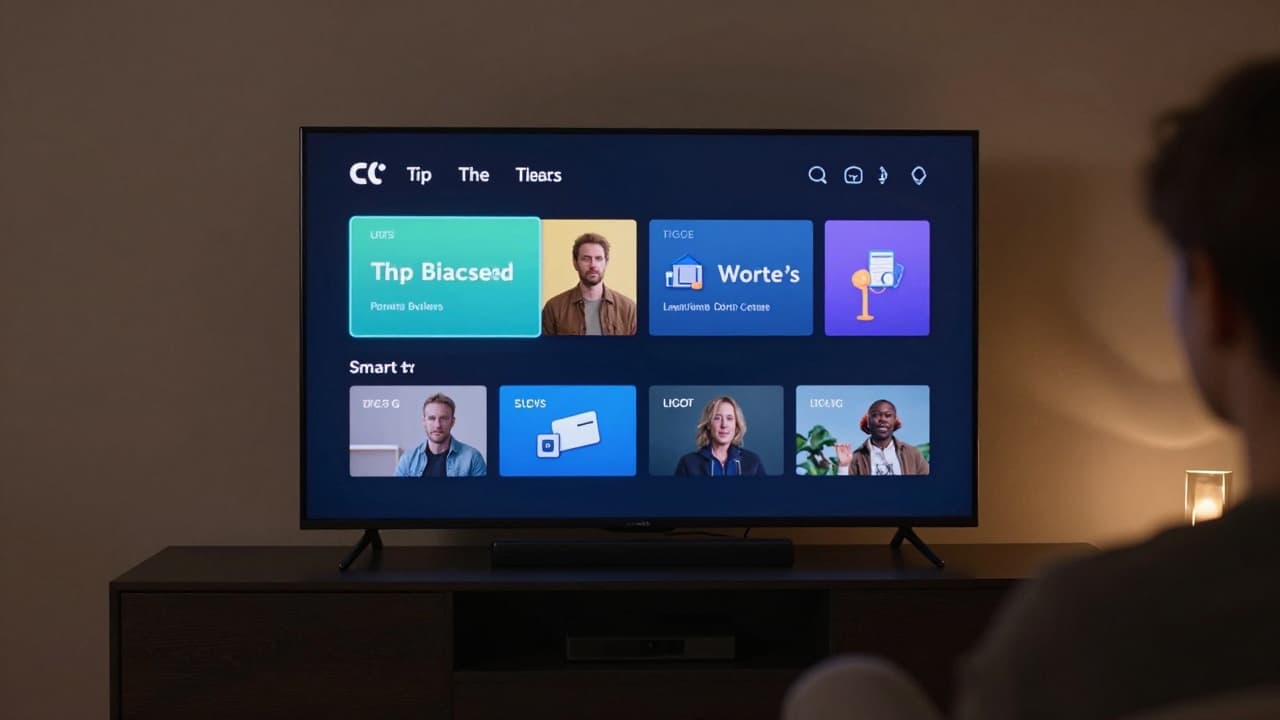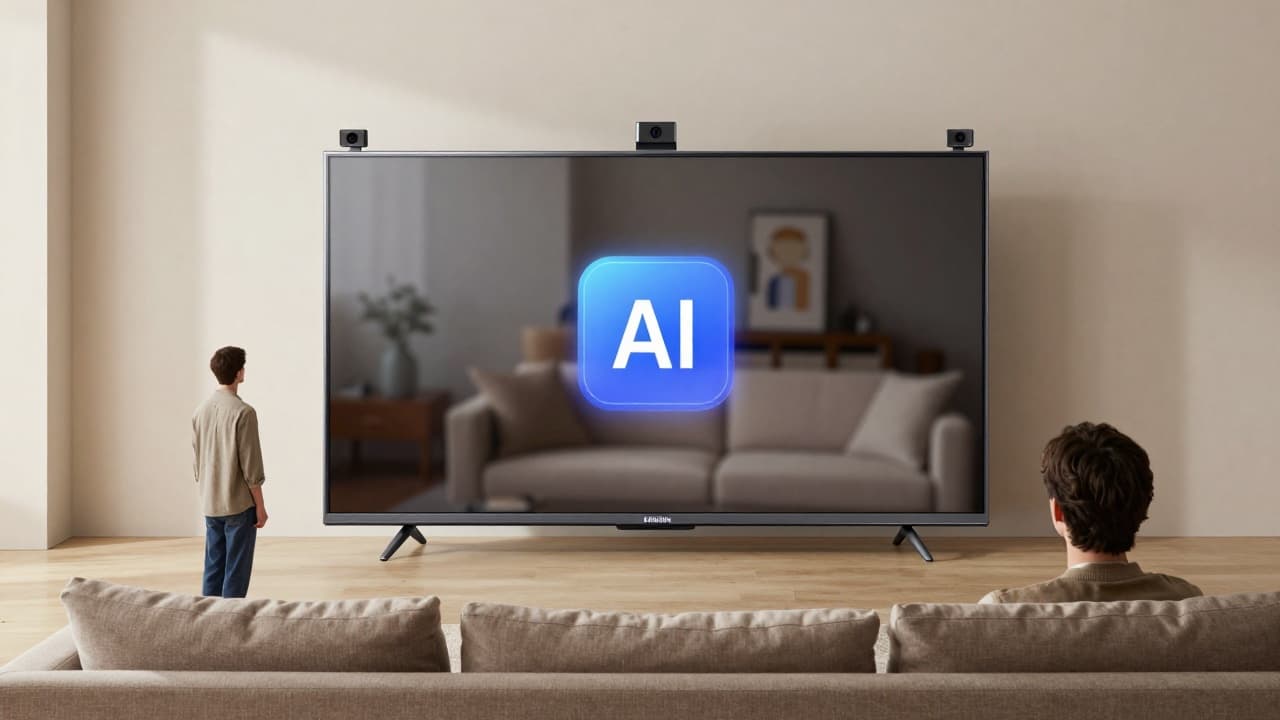
Samsung Electronics at the CES 2027 trade fair in Las Vegas, running from 6 to 9 January, plans to unveil a television that automatically stops playing content when a viewer gets up from the sofa and resumes when they return. The device currently carries the working name TV-I, and artificial intelligence is expected to track viewers' movements and interests and adapt the viewing experience accordingly.
Nowhere is it stated how the television knows the user has stood up — via a camera, radar or something else. Denmark's FlatpanelsHD immediately wondered whether the letter "I" in the name stands for "eye", that is, the eye. Samsung has a long history of such solutions: as far back as 2012, the ES8000 series had a built-in camera and microphone with facial recognition, and the Galaxy S III smartphone of the same year featured Smart Stay, which used the front camera to detect the user's eyes so the screen would not turn off. Later Galaxy models also got Smart Pause, which stops a video when you look away from the screen.
It was precisely the camera and microphone that brought Samsung unpleasant consequences in the past. In February 2015, attention was drawn to a sentence in the voice-control privacy policy warning users that if their spoken commands contained personal or sensitive data, that data too would be sent to a third party. Samsung then clarified in an official statement that televisions do not eavesdrop on conversations in the living room and that only voice commands are sent; it later emerged that the third party was Nuance.
The issue of data collection remains relevant today. In December 2025, Texas Attorney General Ken Paxton sued Samsung, LG, Sony, Hisense and TCL over Automated Content Recognition (ACR) technology, which identifies content on screen and is used for targeted advertising. According to Paxton's office, televisions can capture an image of the screen every 500 milliseconds, and Texas obtained temporary court injunctions against part of such data collection by Samsung and Hisense. The US Federal Trade Commission (FTC) and the New Jersey Attorney General fined Vizio $2.2 million in 2017 for collecting viewing data from 11 million televisions without users' knowledge or consent. In October, a security researcher who gained root access to his 2025 Samsung television warned of extensive data collection, and in November, researchers from Northeastern University in Boston published findings that Samsung, Vizio and Roku televisions continued to transmit data collected via ACR even after tracking was switched off.
According to the JoongAng portal, Samsung wants the television business to earn from services rather than from device sales alone. Overseeing this is Lee Won-jin, former head of Google in Korea and an expert in marketing and services, who was appointed to lead the Visual Display division in May. Lee previously built Samsung TV Plus, a free ad-supported streaming service with more than 100 million monthly active users. In the US, Samsung works with Amazon, so a product advertised on TV Plus can be added to an Amazon shopping basket with a single button press on the remote. The Click to Search function, introduced on 2025 models, answers questions such as "where was this scene filmed" and, according to JoongAng, can also recognise clothing worn by an actor or a restaurant visible on screen.
For TV-I there are as yet no answers to important questions: which sensor it uses, whether data is processed only on the device or sent to the cloud, whether the function can be fully switched off, and whether presence data will end up in the same advertising profile as ACR data. In Europe, such a system would also have to pass through GDPR, and it is not excluded that European versions will receive a more modest set of features than the US versions, as purchasing via Amazon is currently reserved for the US.
Samsung is also preparing a rebranding of its entire television lineup into the AI TV Basic, Plus and Ultra categories at CES, and is considering presenting its first humanoid robot. The market context for the announcement is also relevant: TrendForce, in its latest forecast of 16 November, expects global television shipments to fall by 1.4 per cent in 2026, to 193.48 million units, citing a sharp rise in memory prices as the main pressure on manufacturers' margins.