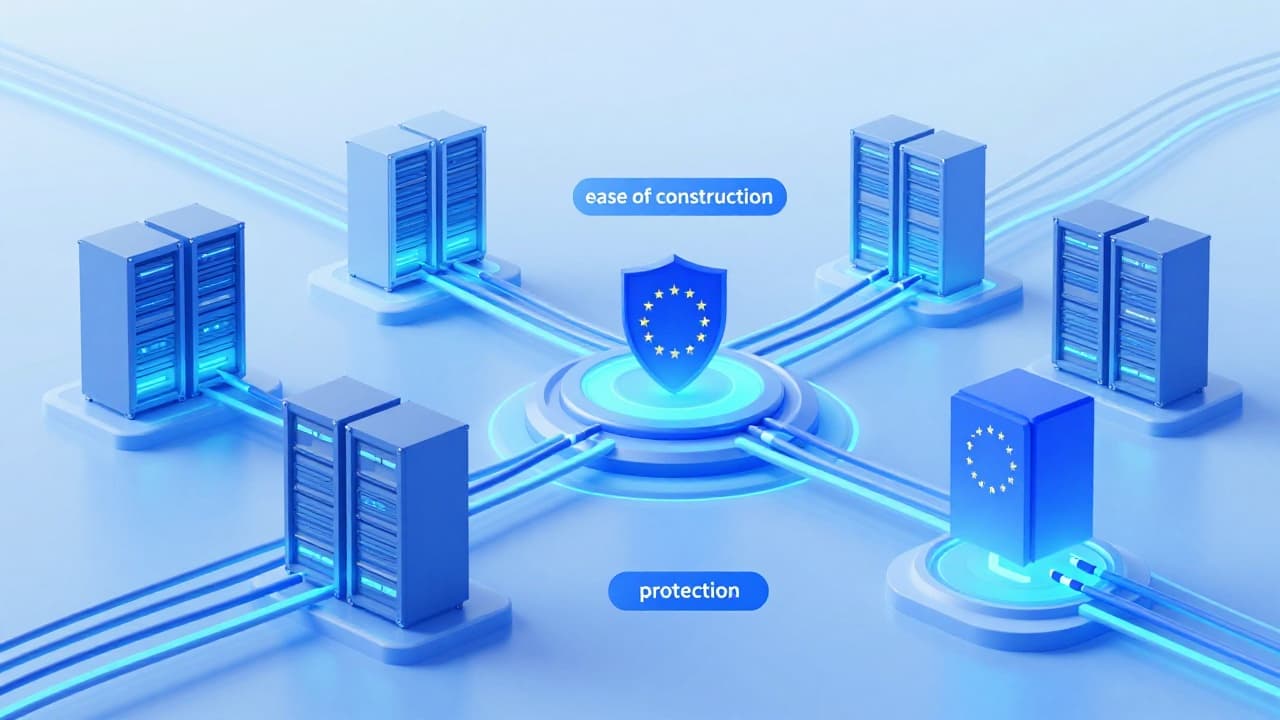
The European Commission has proposed the establishment of the European Critical Communication System (EUCCS), which would link national emergency service systems within a common communication framework. The aim is to enable secure cross-border exchange of voice, data, images, video, messages, and geolocation in real time.
The need for such a system arises from the fragmentation of national systems. When emergency services cross borders, communication can be hindered by different technologies and networks, which is particularly problematic during large-scale wildfires, floods, storms, and other cross-border crises. EUCCS is intended to connect 27 EU member states and four countries associated with the Schengen area.
The system envisages a gradual transition from traditional narrowband radio systems to broadband critical communications based on 4G and 5G. This would utilise existing commercial mobile networks, with priority and pre-emption of traffic for emergency services when networks are congested. A satellite connection is provided as a backup when terrestrial networks are unavailable.
EUCCS would not be a new European mobile network, but a system linking national infrastructures. This opens up a new market for operators, but also brings requirements for security, resilience, quality of service, and interoperability.
The Commission estimates the cost of establishing EUCCS at €3.571 billion. The modernisation of national systems and their transition to broadband critical communications over seven years is estimated at an additional €12.667 billion, although this latter figure is not a cost incurred by EUCCS itself.
EUCCS is currently a proposal that must be adopted by the European Parliament and the Council of the EU. The Commission foresees a gradual linking of states from 2030, with the project building on long-term research and testing funded by European programmes.
The key challenge is to connect the various national systems without creating a single European mobile network. Equally important is ensuring that emergency service communications remain available precisely when commercial networks are overloaded or unavailable.