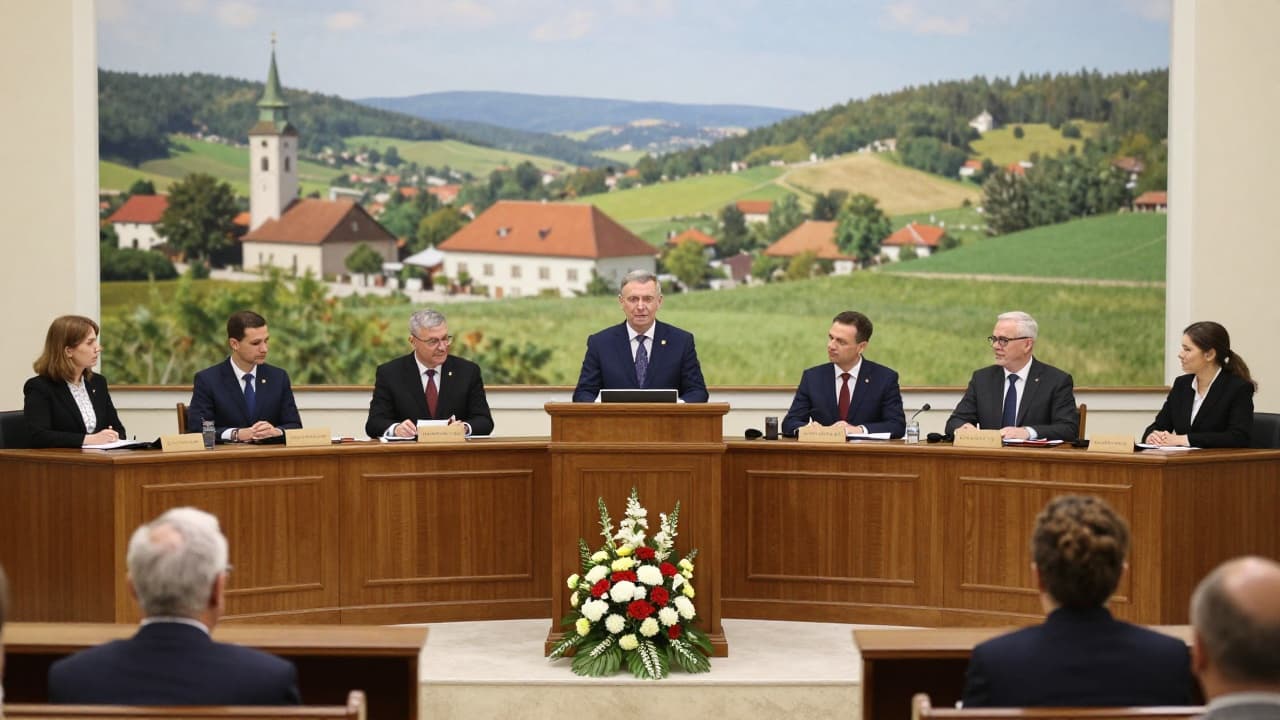
At the City Administration in Rijeka on Wednesday, 14 October 2026, a workshop was held for the European HORUS research project. The workshop was conducted as part of the 'Rijeka – Healthy City' project, focusing on the formulation of recommendations for public policy.
The workshop was jointly organised by staff from the Department of Social Medicine and Epidemiology at the University of Rijeka and the City of Rijeka. It brought together representatives of the city administration, citizens, experts, and other stakeholders. The aim was to present the findings of the project to date for Rijeka and, through discussion, to identify priorities and shape recommendations for future public health and urban policies.
The HORUS project examines the link between urban environment characteristics, residents' lifestyles, and the risk of developing chronic non-communicable diseases, particularly cardiovascular diseases and type 2 diabetes. Special attention is paid to vulnerable groups and the potential for using existing city resources to promote healthier lifestyles and reduce health inequalities. In addition to Rijeka, the project is being implemented in Valencia, Spain, and Rotterdam, the Netherlands.
Participants were presented with the results of the analysis of urban features in Rijeka's districts and the 'Rijeka City Health Barometer' survey. The experiences and views of residents regarding the opportunities and barriers to a healthy life in their neighbourhoods were also presented. The implementation of community-based activities, aimed at promoting physical activity, healthy eating, mental well-being, and health literacy, was also showcased. Special emphasis was placed on the residents of four Rijeka districts: Srdoč, Drenove, Kantrida, and Škurinje.
During the discussion, the need for regular maintenance and cleanliness of public spaces was highlighted, along with improved access to and maintenance of green areas, and the provision of places for rest and socialising. Among the priorities was the removal of barriers that hinder the movement and use of public facilities by people with disabilities. Participants noted that improving health does not necessarily require the construction of new infrastructure.
One of the conclusions concerned the more equitable distribution of resources and opportunities for a healthy life among the districts, taking into account the different needs of their residents. Special attention was given to the inclusion of citizens in health preservation and improvement activities. The discussion also covered how to reach residents who rarely participate in organised activities, motivating them to change their lifestyle, and ensuring the long-term sustainability of the programme. The question of the division of responsibility between the individual, the family, the local community, the healthcare system, and the city administration was also raised.
The recommendations from the workshop will be further reviewed, evaluated, and confirmed in collaboration with relevant stakeholders. They will be integrated with recommendations developed in Valencia and Rotterdam, contributing to the formulation of joint recommendations for the HORUS project for public policy and urban planning. The project's recommendations will be presented to the European Commission as a professional basis for the development of healthier and more inclusive urban environments across Europe. The project is funded by the European Union under the Horizon Europe programme, according to the grant agreement number 101136516.