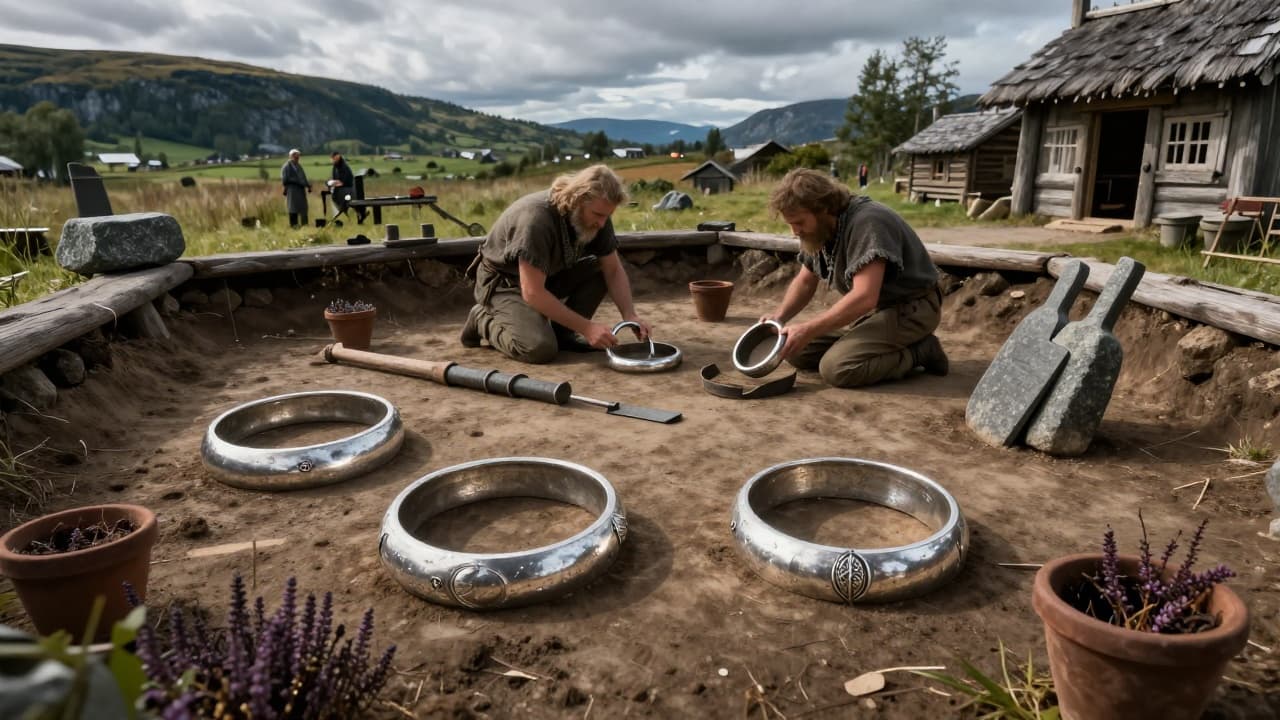
Archaeologists in southern Norway have uncovered a Viking treasure more than 1,000 years old. It consists of four large silver arm rings found at a depth of just 20 centimetres, during investigations of land where a farmer had planned to build a tractor track.
"This is undoubtedly the most significant event in my career," said Volker Demuth of the Archaeological Museum of the University of Stavanger. Research has shown that the area once hosted a large and powerful Viking estate with several buildings for people and animals. In addition to the arm rings, remains of heather vessels, rivets, knife blades and whetstones were found.
Archaeologists also discovered a smaller house, which they believe served as a slave dwelling. The silver treasure was buried directly beneath its floor. Archaeologist Ola Tengesdal Lygre initially thought he had found ordinary copper wires, but only upon closer inspection did he realise it was silver. The arm rings were found exactly where the Vikings had left them, which is extremely rare.
The estate and the arm rings likely date from the 10th century, a period marked by great unrest. The estate was strategically located to oversee the entrance to a fjord, and research has shown that it burned down at some point. "If the estate's inhabitants had to flee an attack, it is logical that they hid their valuables before retreating to the mountains," Demuth explained.
As there were no silver mines in Norway at the time, the metal must have arrived from abroad, through trade, gifts or plundering raids. The arm rings found resemble silver necklaces discovered in the same region in 1769, and archaeologists do not rule out the possibility of a connection between the finds. Investigation of the estate continues, and the silver treasure will be exhibited at the Archaeological Museum of the University of Stavanger as soon as possible.