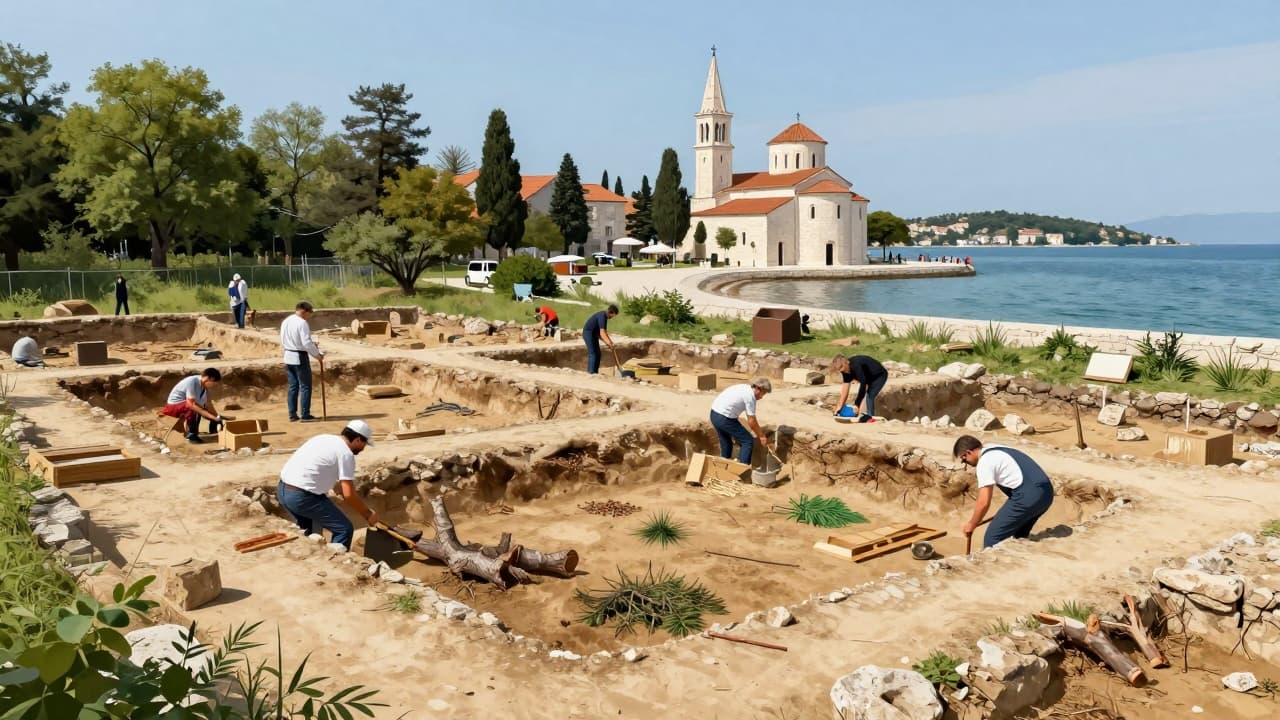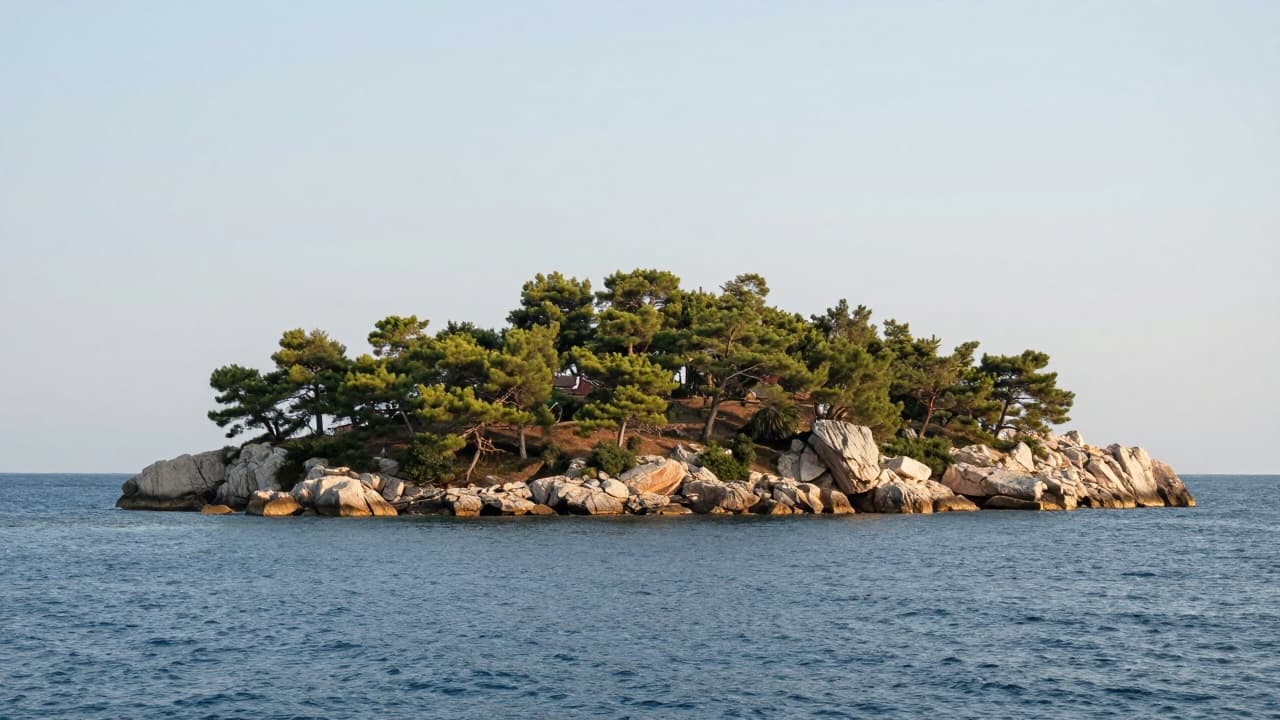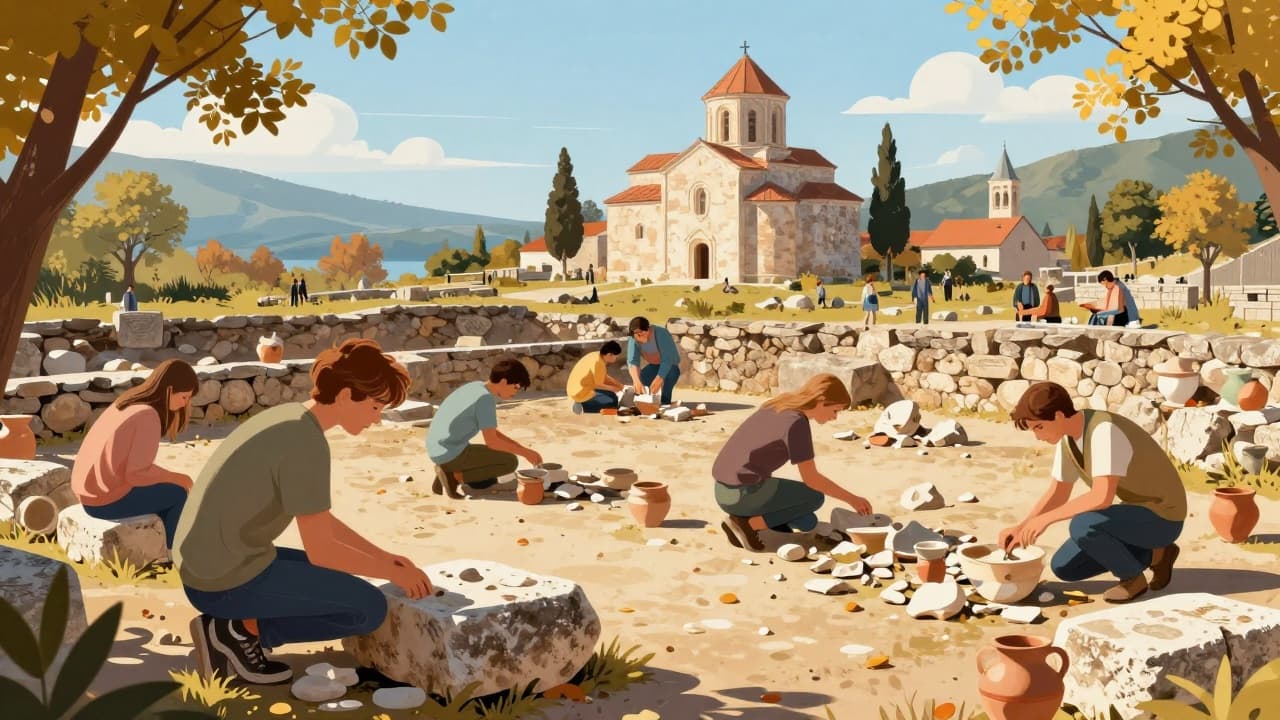
Sunny autumn weather on the island of Vir allowed students and professors from the Department of Archaeology at the University of Zadar to complete previously started work through careful cleaning of three sondages. The sondages are located at the archaeological site of the Church of St Martin in the island settlement of Smratina, where the eighth archaeological campaign is being conducted.
Research began in 2013 thanks to Vir archaeologist Mate Radović, who initiated the first systematic archaeological investigations on the island. By 2018, seven campaigns had been carried out with the participation of the Zadar university department of archaeology, the Zadar Archaeological Museum, the Municipality of Vir and the Museum of Nin Antiquities. During these campaigns, the remains of two churches in one were discovered. The older church most likely belongs to the late antique or early Christian period of the first half of the 6th century, while the younger one dates to the Romanesque period of the 12th or 13th century.
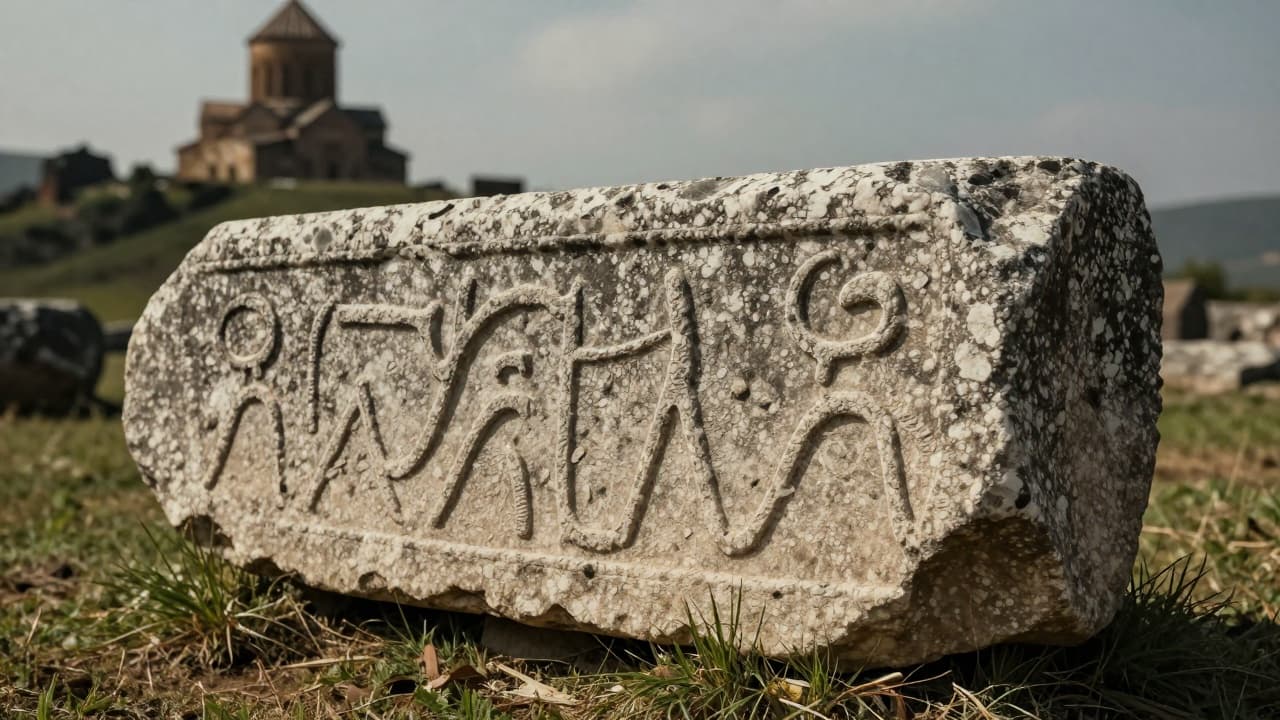
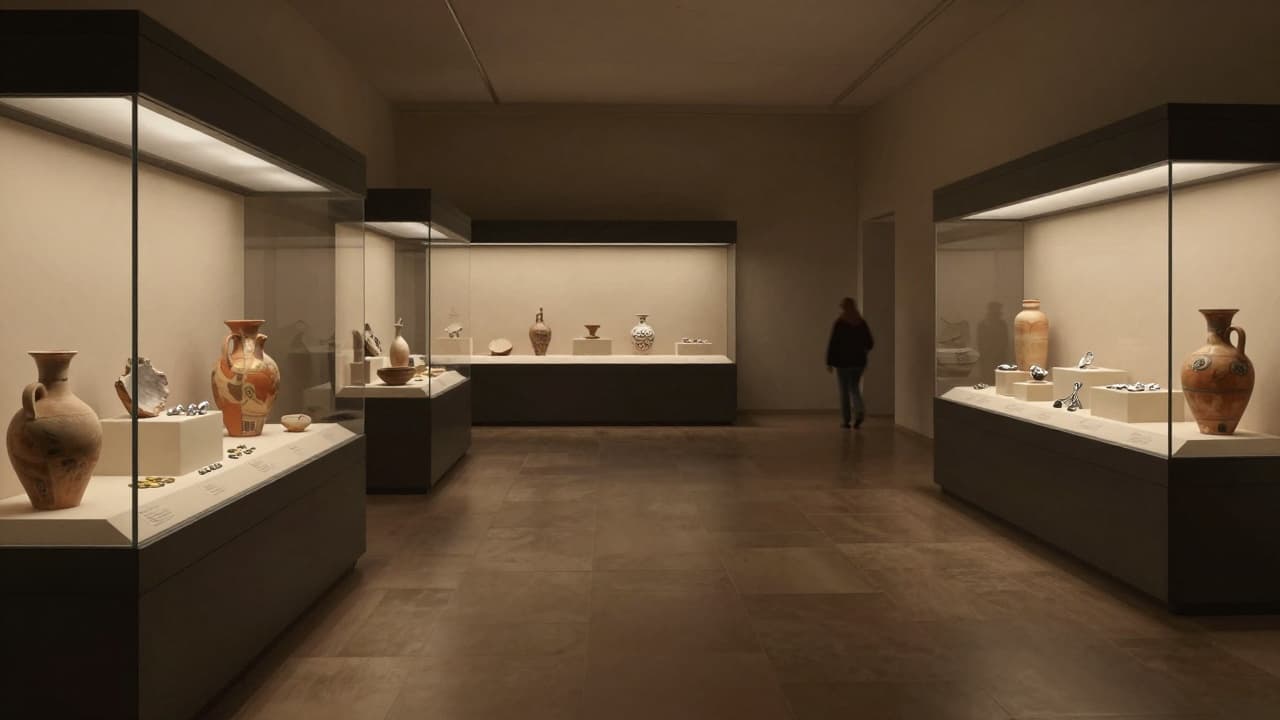
The existence of 17 graves was discovered – seven are attributed to the Middle Ages and the younger church, while 10 belong to the early Christian era. Numerous movable finds were discovered, among which stand out a gold coin of Emperor Justinian I and a silver denar of King Coloman. A particularly interesting find is the enigmatic signature of a certain mason, Marcilianus, on a pilaster of the sanctuary fence of the older church.
Last year, thanks to funding from the Municipality of Vir, they returned to the site to carry out georadar and airborne radar surveys using LiDAR technology. Based on the results of these non-destructive investigations, they proceeded to the current sondage research. The head of the research is Tomislav Fabijanić from the Department of Archaeology at the University of Zadar. With colleague Josipa Baraka Perica and nine students, Fabijanić is leading investigations at sondages where there are indications of possible graves.
Searching a wider area assumed the existence of a prehistoric ancient settlement, namely an economic-agricultural villa rustica. A multitude of ceramic fragments were found, as well as one find from the time of the Roman emperor Galba (1st century). On one sondage, only the bedrock is visible. Professor Brunislav Marijanović always said that in archaeology there is no negative result. We have shown that in the northern part next to the church, we should no longer expect to find graves.
The Church of St Martin is not mentioned in historical sources. The apostolic visitors who catalogued religious objects and ruins of the Diocese of Nin in the 16th and 17th centuries did not record it. It has survived, it seems, only in the name of the settlement Smratina, which most likely derives from St Martin, a Catholic saint particularly popular in the 6th century. The inhabitants of Vir and local tradition associate the name with death, because the people of Vir came across graves while tilling the land.
The find of one church within another is interesting in the context of archaeology of the eastern Adriatic. The older church is a single-nave building with a polygonal apse, semicircular on the inside like the sacristy of the Zadar Cathedral. The younger church was built within the outline of the older church, probably by partially dismantling the late antique structure. It is most similar to the Romanesque Church of St Lawrence in Vrsi, while the older one corresponds to the remains of the early Christian church in Vlašić. Given the architecture, the younger church most likely belongs to the 12th or 13th century, but precise dating is very difficult to establish.
On one of the stone fragments of the sanctuary fence of the early Christian church, the inscription “Marcilianus marmorarius” was found, next to a cross whose arms are of equal length. This is an unknown record of a master who worked on the decoration of the early Christian church. This is the only case in that time where there is a signed mason. We have no knowledge that such a signature exists elsewhere, but it would be very difficult to say that it is the only one at all. The question is also whether the mason signed it himself or, perhaps, someone else. The method of stone processing shows that two hands worked on the fragment, and there are no comparable finds so far.
Among other discoveries, a medieval grave made of stone parts of the sanctuary fence of the older church stands out, as well as a multitude of ceramics and glass. The question has also been raised whether there was a Roman settlement at Smratina before the church. Unexpected finds from the 1st century were discovered. A recorded Roman road that led via Virić precisely towards Smratina indicates the possible existence of a settlement. On the plot where the churches are located, we do not have older or Roman architecture, but we have unexpected finds from the 1st century. Mate Radović always thought that there was a Roman settlement in the wider area of Smratina. It is possible that a Roman villa rustica existed somewhere here. Churches were often built near such economic-agricultural structures, and the ceramics found in the surrounding forest also point to the possible existence of a settlement. However, there is still no direct evidence of earlier buildings.
Five years of research on the site have also brought finds of several unusual graves, one of which is particularly gruesome. In the grave, the remains of two men were discovered whose heads were precisely severed and then placed next to their bodies. At the time of death, one was about twenty and the other about thirty years old, but both had their heads severed. Dating conducted in two different laboratories showed in both cases that the grave dates from the 10th century. Additional anthropological analyses showed that the men did not die in battle, but had their heads severed.