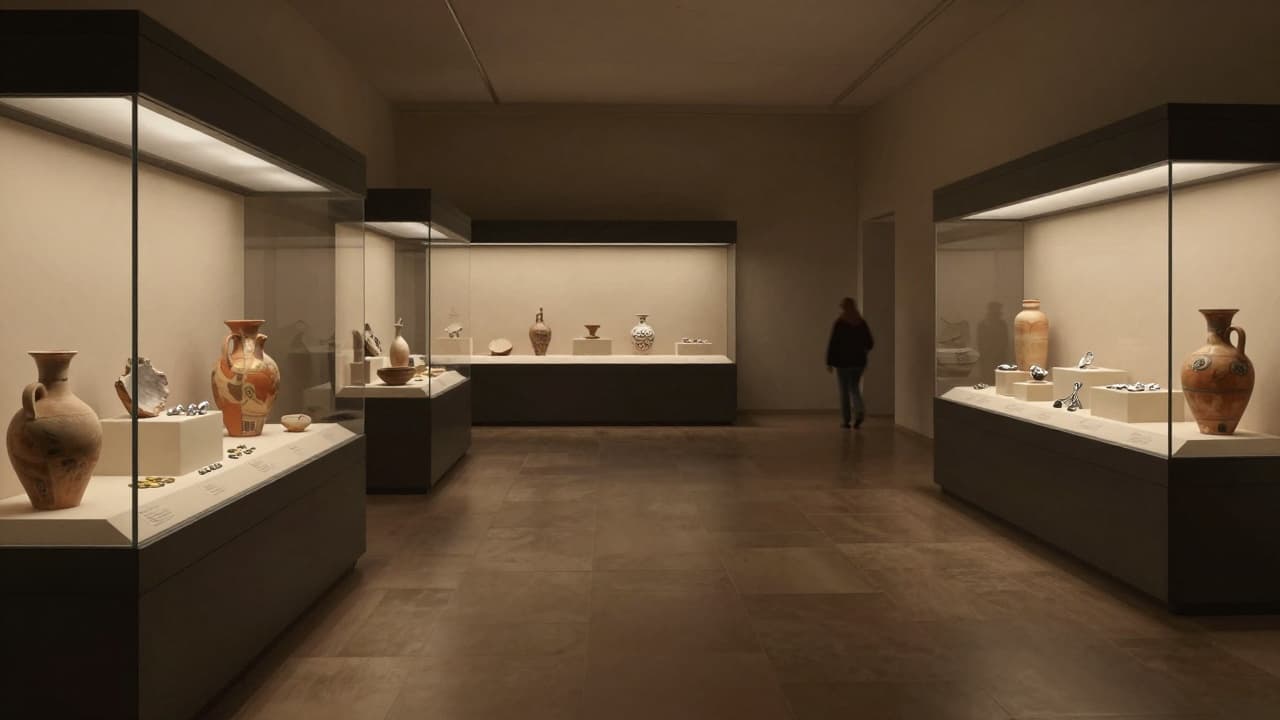
An exhibition titled "Tracing the Archaeological Heritage of Baćina" has opened at the Ploče Cultural Centre, organised by the People's Open University and the Narona Archaeological Museum. The display features a selection of archaeological finds recovered from the Baćina area, spanning from prehistory to the modern era.
Among the exhibits are a fragment of a ceramic kantharos from the 4th to 3rd centuries BC, silver temple rings from the 9th to 16th centuries, and a model of a house made of ceramic and stone dating from 5600 to 4500 BC. Also on display is the upper part of a decorated ceramic vessel, a ceramic sfigos, a fragment of a ceramic bowl from the first half of the 16th century, a ceramic plate fragment, and the upper part of a Greek-Italic ceramic amphora from the 2nd to 1st centuries BC.
Monetary finds include a 15th-century silver Dubrovnik dinar and coins from the Republic of Venice made of copper alloy, minted between 1688 and 1691. The display also features earrings made of gilded silver from the 18th and 19th centuries.
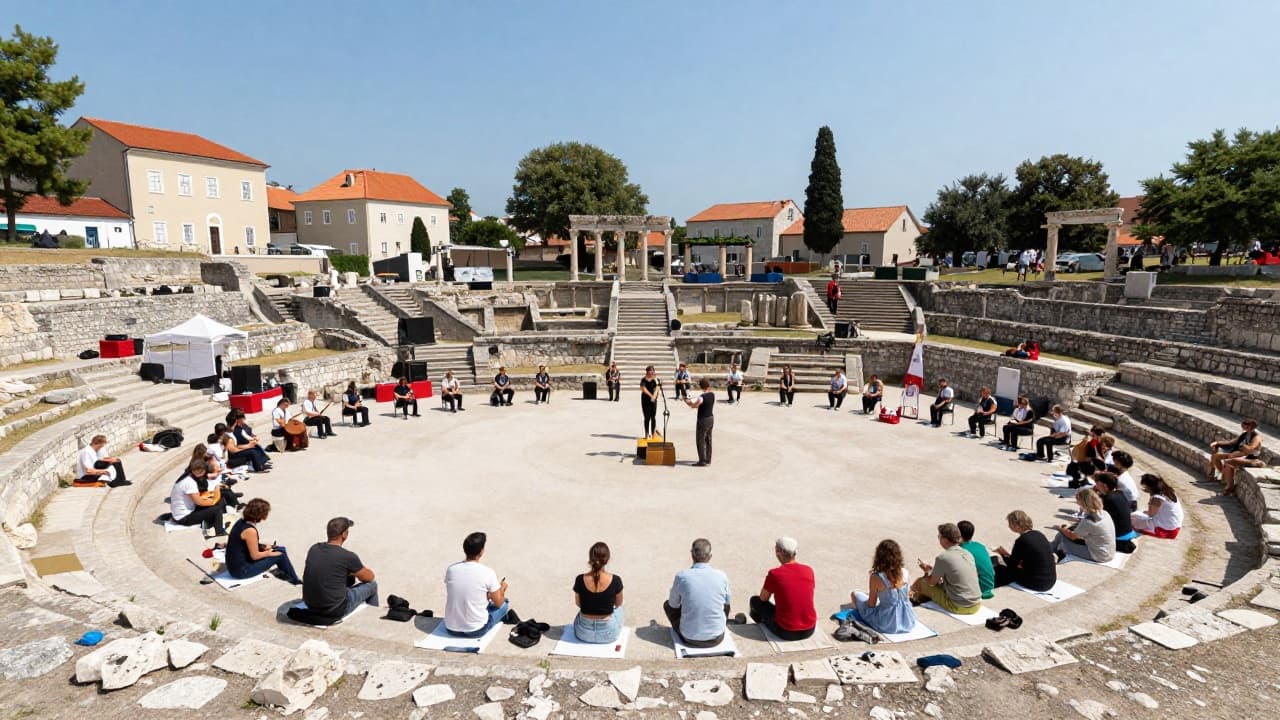
In recent years, numerous archaeological finds from the Baćina area have entered the collection of the Narona Archaeological Museum through storage and donations. These relate to four sites, three of which are registered in the Register of Cultural Goods of the Republic of Croatia. The Baćina sites are Sv. Juri, or the Church of St George with remains of an ancient villa rustica, Sv. Andriji, or the ruins of the Church of St Andrew, Portina, an underwater archaeological site, and a site of unknown location.
The Narona Archaeological Museum excavated two sites, alongside the Church of St George and the remains of the Church of St Andrew, in 2022 and 2023. The underwater site of Portina was investigated by the Split Archaeological Museum in 2017. A portion of the finds from Portina was donated to the museum by Mr Goran Zolnaić. The accidental finds from the water are from Portina, while the land finds were donated by Mr Dominko Marinović.