Ancient civilisations in the area of modern-day Peru occasionally carried out mass human sacrifices, particularly during periods of major climatic disruption, but new research shows that violence in the daily lives of these inhabitants was extremely rare. Scientists analysed the skeletons of more than 1,600 people who lived in the Lambayeque valley, located between the Andes and the Pacific Ocean, over approximately 3,000 years, and found very little evidence of interpersonal violence. They did not find a link between climate catastrophes and the frequency of violent injuries.
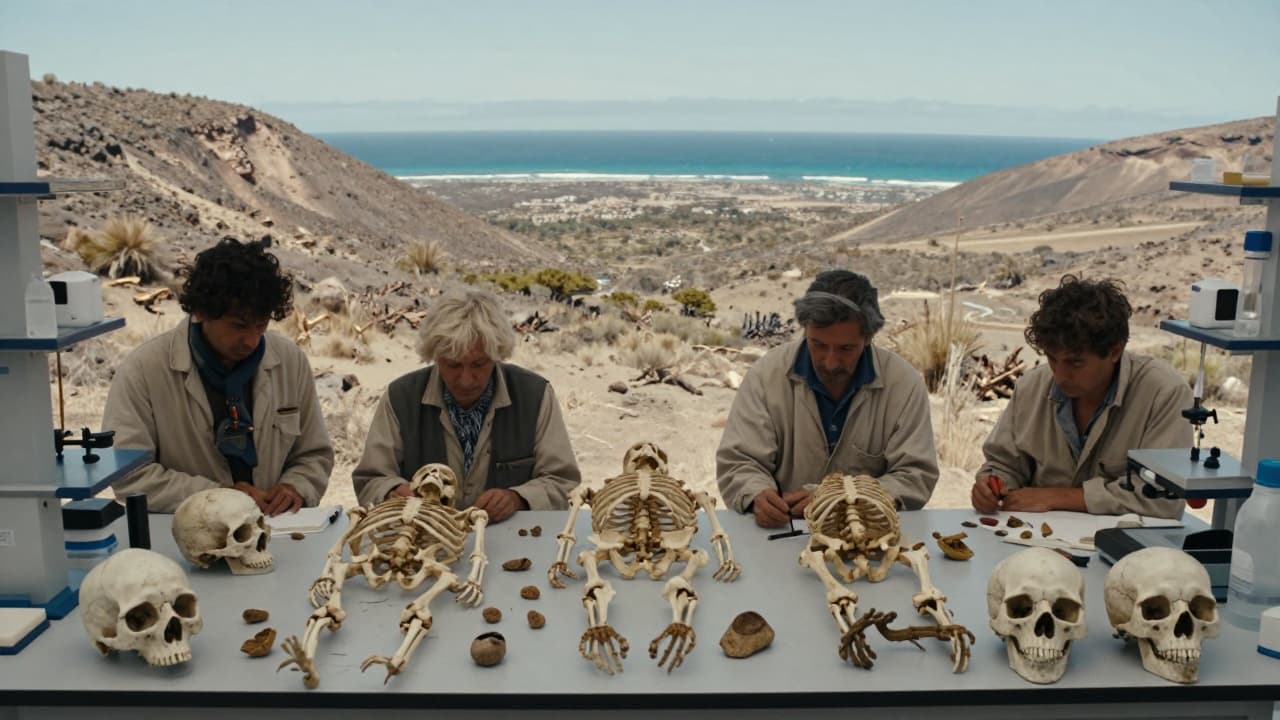
The research was conducted by bioarchaeologists Thomas Snyder from New York University and Haagen Klaus from George Mason University, with results published in the journal Frontiers in Environmental Archaeology. They studied the remains of 1,633 individuals from 30 archaeological sites. The analysed skeletons date from various periods, from the Cupisnique culture, which developed around 1500 BC, to the late colonial period. Scientists looked for traces of injuries that might indicate conflicts between people, as well as injuries caused by accidents.
They hypothesised that major droughts and floods associated with the El Niño climate phenomenon could have caused food shortages, forced inhabitants to work harder and increased the number of conflicts. However, among 1,519 individuals whose skeletons were sufficiently preserved for injury assessment, only 25 had skull injuries indicative of interpersonal violence, representing just 1.6 per cent of the analysed remains. Injuries to other parts of the skeleton, which researchers linked to accidental cases, were found in a further 77 individuals, accounting for 5.1 per cent. Unlike other archaeological sites in the Andean region, where skull injuries associated with violence are significantly more common, such findings were rare in the Lambayeque valley.
Previous research has shown that mass human sacrifices in ancient Peru sometimes occurred during or after extreme climatic disruptions. Events linked to the El Niño phenomenon can bring heavy rainfall and destructive floods to areas that are otherwise extremely dry. Archaeologists had assumed that such catastrophes triggered broader social conflicts, with mass sacrifices being just one of their expressions. Snyder explained: "If large ritual sacrifices were an indicator of a deeper crisis, we expected that violence would be reflected in people's daily lives." However, the skeleton analysis did not show that periods of more frequent floods or reduced rainfall coincided with an increase in violent injuries.
Researchers believe that mass sacrifices may have had a primarily political and religious role. Leaders of the Moche and Sicán cultures presented themselves as intermediaries between people and natural forces, and during major catastrophes, sacrifices may have served as an attempt to restore balance in nature. Klaus explained: "It appears that the leaders of the Moche and Sicán peoples partially maintained their power by presenting themselves as intermediaries between people and nature." He added: "Large human sacrifices immediately before the collapse of these political systems appear as an attempt to return natural forces to balance. Leaders offered their most valuable lives to supernatural forces, and it is precisely in Lambayeque that we find the most extensive evidence of such violence." According to this interpretation, ritual sacrifices did not necessarily reflect violence among ordinary inhabitants, but were linked to how authorities at the time responded to natural disasters.
One possible explanation for the lack of evidence of everyday violence is the location of the Lambayeque valley along the Pacific Ocean. The population had access to marine food sources and trade routes, which may have mitigated the effects of droughts and agricultural production problems. As a result, they may not have been forced into as intense a struggle for remaining resources as inhabitants of some other Andean areas. The authors suggest that it is also possible that the societies there developed ways of organisation and mutual cooperation that reduced the likelihood of conflict.
Scientists warn that the small number of injuries on skeletons does not mean that inhabitants were never exposed to violence. Many violent events do not leave traces on bones, so archaeologists cannot recognise them through skeleton analysis. The research covers a very long period, which means they may have missed short-term spikes in violence during specific catastrophes. Researchers did not find a statistically significant link between climatic disruptions and violence, but they emphasise that the rarity of injuries limits the ability to detect such connections. Snyder said: "This clearly shows that widespread violence is not an inevitable consequence of climate change." According to him, inhabitants of the Lambayeque valley developed various ways of adapting to extreme weather phenomena over millennia, and widespread violence was not their inevitable response. He stated: "As a society, we have the opportunity, and the obligation, to choose for ourselves how we will respond to our own climate crisis."