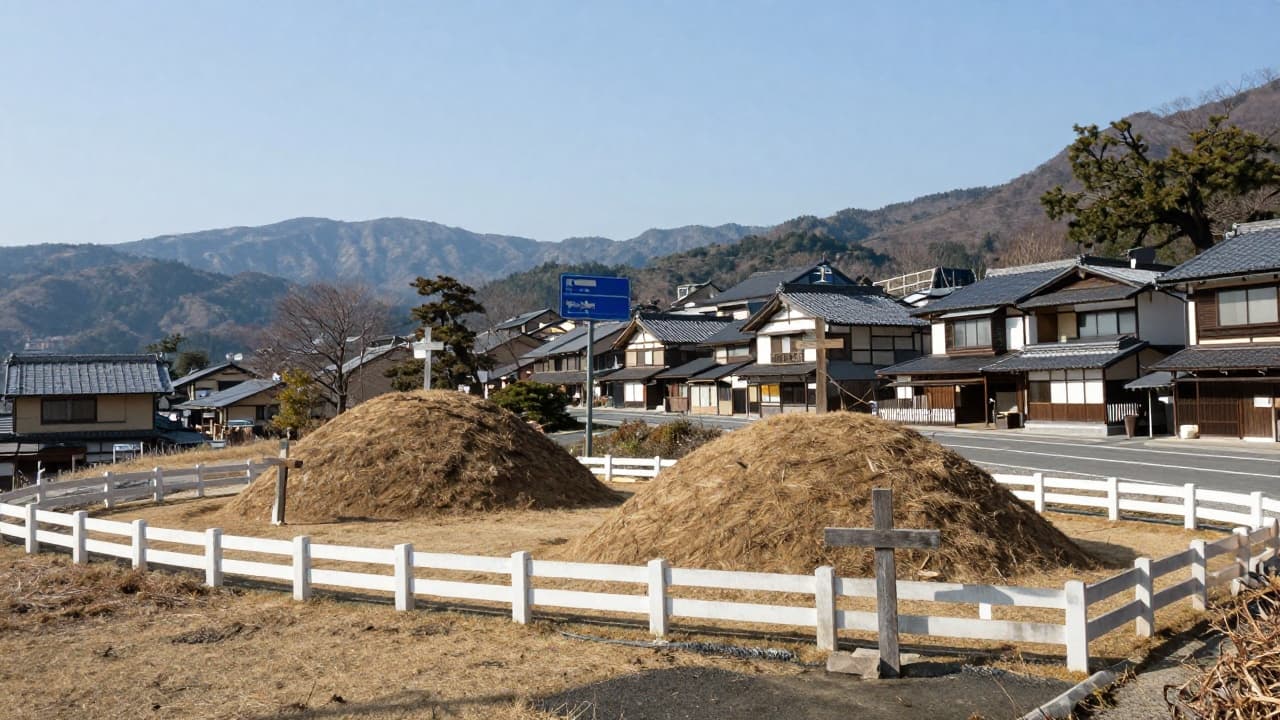
In the Japanese village of Shingo, there is a legend about the tomb of Christ, and the village has preserved the tradition through an annual festival. Immediately behind the village, by the roadside, stands a small blue sign with the words 'Tomb of Christ' written in English. This refers to Jesus of Nazareth, but this version of history is not found in the Bible, and the Catholic Church does not recognise it.
According to local legend, Jesus did not die on the cross in Jerusalem, but fled to Shingo, where he became a farmer, married, had children, and lived to old age. The story is recorded in manuscripts known as the Documents of Takenouchi, which are said to have been written thousands of years ago and rediscovered in the 1930s. The documents were exposed as a forgery, and there is no solid historical evidence to support the story.
The village has maintained this folklore for more than 60 years, not as religious dogma, but as part of local tradition and identity. The central location is Christ Park, where two burial mounds are located on a slope, and the nearby Museum of the Village of Christ presents the entire story to visitors. The director of the museum, Hidenobu Kadogishi, explains the chronology of the Documents of Takenouchi. According to the legend, Jesus was first in the Toyama prefecture, where he worked for the imperial family, and then returned to Judea to 'spread the word of the divine land, Japan'.
The documents state that years later, when Jesus was to be crucified, his place on the cross was taken by his brother Isukiri, whose existence is not mentioned in the Bible. According to the legend, Jesus lived to the age of 106, having had three children. In 1935, the religious leader Kiyomaru Takenouchi announced that he had discovered the tomb of Iesu Kirisuto, as Jesus is known in Japan. Kiyomaru Takenouchi said that he was led to Shinga, which was then called Herai, by the documents in question, and the local people showed him the burial mounds. The original texts were destroyed in the Second World War, so only copies remain, the reproductions of which are displayed in the museum. The museum was built in 1996 and the exhibition was set up at that time.
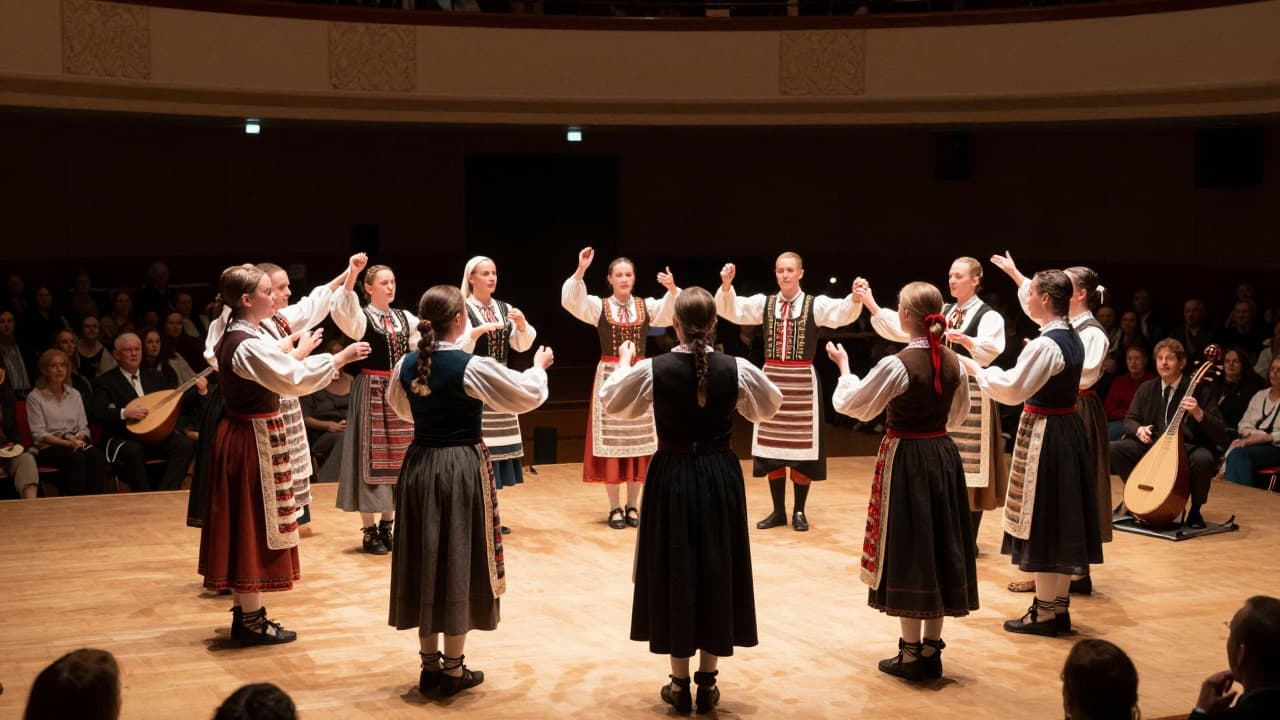
On the hill, a few steps from the museum, are two large earthen mounds enclosed by a low white fence and marked with wooden crosses. One mound is said to be the tomb of Jesus, while the other is said to contain the ear of his brother. Every first Sunday in June, since the 1960s, the Kirisuto Matsuri, or Festival of the Crucifix, has been held there. The event is a blend of tribute and village entertainment. A Shinto priest recites prayers and offers sacred branches of shinboku (sacred tree), local performers dance the lion dance (shishimai), and women in kimonos dance the folk dance Nanyodo around the burial mounds. Afterward, visitors join in the dance.
The mayor, Kazutomo Sato, is pleased with the response to the festival, noting that this year there are more people attending than last year. The village of Shingo has put effort into promoting the event on social media, and more and more young people, including primary school children, are joining the dance of Nan'ya Do. Koshi Nagano is a 26-year-old volunteer at the festival, and says that he grew up with the story that Jesus is buried there. The director of the museum advises visitors to treat the story 'solely as a legend'.
Antonio Fernández from Spain, a student of religion at Tohoku University, came to investigate the origins of the legend, while Paulina Kralka from Poland, a Christian, considers the event 'special and extraordinary'. The director of the museum is pleased with the record 1,000 visitors this year and plans further adjustments for international guests, emphasizing that they treat the Christian faith with respect. Japanese professor Ryosuke Okamoto, who teaches theology and tourism at Hokkaido University, says there is no reliable evidence that the graves are those of Jesus and his brother. Okamoto warns that the festival should not be viewed as a blend of Christianity and Shinto, as the central ceremony is a Shinto ritual.