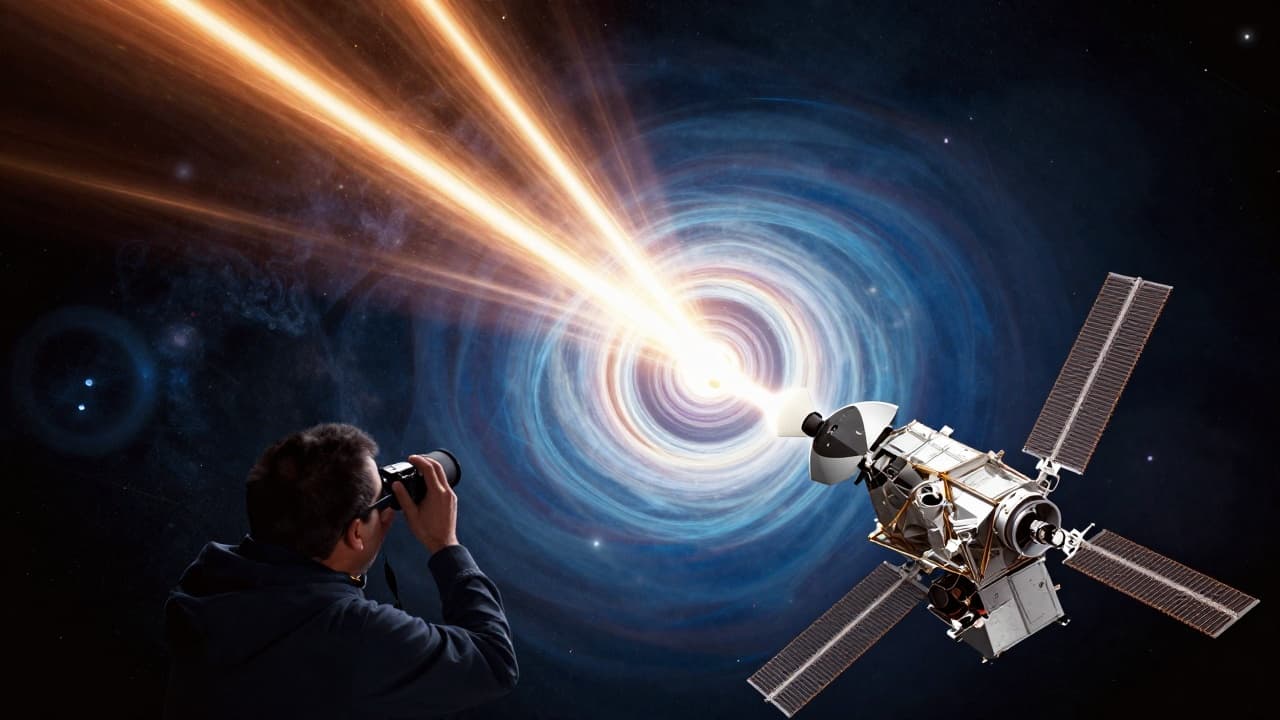
Scientists have used the Imaging X-ray Polarimetry Explorer (IXPE), developed by NASA, to collect critical data on high-energy celestial bodies. This specialised instrument has enabled detailed observation of magnetars, a type of neutron star with extremely strong magnetic fields, thereby allowing tracking of their impact on the surrounding space.
The research team conducted over 140 hours of intensive observations of a specific magnetar designated 1E 1547-5408. These data were collected during the period from March to April 2025, representing a significant effort to capture precise images of the X-rays and light polarisation originating from this object.
The results of these observations suggest that scientists have recorded a pattern in empty space that aligns with theoretical predictions by physicists. Indeed, physical models had forecast such deviations in the quantum vacuum more than 90 years ago, yet direct evidence for such phenomena had previously been absent.
This discovery marks a historic moment as it represents the first directly recorded instance of such a phenomenon. To date, no observation has confirmed that empty space near extreme gravitational and magnetic fields behaves exactly as predicted by early theoretical models of quantum electrodynamics.
This development opens new avenues for understanding the limits of physics in conditions that cannot be replicated on Earth. The confirmation of long-standing predictions through modern instrument data strengthens confidence in existing physical theories and simultaneously lays the foundation for future research into the nature of vacuum fluctuations.