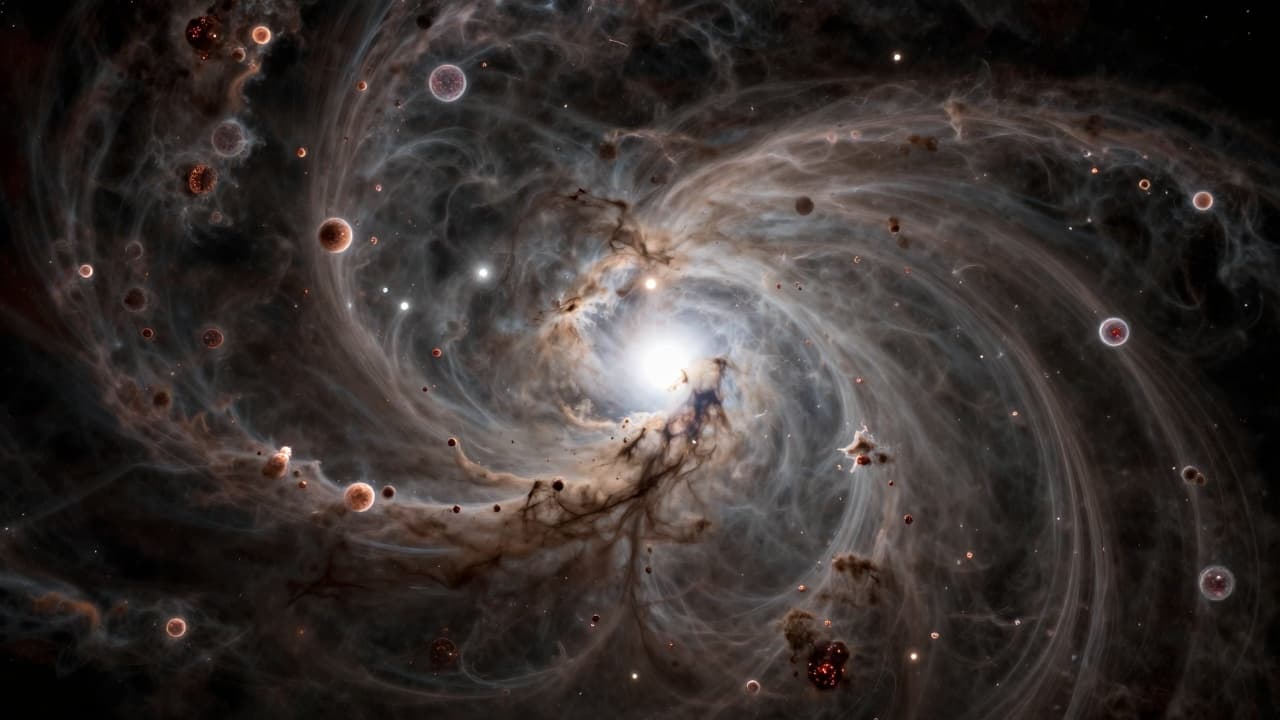
The James Webb Space Telescope, in collaboration with NASA, ESA and CSA, has imaged the planetary nebula NGC 2392, widely known as the Lion’s Nebula. This image provides an exceptionally clear and detailed view of the nebula, surpassing earlier observations thanks to the high-resolution technique enabled by the space telescope’s instruments. Infrared images were captured using NIRCam (Near Infrared Camera) and MIRI (Mid-Infrared Instrument), highlighting features such as compact dust clumps and clouds of ionised gas that were previously less visible.
The Hubble Space Telescope first observed this planetary nebula in 2000, capturing it in visible light. That earlier image revealed significant structures such as a 'mane' composed of cometary-shaped nebulous objects. Although Hubble’s insights were crucial, Webb’s infrared vision allows for a deeper understanding of the physical processes shaping this cosmic phenomenon, particularly through the differentiation of materials that would otherwise remain hidden.
It took the nebula several thousand years to achieve its current shape, and its components continue to change actively. The source of these constant changes and the distinctive appearance of the Lion’s Nebula lies at its centre, where the remnants of a dying star reside. This central white dwarf star visually resembles a button-like lion’s nose, and its energy powers the complex structures visible in the new image.
The bubble of ionised gas, which forms the lion’s face, expands over time and destroys the dust in its path. The clumped gas has a complex structure of rings and shells, a common feature of planetary nebulae. The lion’s mane represents the interior of the dust shell, illuminated by the white dwarf at the centre. The hairs that resemble comet tails are actually compact dust clumps.
These dust clumps have survived the intense radiation from the star’s central region. They protect the material beneath them from the direct impact of the white dwarf’s energy, allowing the preservation of a structure resembling lion’s fur. This protection enables Webb’s instruments to detect details that would otherwise be lost in the light radiation from the central star.