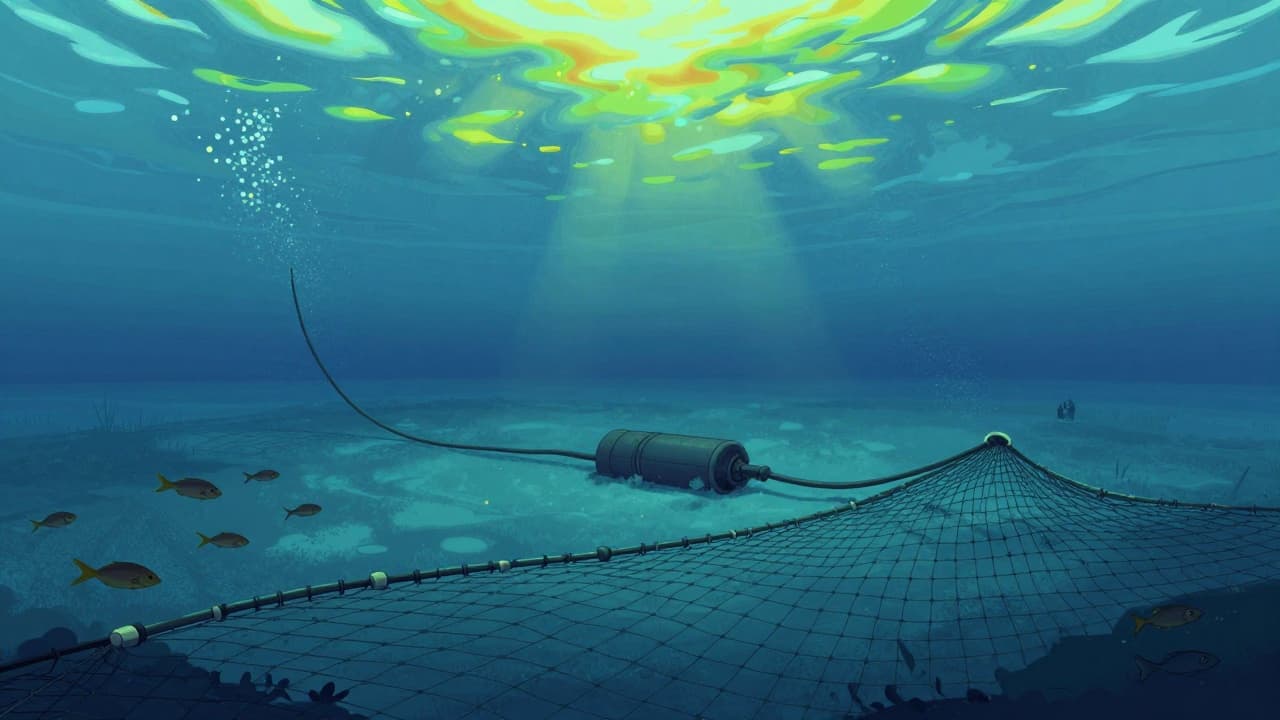
Daily life relies on a vast network of cables hidden beneath the sea, and climate change could pose new threats to the infrastructure that keeps the world connected. This is highlighted by new research from the UK’s National Oceanography Centre (NOC).
Experts warn that ocean warming could indirectly impact critical digital infrastructure. Changes in where fish live also alter the areas where fishing activity takes place, which could endanger undersea cables.
The first global assessment shows that by 2100, approximately 34,600 km of existing cables could become exposed to trawling. Trawling is expected to increase along an additional 157,000 km of routes, primarily in the North Atlantic and the western Pacific.
The study’s findings were published in the journal Climate Risk Management. According to the researchers, these findings should help in planning the protection of networks on which island communities and global traffic depend.
Beyond undersea infrastructure, scientists have recently recorded a series of other technological advances. Physicists from Martin Luther Halle-Wittenberg University and the Max Planck Institute for Microstructure Physics have identified the cause of erroneous measurements in chiral antiferromagnets, which could pave the way for faster and more energy-efficient electronics.
By combining nanometre-thin layers of manganese-tin alloy (Mn₃Sn) with platinum, they observed that a ferromagnetic interlayer forms at the boundary upon heating, with a signal more than 100 times stronger than that of the antiferromagnet itself. By fully heating the Mn₃Sn before applying the platinum, they prevented the formation of this layer, while ultrashort laser pulses were used to measure the material’s actual properties. The discovery was presented in the journal Advanced Materials.
The Korea Institute of Machinery & Materials (KIMM) has developed an LED lighting system that changes the perceived colour of objects without painting them or adding devices to them. By adjusting the intensity of multiple LEDs of different wavelengths, the light reflected by the object is altered, while the surrounding space remains illuminated by natural white light. In tests, the system achieved a colour difference greater than 90 on the CIEDE2000 scale, and was showcased at the 2026 Artience Daejeon exhibition.
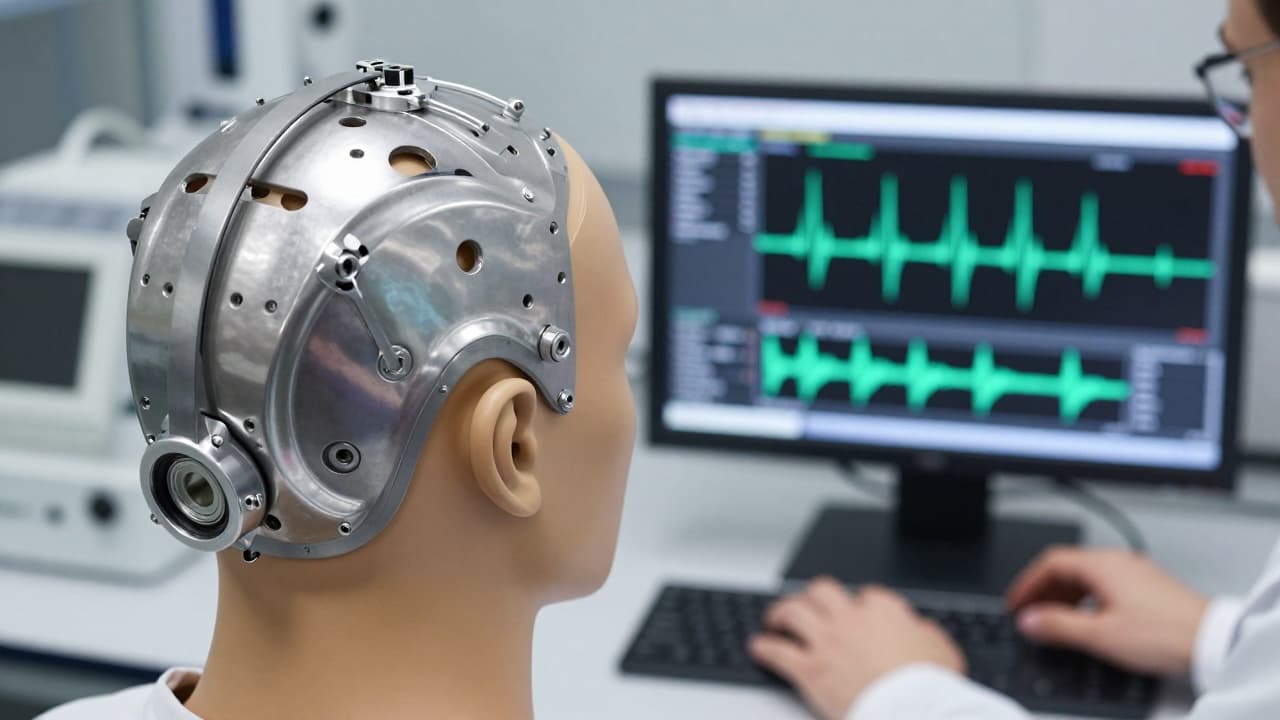
The same institute has also developed a 32-channel EEG cap that automatically adjusts the position of electrodes on the scalp. The system samples signals at 500 Hz and uses a weak test signal in real time to check the contact of each electrode. If the contact is weak, a mechanism moves it vertically and stops as soon as optimal pressure is achieved, thereby avoiding manual adjustment. The cap is patented and intended for rehabilitation, brain-computer interfaces, and the collection of uniform EEG data for training AI models.