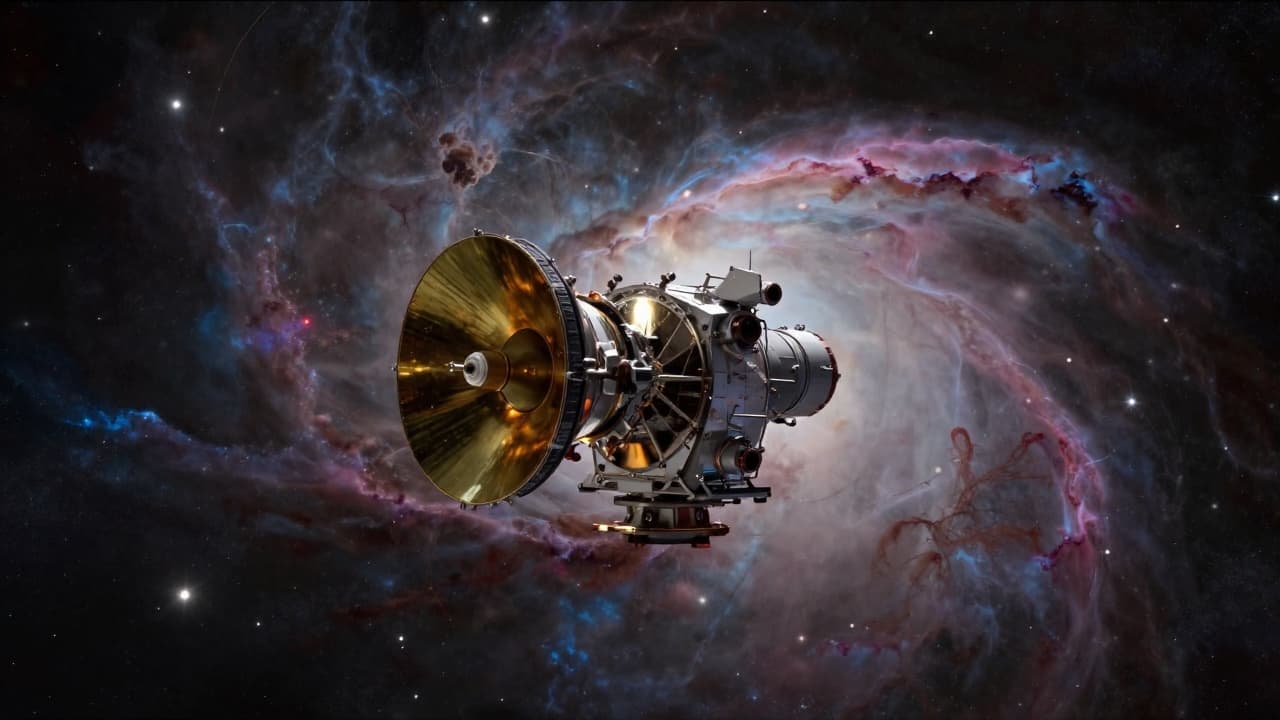
An international team of astrophysicists has developed a computer model called Lumina, the most detailed simulation yet of the early evolution of the universe. The model was presented in the journal Monthly Notices of the Royal Astronomical Society.
Lumina covers the first two billion years of cosmic history after the Big Bang, within a space 1.6 billion light-years wide. The simulation successfully tracks the complex interactions of dark matter, gas and stars, while enabling extreme zooming — from giant cosmic structures down to individual galaxies in formation.
It is the first model to depict the processes of hydrogen and helium reionisation in detail, a phenomenon that pulled the universe out of the dark ages. In doing so, Lumina provides insight into a period that has previously been difficult to capture in simulations.
Alongside work on the universe, researchers at the University of Arkansas and the University of Michigan have developed a tiny temperature sensor that is entirely self-powered. The device uses a graphene-based energy harvester that exploits weak magnetic fields near standard electrical installations.
The graphene inductor collects a low-frequency alternating signal and converts it into direct current to charge built-in capacitors. The sensor prototype, described in the journal Journal of Vacuum Science & Technology B, consumes only a few nanowatts and can operate autonomously for decades without conventional batteries.
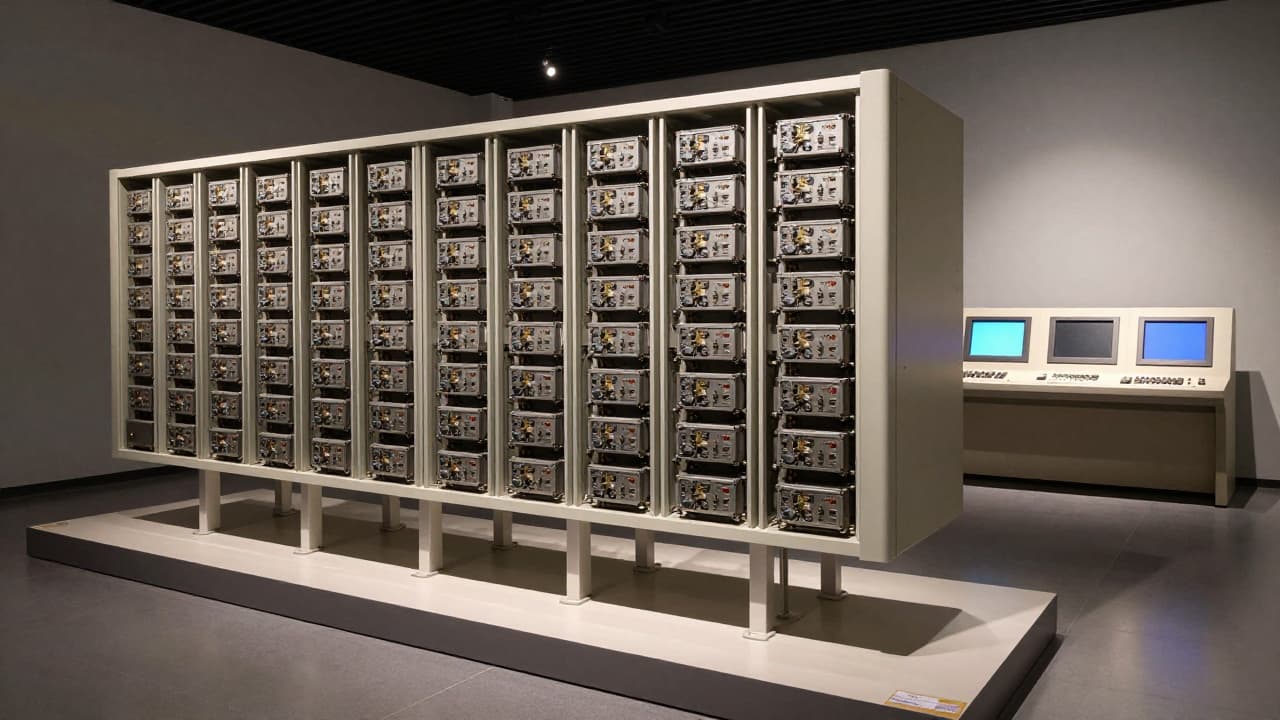
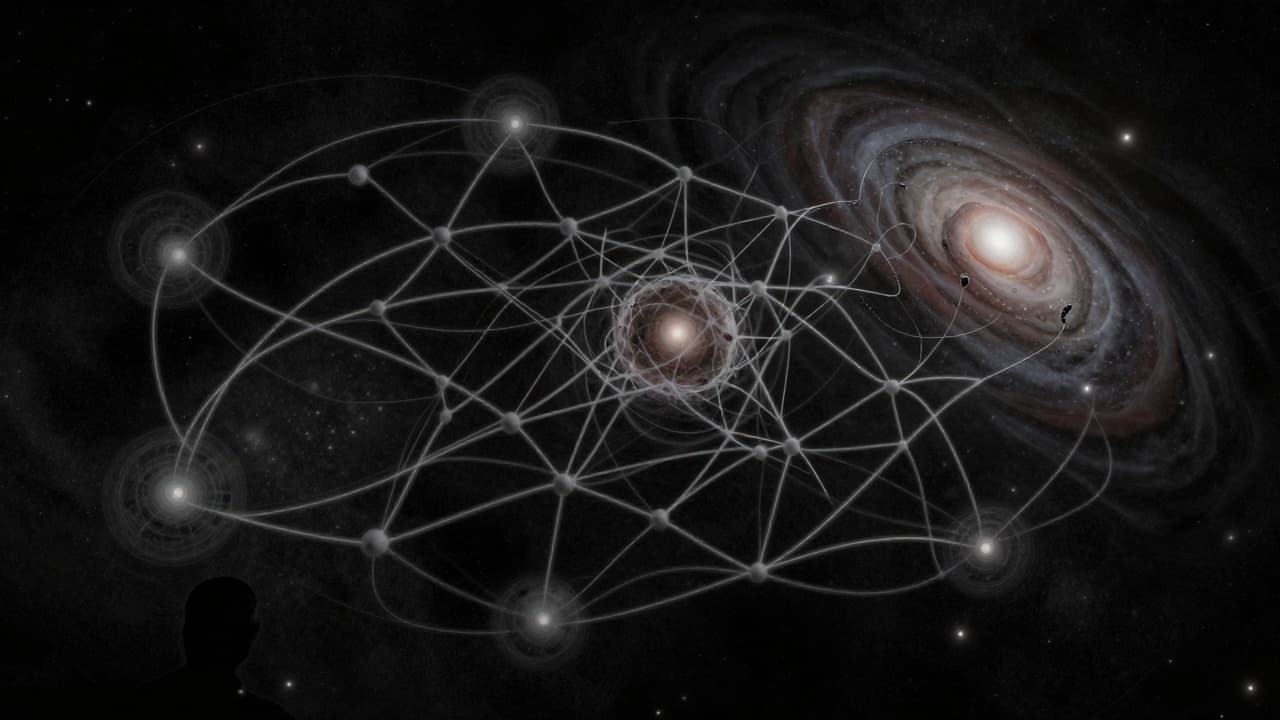
In the field of quantum computing, researchers at IBM have linked two 120-qubit processors using four L-joins and transmitted quantum information over a distance of 80 cm. The junctions, made of superconducting aluminium, achieved an average transmission accuracy of 99 per cent, with peak precision of 99.29 per cent. The work on linking quantum chips is available as a preprint on the arXiv platform.
Physicists from Rutgers University, IBM and the University of Florida used IBM’s 156-qubit Heron processor to demonstrate real-time error correction within a dynamic system. The experiment, described in the journal Nature Physics, was a two-stage process in which chaos was intentionally introduced, followed by the verification and resetting of qubits. Through nearly 5,000 consecutive operations, it was proven that stability and order in the system can be maintained if checks account for more than half of the total actions.