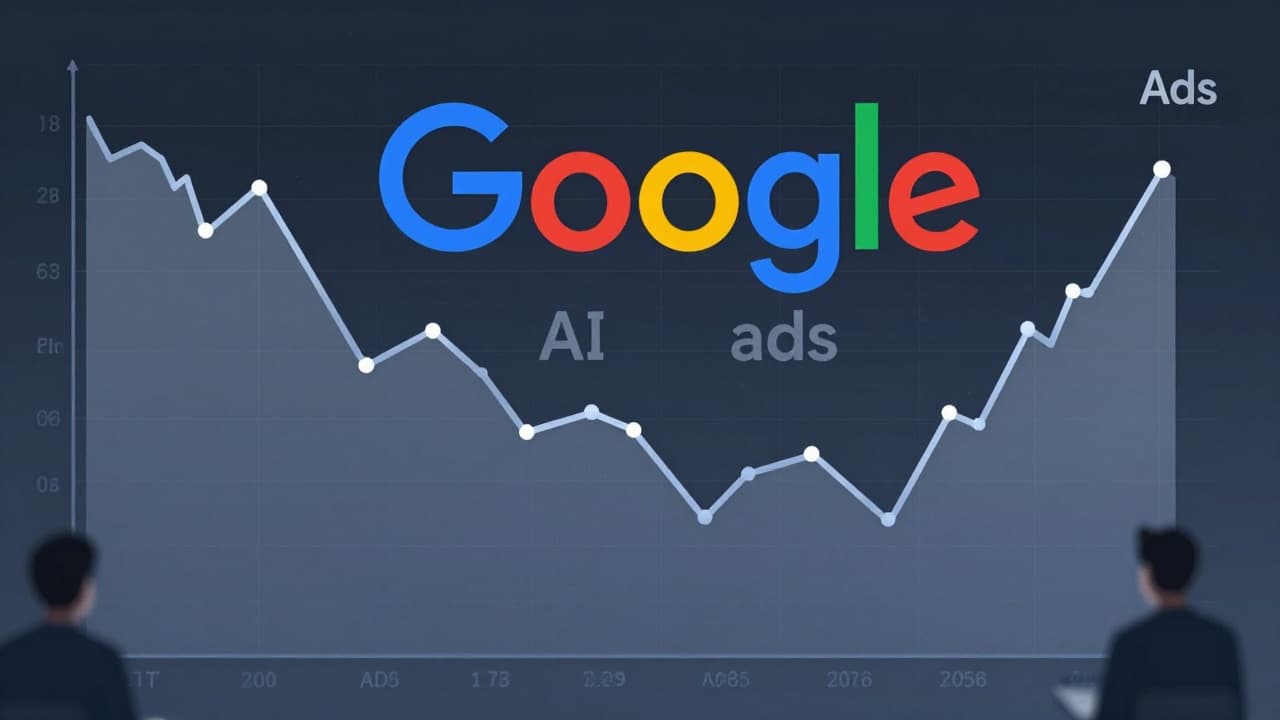
Alphabet lost just over $500 billion in market value on Thursday after revealing that its own artificial intelligence summaries are reducing search ad revenue. The company's total market capitalisation fell to $3.46 trillion from $3.97 trillion the day before, with shares plunging more than 12 per cent to a six-month low.
Chief Executive Officer Philipp Schindler said that Google's "AI mode", which answers questions conversationally, reduces the money the company earns from ads displayed alongside traditional query results. Nevertheless, Schindler stated that he feels "very good about our path" with the AI-focused search engine. Millions of people are using programmes such as ChatGPT and Claude instead of Google.
Kim Scott, who formerly led Google's advertising business, told the BBC's Today programme that the company would rather "eat its own lunch than let someone else eat its lunch" by having its AI summaries hurt search revenue. Scott said Google was founded on the idea of long-term investment in technology, even when it harms the company in the short term. "I think they are investing in artificial intelligence for the long term," she said.
In results published on Wednesday, Alphabet disclosed that total revenue in the three months to the end of September rose 25 per cent year-on-year, reaching $127.6 billion. However, the company did not earn as much as analysts had predicted, particularly in its advertising division.
Microsoft and Amazon also released their business results this week, joining Google in plans to continue spending vast sums of money in the race for artificial intelligence. Amazon shares fell 6 per cent in after-hours trading on Thursday, with quarterly sales growth of 11 per cent and revenue of $201 billion. The company reported a negative cash flow of $42 billion, while its expenses in the three months increased sixfold.
Amazon Chief Executive Officer Andy Jassy claimed the company is spending partly because it has the opportunity for not one, but two businesses that could bring it $1 trillion in the future. He did not specify which businesses, but repeatedly mentioned the financial potential of manufacturing and selling its own computer chips and the Bedrock AI development platform, which offers paid users access to most major AI models and tools. "One of the lessons we have learned over more than 20 years is that there is no single tool that rules the world," Jassy said. "People always assume that what is in the early stage and in the lead will be the only thing people will use – that is never true." He acknowledged that it would be "more convenient" if the company's spending were spread over the next 25 years, but added: "That is not the world we live in." He concluded: "We can fund this plan and I think it will forever change the size, revenue and free cash flow of Amazon."
Microsoft shares fell less than 1 per cent on Thursday. The company spent about $5 billion less on investments dedicated to artificial intelligence, and earlier this week revealed plans to lay off thousands of workers, which will further reduce its costs. Microsoft revenue rose 19 per cent year-on-year to $92.3 billion in the quarter, while its cloud business grew 30 per cent to $63 billion. Chief Executive Officer Satya Nadella said that the use of Copilot, Microsoft's AI chatbot and tools, has led to "automated tasks nearly doubling since July", and the number of daily users increased by 500 per cent year-on-year.
Microsoft is one of the largest investors in OpenAI. Woo assessed that Wall Street is trying to look further into the future to assess which businesses will truly fulfil the great promises associated with artificial intelligence. "Microsoft's results confirm that enterprise demand for artificial intelligence remains strong, but they also highlight a much bigger question for the technology industry – where the value of artificial intelligence will ultimately reside," Woo said.