Newmont, the world's largest gold producer, headquartered in Denver, announced an eight per cent year-on-year decline in production in the third quarter of this year. The total year-on-year drop in production since the start of the year stands at 12 per cent, but the company remains on track to meet its annual production target for 2026 of 5.3 million ounces of gold.
In the third quarter, Newmont produced 1.3 million ounces of gold, along with 11 million ounces of silver and 23,000 tonnes of copper. For comparison, in the first quarter of last year, the company placed a record 1.5 million ounces of gold on the market, while in the second quarter of this year, production fell below 1.3 million ounces.
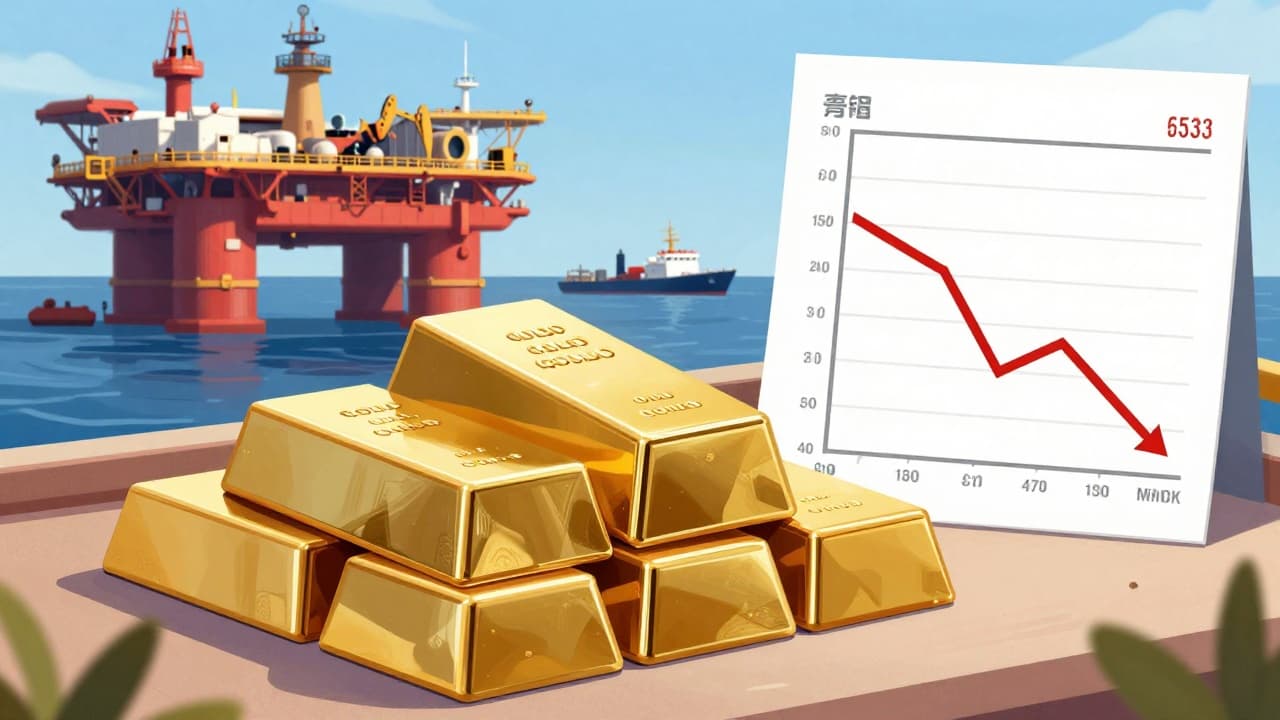
On the leading global gold exchange, Comex, the gold ounce was traded at a price of $4,040 on Friday. This is the lowest price since 20 July, when the ounce fell below $4,000. Compared with the end of August, the current gold ounce price on Comex is 14 per cent lower.
However, looking at the long term, the gold price is recording strong growth. In early March 2025, the gold ounce on Comex was traded at a price below $3,000, meaning that current stock market movements represent a 34 per cent price increase compared with March last year. In the first week of October 2025, the ounce on Comex crossed the $4,000 price mark for the first time, and by the end of January this year, it surpassed the $5,000 price mark for the first time. The trading peak for gold was $5,399 on 27 February.
At the same time, a barrel of Brent crude oil crossed the $114 price mark for the first time since May this year on Thursday. Since 30 September, the Brent stock price on the New York exchange has been in almost constant growth, and since 5 October, the Brent price has been continuously above $100 per barrel. At the end of July this year, Brent was traded on the New York exchange at a price of $72, meaning that the price has jumped by 58 per cent in the last almost three months.
Analysts at the Oilprice portal cite estimates from the S&P Global institute that rising oil prices in the coming months will be accompanied by rising food prices. Before the United States and Israel launched a military offensive in Iran in February this year, half of the total global export of raw materials for fertiliser production passed through the Strait of Hormuz. Chemical compounds such as urea, ammonia, sulphur, hydrogen, natural gas and nitrogen are key components of nitrogenous fertilisers. After the Strait of Hormuz became almost completely inaccessible to maritime traffic on 28 February, fertiliser prices soared, doubling in a short period. As late as April this year, Jorge Moreira da Silva of the United Nations warned that a disruption in the Strait of Hormuz could push an additional 45 million people into hunger and starvation.