The County President of Dubrovnik-Neretva, Blaž Pezo, presented valuable equipment to representatives of the Croatian Centre for Seismology (HCP). The handover took place in the premises of the Civil Protection Headquarters in the Dubrovnik-Neretva County, with the equipment valued at 30,000 euros.
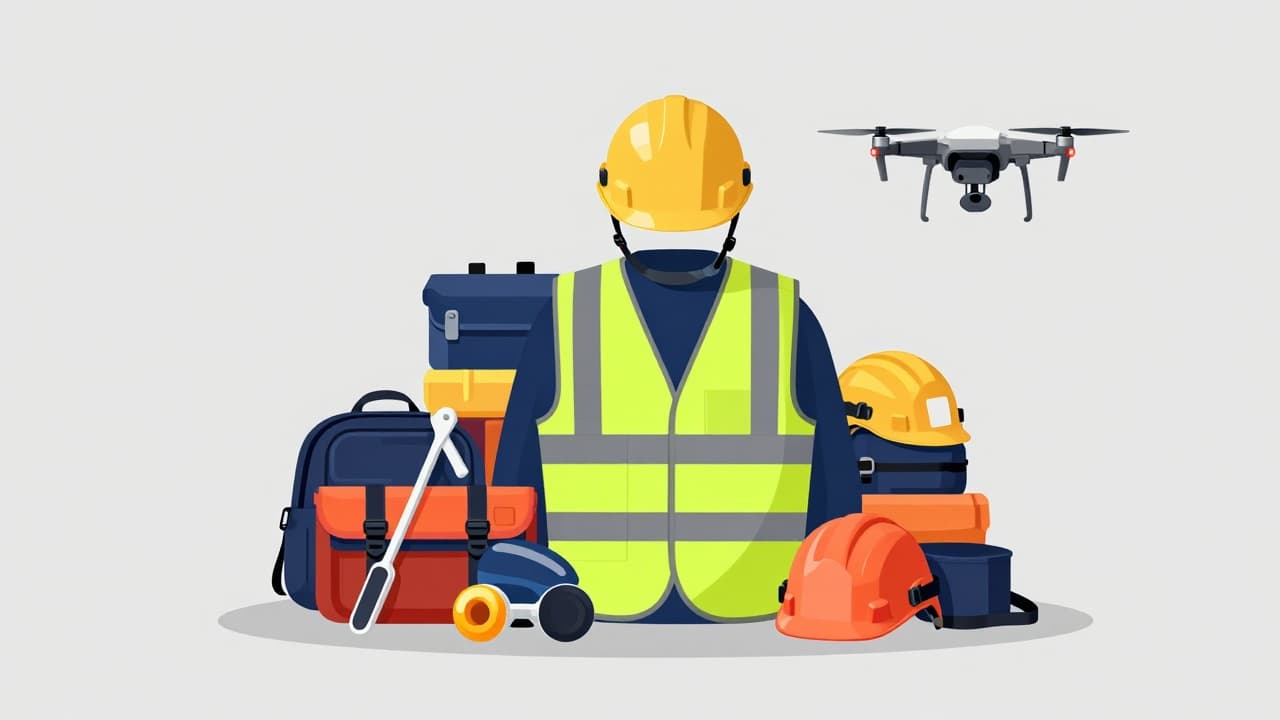
The equipment consists of modern drones and personal gear, including battery-powered lamps, digital laser distance meters, and portable chargers. It was procured through the HANDY project, which is co-financed by the Interreg Italy-Croatia programme. The project implementation began in September 2024 and will conclude on 30 September of this year.
During the two-year period of the project's implementation, equipment with a total value of 290,000.00 euros was procured. This equipment was allocated to the Firefighters' Association of the Dubrovnik-Neretva County, the HGSS stations in Dubrovnik and Orebić, and the Association of Societies of the Red Cross of the Dubrovnik-Neretva County.
The Dubrovnik-Neretva County was the first local self-government unit in the Republic of Croatia to formally include the HCP in its system. This inclusion covers not only earthquakes but also other risks such as floods and fires.
President Pezo stated that he hopes the HCP will utilise the equipment to train its members. He stated that he believes the equipment will serve as a good link with operational forces. He noted that a joint meeting is scheduled for the following day, at which the possibility of jointly using the equipment, improved cooperation in interventions, and the exchange of experience and information will be discussed.
On behalf of the Croatian Centre for Seismology, the office head, Ivan Kostelac, expressed gratitude to the Dubrovnik-Neretva County. He highlighted that cooperation with the Dubrovnik-Neretva County is at the highest level in the Republic of Croatia. He stated that decisions regarding community recovery could be made much faster, and that everything could be assessed much more quickly.
Kostelac stated that the equipment would accelerate decision-making, improve assessments, and elevate standards to a higher level. He added that the equipment has a preventive function, as inspections can be conducted in this manner, but the primary function of the equipment is post-event. The idea is also preventive, in that critical infrastructure buildings are inspected before an event, and guidelines for improving the structure are provided to ensure they are safer.