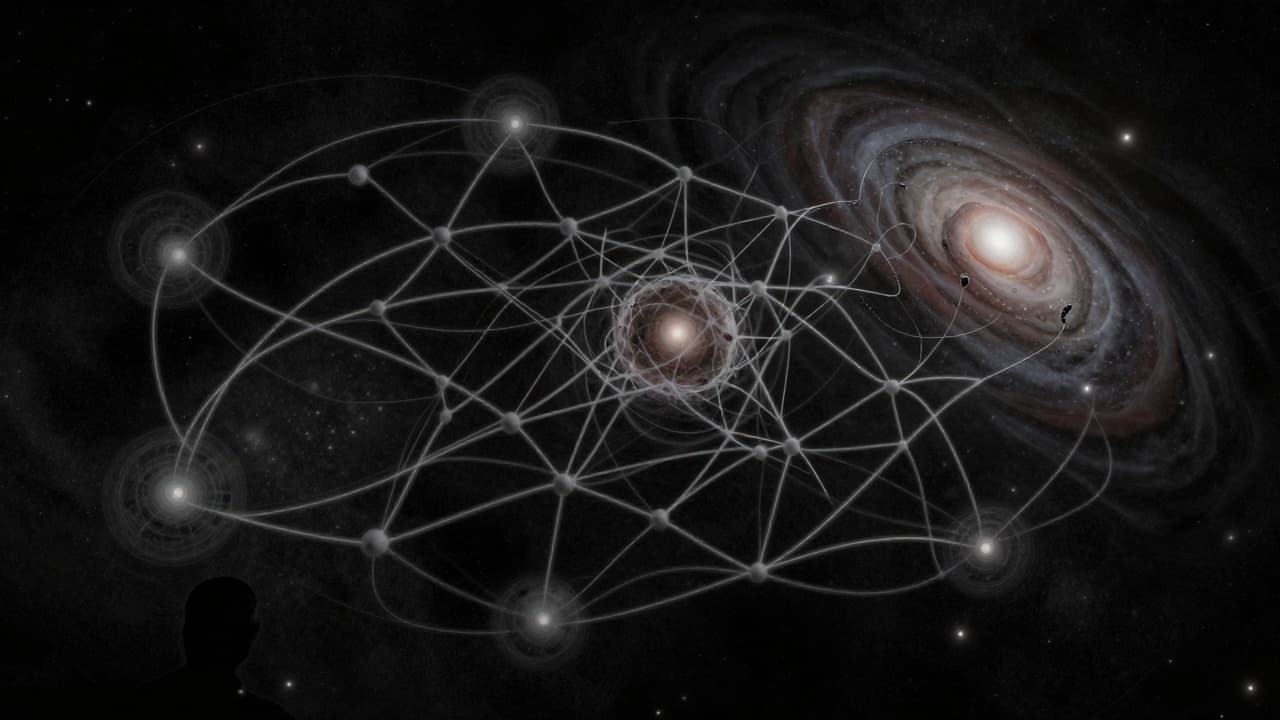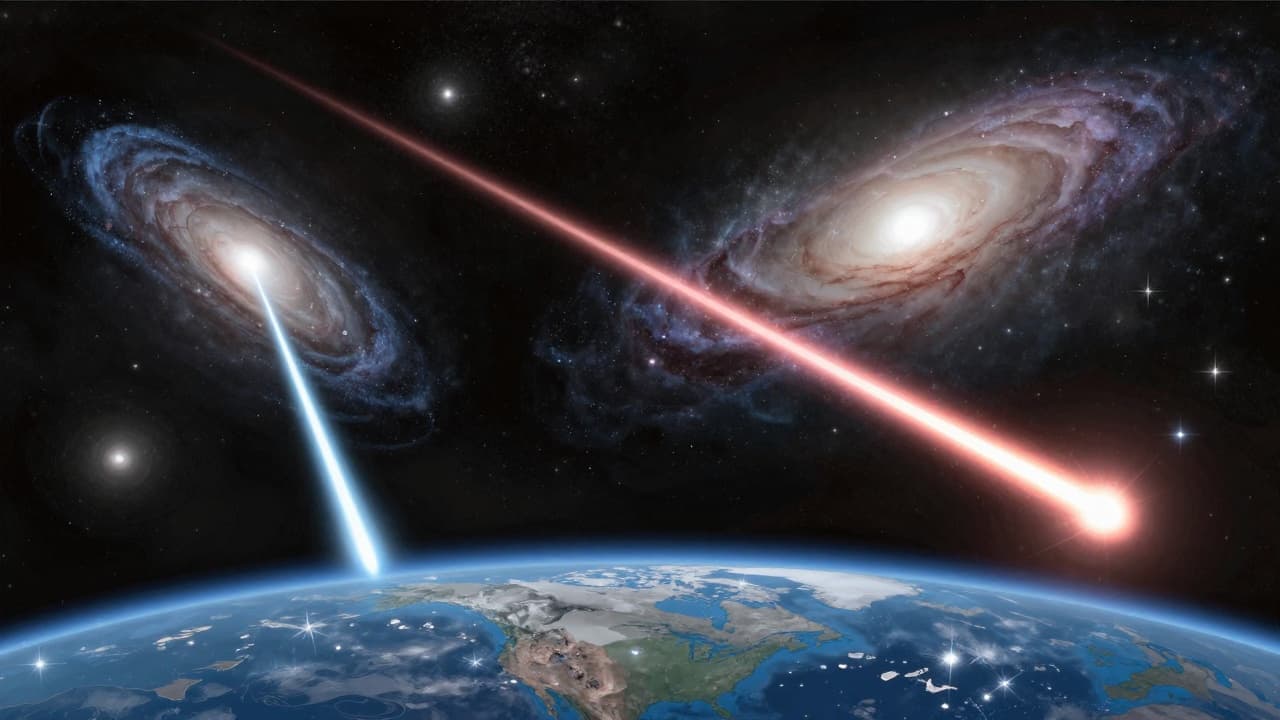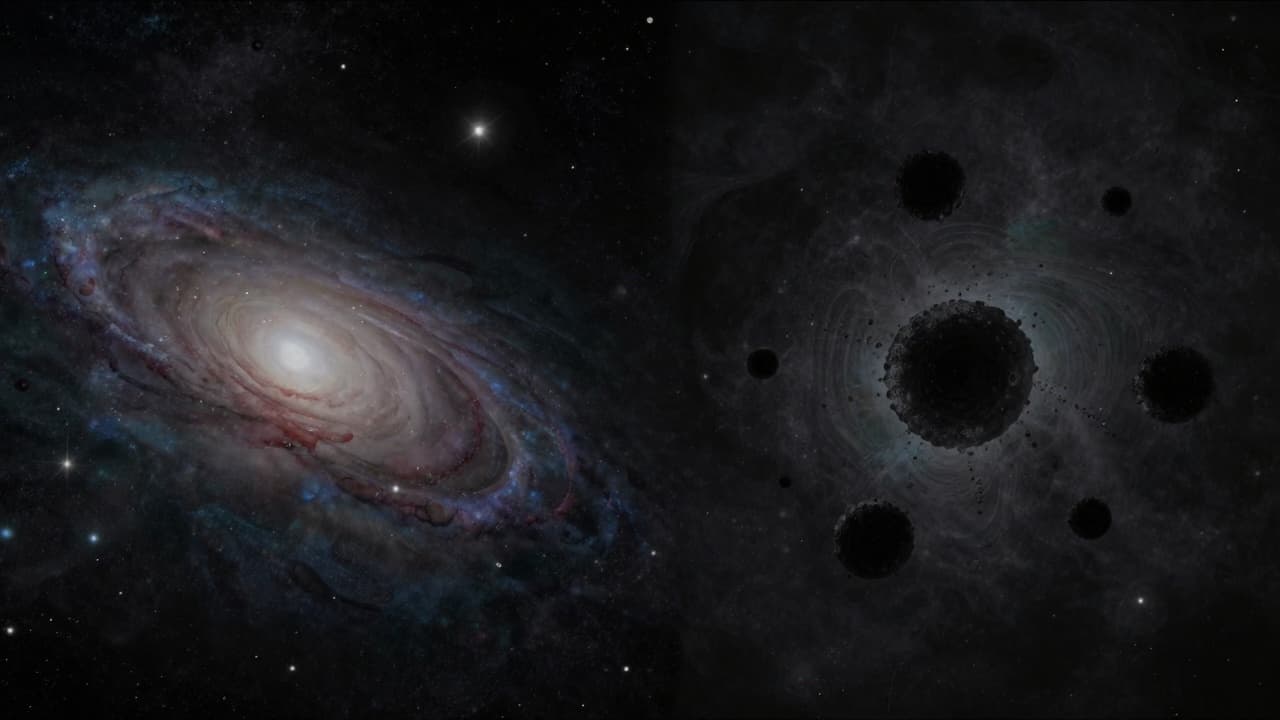
Dark matter could be a mirror image of our universe, with its own periodic table of elements, a new theory led by physicist Pouya Asadi from the University of California, Santa Cruz, proposes. The work was published on the arXiv server and is signed by a team of physicists from the United States and Canada.
It is estimated that there is approximately five times more dark matter in the universe than ordinary matter. There is currently no clear reason why this ratio is exactly what it is, a phenomenon known as the "matter coincidence problem". The new model could explain why the ratio of ordinary to dark matter is precisely this and why that ratio is probably not accidental. As noted, the five times greater amount of dark matter and ordinary matter are actually within the same order of magnitude.
The idea of a mirror image is based on a theory known as the "Mirror Twin Higgs", which presents a mirror version of the Standard Model of physics. In this model, ordinary and dark matter are not completely independent, but are linked by a mathematical symmetry that determines the properties of their particles and forces. The paper states that the coincidence in the amount of matter remains the strongest empirical indication that the visible and dark sectors may not be connected exclusively by gravity.
According to the scenario explored by Asadi and colleagues, dark neutrons, which would make up most of the dark matter, are about five times more massive than ordinary protons. If the early universe produced approximately an equal number of dark neutrons and ordinary protons, the result would be exactly five times more dark matter. In our universe, neutrons are slightly heavier than protons, so free neutrons decay into stable protons. In the mirror version proposed by the researchers, dark neutrons are lighter than dark protons, making neutrons stable building blocks of dark matter.
According to calculations, protons and neutrons can combine into stable atomic nuclei. The mirror universe could thus produce its own, limited catalogue of dark versions of chemical elements, such as helium, lithium, beryllium, boron, and even carbon. Under certain conditions, the heaviest element that can form could make up the majority of dark atoms, opening the possibility of a population of dark atoms dominated by dark carbon.
Hydrogen, the simplest and most abundant element in our universe, would be unstable in the mirror universe. Since dark neutrons are lighter than dark protons, a dark proton could capture an electron and turn into a neutron, thereby destroying the hydrogen atom. Heavy hydrogen, deuterium, which contains an additional neutron, could be stable.
The researchers suggest that heavier dark elements could crystallise into solids or form grains of dark dust. Such grains would drift through space but would interact only with their own "dark version of light", making them completely invisible. Scientists also mention the possibility of mirror stars, hypothetical objects of dark matter that could be significantly smaller and denser than our stars.
Interactions in the early cosmos could have created waves that left traces in today's structure of the universe, similar to baryon acoustic oscillations (BAO). The researchers call these traces in the dark sector dark acoustic oscillations (DAO) and suggest that their imprint could be found in the distribution of dark matter. Dark oscillations could have a two-part signature, which would allow this model to be distinguished from others.
They believe that future particle detectors could record weak interactions between dark and ordinary matter. The paper concludes that their work represents the first detailed, systematic investigation of the consequences of this class of models. It is also noted that a viable dark matter sector does not have to be phenomenologically sterile, but can provide measurable traces of a deeper connection.