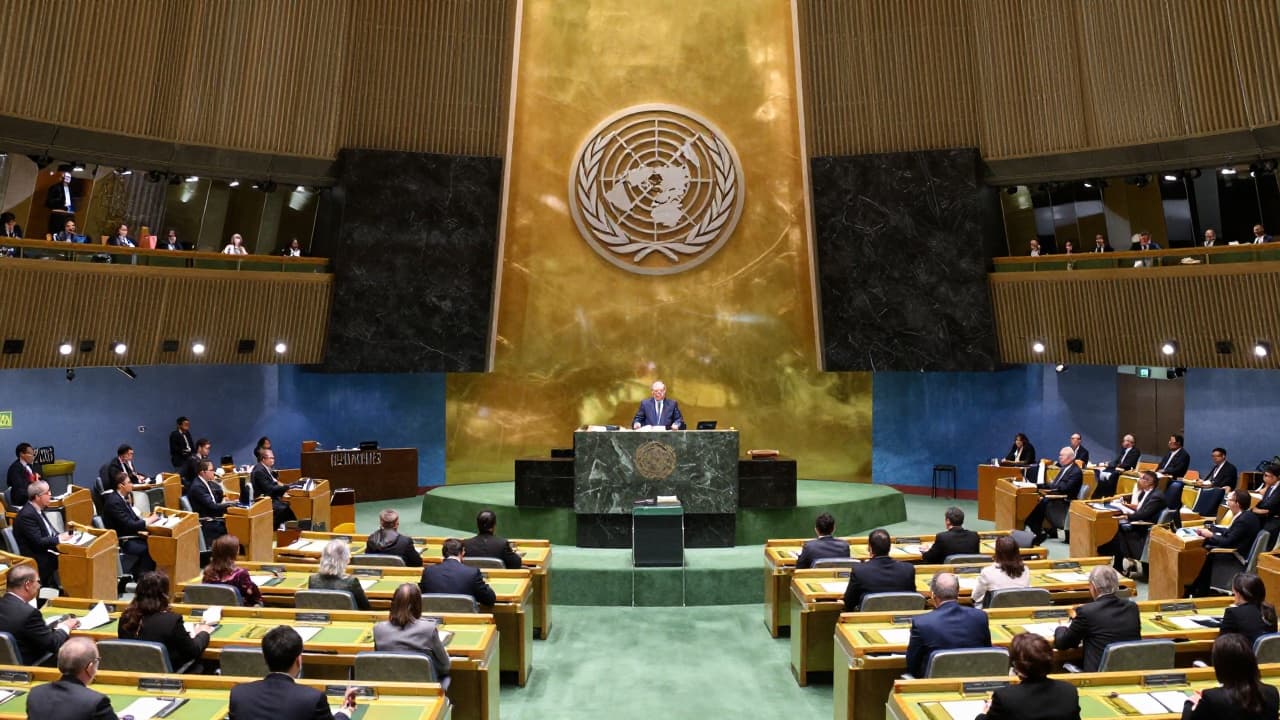

Delegates from nearly 200 countries gathered in Yerevan for almost two weeks of negotiations on global nature protection. Although the meeting was scheduled to end earlier, an agreement on key parts of the new action plan was reached only in the early hours of Saturday morning. The meeting was chaired by Hambardzum Matevosyan.
The deal was reached four years after the same countries signed the Global Biodiversity Framework, a key agreement committing them to halt and reverse nature loss. The 2022 framework contained 24 targets, including placing 30 per cent of the world’s land and sea under protection by the end of the decade. According to UN data, the world is on track to achieve only one of those 24 targets.
As part of this week’s agreement, countries acknowledged that they are lagging in meeting their obligations. Last month, the World Wide Fund for Nature (WWF) praised conservation efforts that have led to the recovery of key species, including elephants, green sea turtles and tigers.
Countries recognised that the main obstacle to accelerating these efforts is money. In 2022, they agreed to allocate $30 billion for nature recovery by the end of the decade and mobilise an additional $170 billion from private sources. However, according to the UN, many states are redirecting international aid to defence budgets and to address repeated energy shocks, meaning promises are not arriving at the required speed.
More than $1 billion was pledged at this meeting, half of which comes from philanthropists, including Leonardo DiCaprio’s organisation Re:wild. A special fund, the Cali Fund, was previously established to allow private companies profiting from the use of genetic material from the environment to donate. It was estimated that up to $3.6 billion could be raised annually from this fund. However, at the start of the meeting, only $10,000 had been paid into the Cali Fund, and progress on this issue had been negligible.
A small group of countries, including Saudi Arabia and Russia, reportedly hindered the process of approving scientific reports on the state of nature. French Minister for Ecological Transition Monique Barbut stated: "Attacks on science have deeply concerned me." Next month, countries will gather for the annual climate conference COP31. The IPCC has faced similar challenges in the past month in adopting its own scientific reports and securing funding. Professor David Lee from the University of Manchester said: "This is such an obvious political move... and the IPCC is not a place for such political manoeuvring because the results are in the interest of humanity."
Scientists warn that the world is currently in the sixth mass extinction, with species going extinct 100 times faster than the natural rate due to human activities.