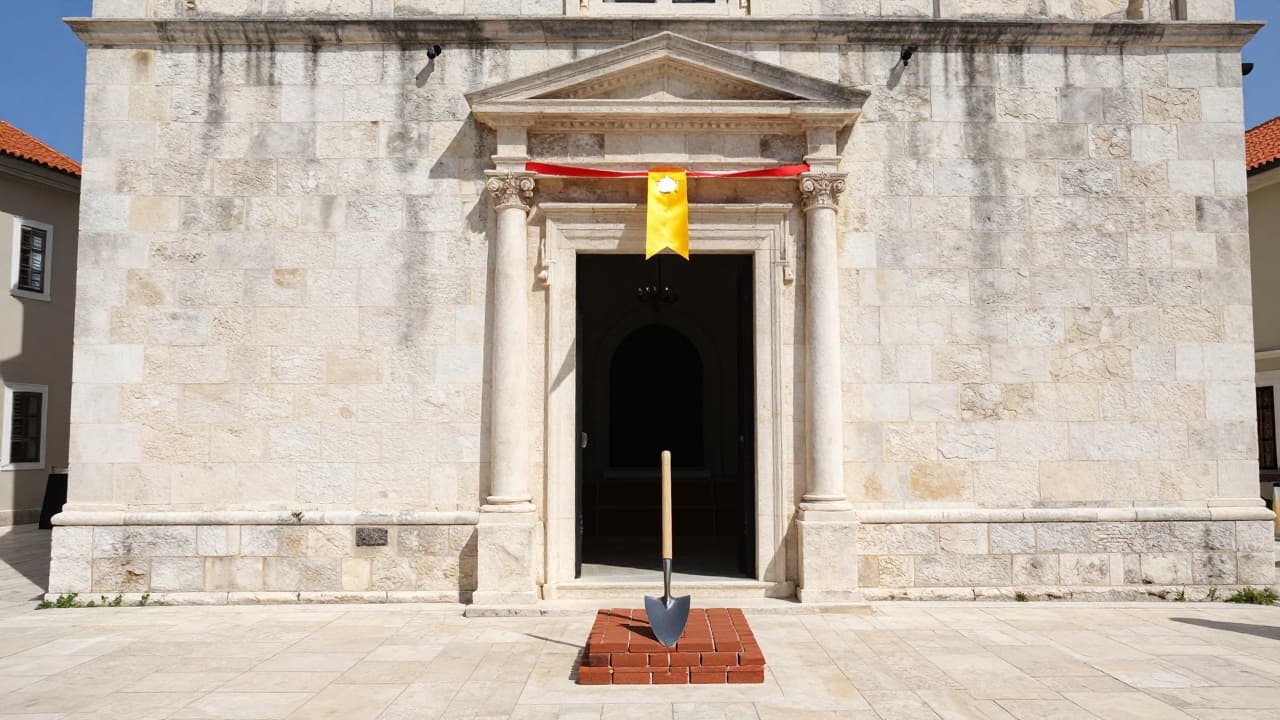
Works on the renovation of the historic 'Štalija' building in the Bazana settlement of Sinj began today, marked by the laying of a cornerstone. The cornerstone was laid by Denis Bobeta, Deputy Mayor of the City of Sinj, and Mario Bjeliš, Acting Dean of the Agromediterranean Faculty of the University of Split, and was blessed by Father Antonio, the parish priest of the Sinj basilica.
The renovated building will house the Innovation Centre for Digital Agriculture, a future university building in Sinj. It will feature two laboratories, three offices, a classroom, an IT practical room and a co-working space. The Agromediterranean Faculty of the University of Split will deliver the study programmes 'Mediterranean Agriculture' and 'Mediterranean Agronomy' there.
The ceremony was attended by Frane Strikić, Acting Deputy Dean for Science, Development and Business, and Vedran Poljak, Acting Deputy Dean for Teaching, Students and Quality, as well as Ana Cvitković, Head of the Administrative Department for Economic Development, European Union Funds and Public Procurement. Directors of municipal public enterprises and representatives of the conservation institute, the contractor and the technical supervision were also present.
Deputy Mayor Denis Bobeta expressed regret that Mayor Miro Bulj could not attend the ceremony. He highlighted that Mayor Bulj was the originator of the idea to establish the future university building and the Innovation Centre for Digital Agriculture in Štalija. Discussions on developing university studies in Sinj began in July 2021, when an important meeting was held in Sinj between Mayor Bulj and then Rector of the University of Split, Professor Dr Dragan Ljutić. The meeting discussed strengthening cooperation between the City and the University, the development of agricultural studies and the future Innovation Centre, and in January 2022, Bulj and Ljutić signed an agreement on cooperation for the delivery of the university study 'Mediterranean Agriculture' in Sinj.
The City of Sinj received permission in 2025 to renovate Štalija and secured European co-financing for the project under the ITU mechanism. At the start of the cooperation, the City provided the University with land for a trial site and field teaching in Glavice, covering an area of more than 13,000 square metres. Crops have already been planted on this land, and the first results are visible in the field. The future centre will conduct laboratory analyses to help in selecting quality seeds and improving agricultural production.
Bobeta called on young people to enrol in the Mediterranean Agriculture study and thanked former Rector Dragan Ljutić and current Rector Professor Dr Nikola Koceić-Bilan for their support in developing university education in Sinj. Acting Dean Mario Bjeliš spoke about the growing role of digital technologies in agriculture, emphasising that digital tools can improve productivity and enable more precise and efficient performance of various agricultural tasks. Satellites and drones allow for the analysis, measurement and monitoring of crops, while modern machines contribute to more precise planting, application of agents and other tasks. Such technologies can increase productivity and facilitate work in hard-to-reach areas, such as olive groves. The centre will conduct scientific research and develop and apply methods and tools that can help farmers in their daily work.
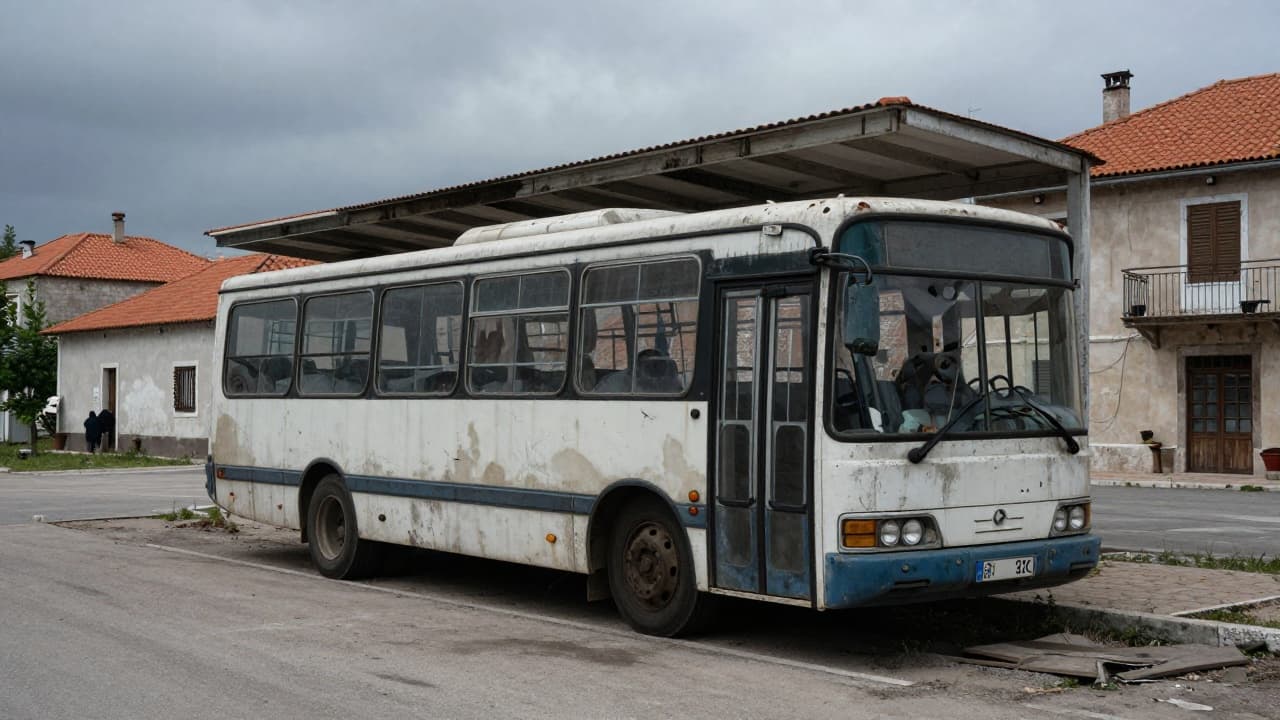
The centre will link university teaching and research with the needs of farmers, entrepreneurs and the economy of the Cetina region, and allow young people to study in Sinj. In the 18th century, a bazana, a station for rest, shelter and trade, was located on the site of Štalija on the caravan route connecting Bosnia and Split. In the 19th century, the space was given a military purpose, and Štalija became part of a complex for the needs of the cavalry riflemen. The renovation will preserve the protected historic building and its architectural value, giving it a new purpose important for the future development of the city and the Cetina region.
The works are being carried out by Prolux d.o.o. from Split. The contract value is €1,549,346.73 excluding VAT, or €1,936,683.41 including VAT, and the expected completion time is 12 months. The project is co-financed by European Union funds under the ITU call 'Revitalisation of brownfield sites in the Split Urban Agglomeration'.